
The Sacred Sylvaner of Neustift Abbey

By Ani Duzdabanyan | Originally published in Volume 22 | July 21, 2025
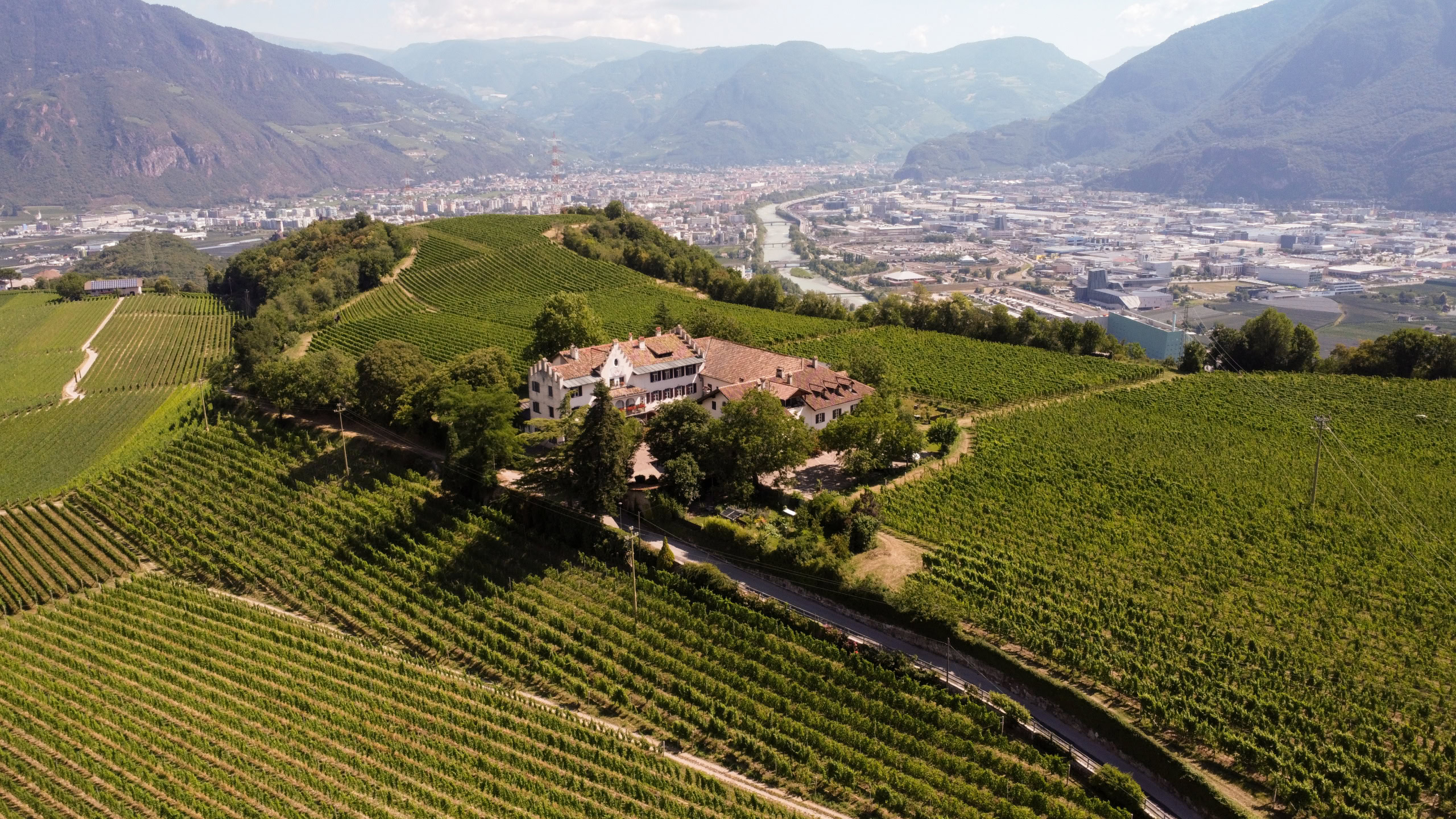
In the heart of Alto Adige-Südtirol, infinite green rows of vines crown the chestnut-brown roofs of Neustift Abbey. In this fairytale-like northern Italian valley, German and Italian coexist in mutual synchrony, a vivid reminder of a not-so-distant past when this was part of the Austrian Empire. The fortified ensemble houses a monastery, boarding school, museum, and winery within its Romanesque, Baroque, and Rococo walls.
Wine has been made using grapes of the region here for the last nine centuries, all under the vigilance of Augustinian canons. Grüner Veltliner, Kerner, and Sylvaner reflect the terroir, proudly representing the abbey in local and international markets. Of these, Sylvaner has not only shaped the abbey’s history but is also making bold promises about the future. Thanks to its highly adaptable nature, this humble workhorse is proving its worth in the face of a changing climate.
From Suppression to Selection
The story begins in 1142, when Bishop Hartmann of Bressanone founded the Abbazia di Novacella, or Neustift Abbey, on land and vineyards donated by a local count. The abbey’s unique geography made it a crucial meeting point on an important route through the Eisacktal/Valle Isarco that connects Italy to Northern Europe. For centuries, the monastery consisted of 500 farms including the vineyards. That changed in 1807, however, following Napoleon’s orders to suppress religious institutions. The abbey’s holdings were dramatically reduced to just 20 acres huddled around the monastery walls.
Sylvaner proved perfect… and it became one of the grapes that changed the narrative of the Abbazia di Novacella winemaking traditions.
This crisis, however, presented an opportunity. Until then, the abbey had mostly produced unremarkable red wines, as the climate was simply too cold for proper ripening. But in 1874, Edmund Mach, the visionary enologist and agricultural chemist who laid the foundation for modern viticulture in the region, founded a research center at San Michele all’Adige and encouraged the introduction of new, more adaptable varieties. Sylvaner proved perfect for his experiments, and it became one of the grapes that changed the narrative of the Abbazia di Novacella winemaking traditions. The first single varietal Sylvaner at the abbey was made around 1908, says Werner Waldboth, director of sales and marketing for the abbey.
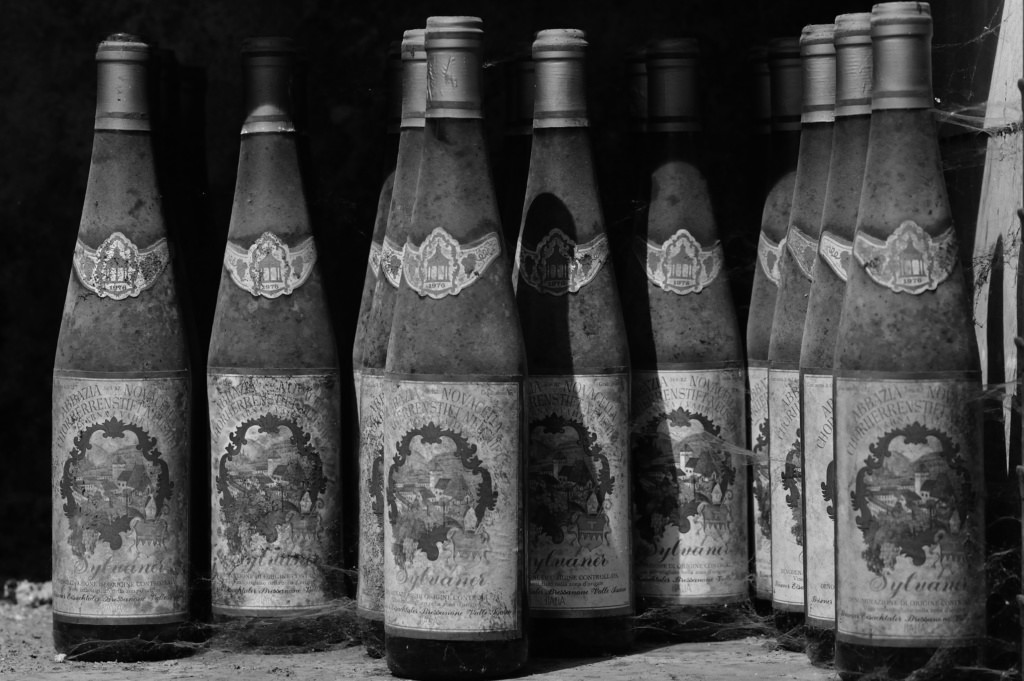
For over a century, the wine used for the abbey’s Holy Mass has been made from Sylvaner grapes, with the abbey producing approximately 500 bottles annually specifically for religious ceremonies. Smelling of fresh pear and elderflower and channeling a crisp acidity and silky texture, this golden yellow berry became an intricate part of monastery life. “We began selling pure Sylvaner more than 100 years ago, and over time, it became our flagship variety. Even today, Sylvaner remains at the heart of our production,” explains Waldboth.
The Return of a Regional Classic
Despite being one of the oldest varieties in the region, for decades Sylvaner was overshadowed by higher-yielding grapes. In 1994, there were still 106 hectares of Sylvaner; by 2020, just 50 hectares remained. However, that trend is reversing. An expert on the country’s indigenous grapes, Giammario Villa, educator at the University of California, Los Angeles, has witnessed a recent revival. “Many small, high-quality producers in the Valle Isarco or Alto Adige have recognized Sylvaner’s ability to uniquely express the valley’s terroir,” says Villa. According to the Eisacktal/Valle Isarco Wine Consortium, 21 producers are currently working 68 hectares planted to Sylvaner, representing about one-seventh of the subzone’s total vineyard area.
The gravelly and stony soils of the Eisacktal/Valle Isarco provide excellent drainage, promoting deep root growth and preventing excessive water retention. This leads to more concentrated flavor, higher acidity, and the distinct minerality that gives Sylvaner its vibrant profile. The significant diurnal temperature variation further helps to preserve that acidity while ensuring full ripening.
Elevation, Amphora, and Adaptation
The abbey’s approach to climate change demonstrates how traditional varieties can lead innovation. “We are planting our traditional cool climate varieties (like Kerner or Müller Thurgau) on higher elevations, while in vineyards on lower elevations, we are planting varieties that can handle the warmer temperatures better, like Chardonnay, Pinot Blanc, or Pinot Noir,” explains Waldboth.
As each variety has different climate requirements, vintners plant them at altitudes spanning a range from 350 to 900 meters, with each 100-meter rise in elevation lowering the average temperature by about 0.65°C—enough to noticeably affect ripening timelines. Although higher-elevation vineyards have shorter growing seasons, Sylvaner’s late budding and flowering allow it to catch up—resulting in harvests that align with lower sites.
Enologist Lukas Ploner, working with veteran winemaker Celestino Lucin, has been creating experimental wines released under the “Insolitus” label since 2020. These have included a Sylvaner aged in amphorae and fermented on its skins to explore its potential for longevity. “The experiments are about new techniques, new varieties, or new styles. ‘Insolitus’ means unusual and is our space for innovation and progression in ancient craftsmanship.” Wines like these suggest Sylvaner isn’t just a relic of the abbey’s past—but an active participant in its future.
Sylvaner: The First Among Equals
Today, wine sales generate approximately 65 percent of the monastery’s total income, with Sylvaner accounting for a small fraction of this. While Kerner may eclipse it in volume, Sylvaner remains historically paramount. Two of the monastery’s signature wines—Stiftsgarten and the award-winning Praepositus—are made from Sylvaner.
As global wine markets shift and interest in lesser-known varieties grows, Sylvaner is quietly reasserting itself. At Neustift Abbey, its role is both practical and symbolic: a grape once pushed to the margins now stands at the intersection of heritage and adaptation. “While it may no longer be our highest-volume wine, it holds a special place in our hearts due to its deep-rooted history and strong connection to the region,” says Waldboth. “We believe Sylvaner possesses exceptional quality and remarkable aging potential, despite often being underestimated.”
According to Abbot Eduard Fischnaller, the wine has long played an important role in both Catholic liturgy but also in serving pilgrims and staff. In the hands of the Augustinian canons, the future of this old grape variety is being shaped not by resisting change, but by adapting a 900-year-old tradition to new climatic realities—evidence that resilience can be cultivated as much in the vineyard as in the cellar.