A Short Guide to Swiss Syrah (The Wallis Edit)
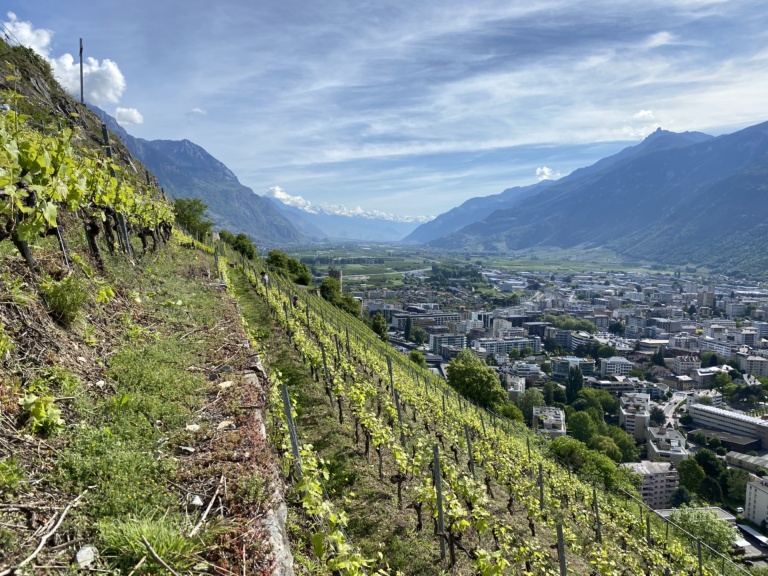
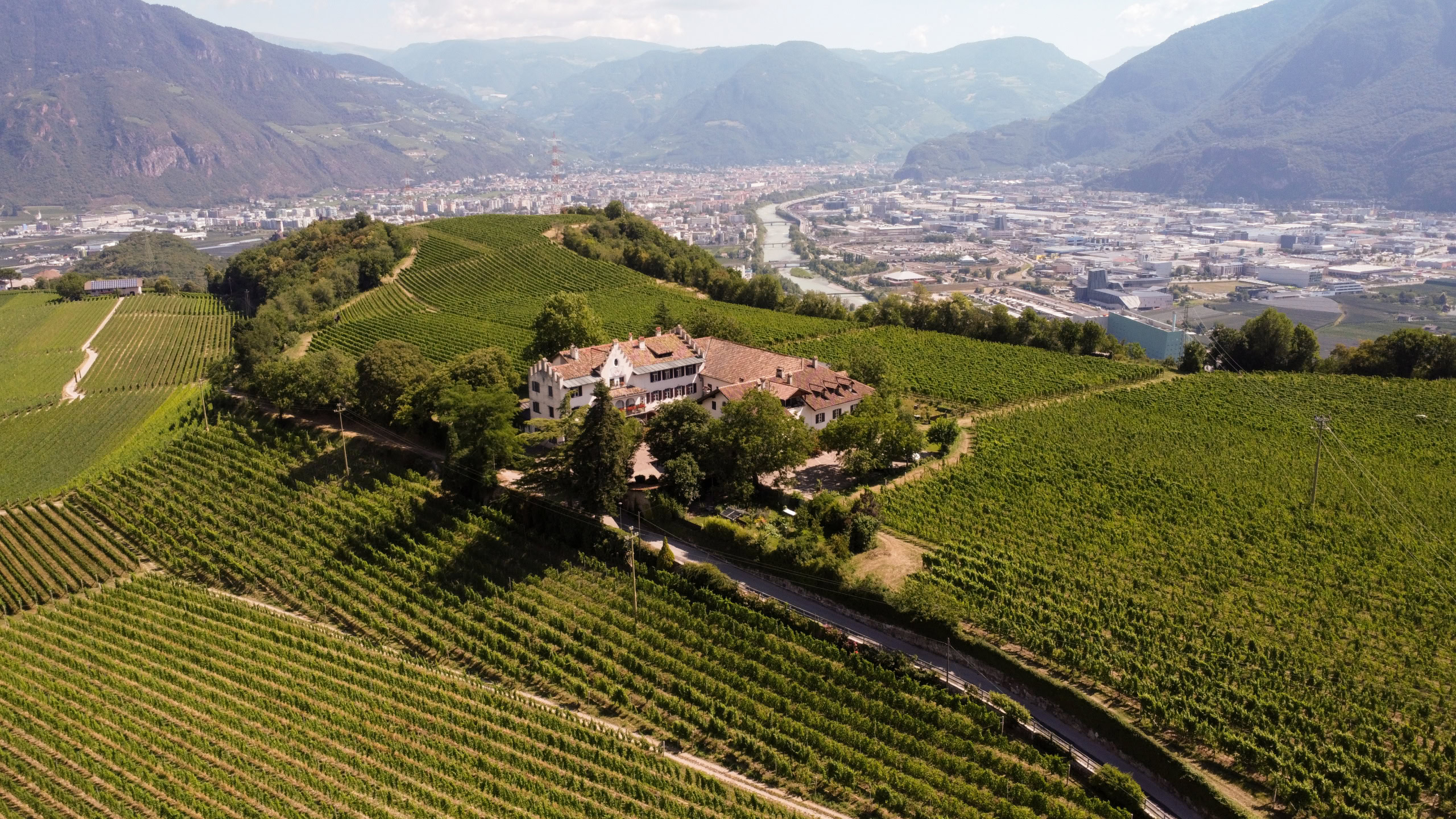
The question is no longer whether Syrah belongs in Wallis, but what kind of Alpine Syrah the region will make its own.
January 2026
Dear Readers,
Wine is just fine, thank you.
Is that a hot take? Perhaps. But ask yourself: What are you most excited to explore, taste, and learn about in the year ahead? Is there any shortage of places or bottles you can’t wait to dive into?
It feels like the wine world is in a moment of acceleration, in the best possible sense. It’s hard to keep pace with the emerging crop of winery projects, vineyard outposts, collaborations, bars, and fairs. Wine sales may be down, but wine culture? It’s thriving.
This excitement is the heartbeat of Volume 24: Shifting Horizons. We are ditching the doomerism to focus on the intel and insights that make German-speaking wine so compelling.
We kick off this edition with a journey to the edge: Sachsen and Saale-Unstrut.
These two tiny, fragmented regions are complicated by geography and history (To help orient you, we commissioned a map from cartographer Quentin Sadler.)
But while this complexity explains their relative obscurity, it also hints at the abundant opportunity producers are tapping into today. As TRINK correspondent Rainer Schäfer reports in our cover feature, “Red Dawn,” energy and experimentation abound. Now, the climate is catching up with ambition.
Rainer charts this rise of a flourishing red wine culture, spanning Spätburgunder and Zweigelt to eyebrow-raising expressions of Nebbiolo and Gamay.
A Note on How We Publish: We build our volumes story by story, curating a conversation instead of simply dropping content. Why? Because we believe in savoring over scrolling. Our weekly rhythm gives each feature its moment — and you the time and space to enjoy it.
To new horizons!
Eure
Paula and Valerie

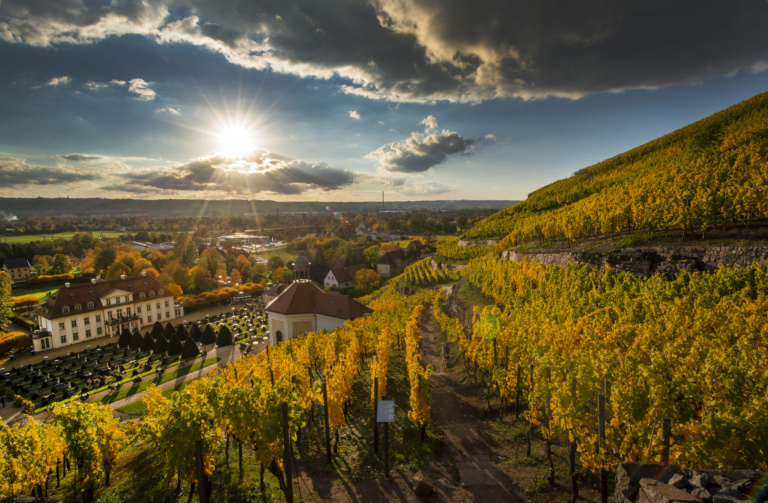
The question is no longer whether Syrah belongs in Wallis, but what kind of Alpine Syrah the region will make its own.
The focus and energy of Austria's biennial wine trade fair VieVinum puts the spotlight on a country that is doing wine right.
As I peer out the window of a train from Hamburg, I understand why Sylt, sometimes referred to as “the Hamptons of Germany,” is such a popular destination for German vacationers. I can feel the tension of travel slipping away with the mainland as the tracks cross the shallow waters of the Wadden Sea and approach the sweeping, sandy landscape of this North Frisian island. Nils Lackner, a charismatic sommelier, tour guide, and regional expert based here, picks me up at the station, wondering how Sylt ended up on my radar since so few Americans are aware of it. I…...
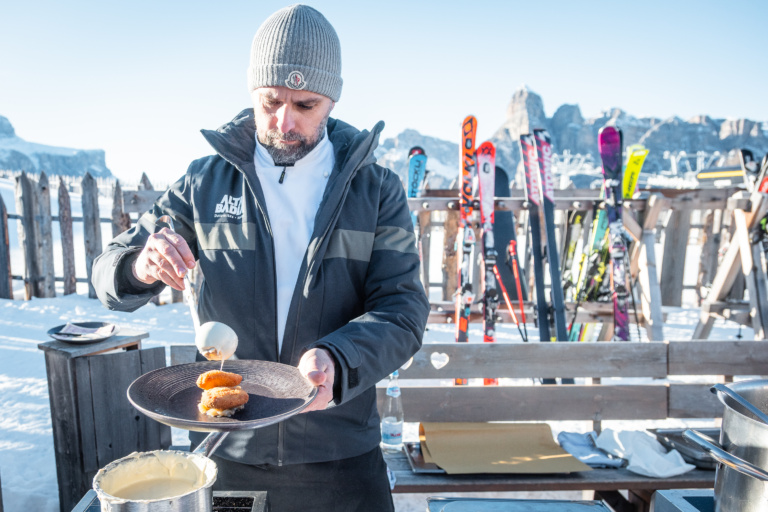
At 2,010 meters above sea level, the first thing that changes is your breathing. The second is your appetite. By the time you are standing outside a mountain hut with a glass of Blauburgunder in hand, something else has shifted too. The wine tastes different up here. In December, I went to Alta Badia, a small, jagged pocket of Südtirol-Alto Adige, with skis, a notebook, and a question. Nestled among the villages of San Cassiano, La Villa, Corvara, and the Campolongo Pass, the region is defined by its verticality, snow, and fine cuisine. Every year, as the ski season starts,…...
“Die Luft war raus.” The spark had vanished; the bloom was off the rose. That was the phrase circulating in the weeks before ProWein opened, in emails, on the phone, in the particular silence that greets an appointment calendar nobody has the energy to open. Executing pre-fair rituals felt like a chore. My cowboy boots weighed heavy; my playlists, uninspired. And I wasn’t alone. Wine Paris closed its seventh edition in February with 63,541 trade visitors from 169 countries, up 21 percent in a single year. My social media feed was full of smiling faces and hand-lettered “Bonjour! Bienvenue!” signs,…...
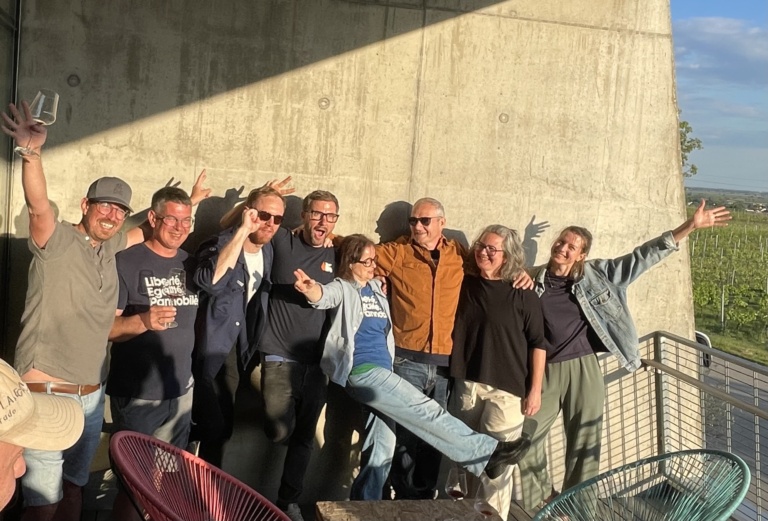
Melanie Broyé-Engelkes, a seasoned marketing executive and entrepreneur from Paris and Luise Böhme, a former nationally competitive athlete from eastern Germany, have joined Theresa Olkus, a communications specialist from Württemberg, to form a triumverate that — in ways large and small — now steers the future of German wine.
100 years ago this month, the Mosel spilled its banks. Not with water, with fury.
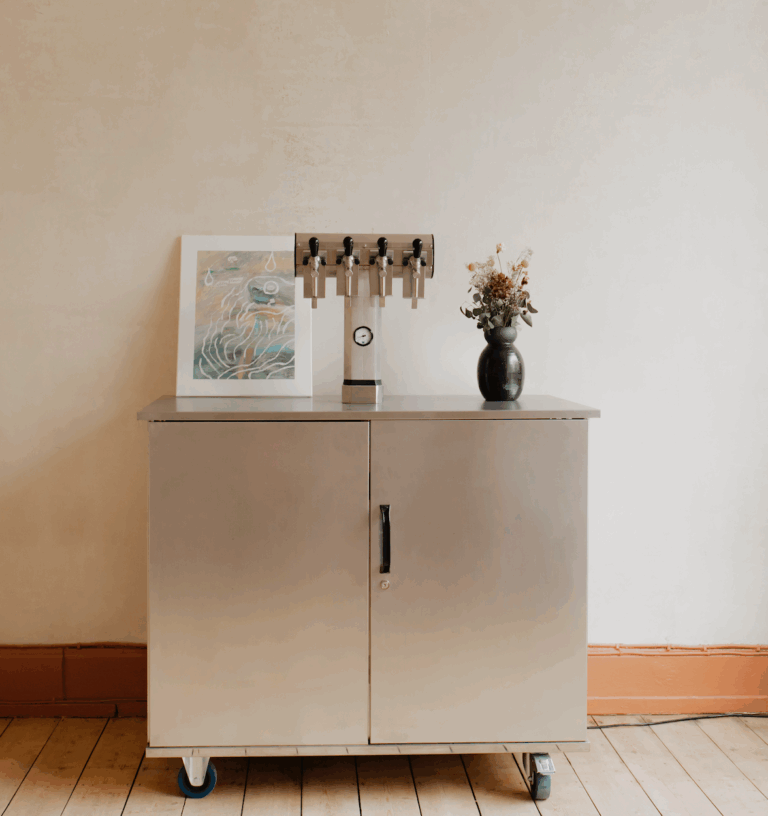
For Deandra Anderson, co-founder of Ebb & Flow Keg, a Frankfurt-based purveyor of organic kegged wines, the supposed “death of wine” among millennials isn’t a crisis, it’s a myth. In her view, the challenge is whether the German wine industry can meet the next generation where they already are.
The resurrected Zach. Bergweiler-Prüm Erben wines from Weingut Dr. Loosen offer a new definition of Mosel Riesling: one where the winemaker’s role is found in surrender, not forged by control.
At a time when some Mosel producers are shedding vineyards like snakeskins, Ernst “Erni” Loosen, who already has 90 hectares at his disposal, is trying on a new one. A few years ago, a cousin of Loosen’s called to say he was selling a parcel. Lammertslay, a steep, mid-slope, two-and-a-half-hectare plot within the Wehlener Sonnenuhr, is hallowed ground for Riesling. The vines were largely wurzelecht (ungrafted), planted around 1895 in pure blue slate soil on a south-facing slope. Loosen was sold. The parcel had belonged to his great-grandfather, Dr. Zacharias Bergweiler-Prüm. Loosen saw it as a rare chance to honor…...
André Gussek remembers very clearly how it all got started: Right around the time he was hired as cellar master at the historic eastern German Kloster Pforta winery in 1982, “the first Spätburgunder vines, West German clones obtained via foreign trade,” arrived at the estate in Naumburg an der Saale, roughly 60 kilometers from Leipzig and some 220 kilometers from Berlin. “In the fog of history, it was difficult to see precisely where they came from,” Gussek explains with characteristic calm. Much clearer is what they became: a catalyst for red wine to assume “an ever-larger role” in the former…...