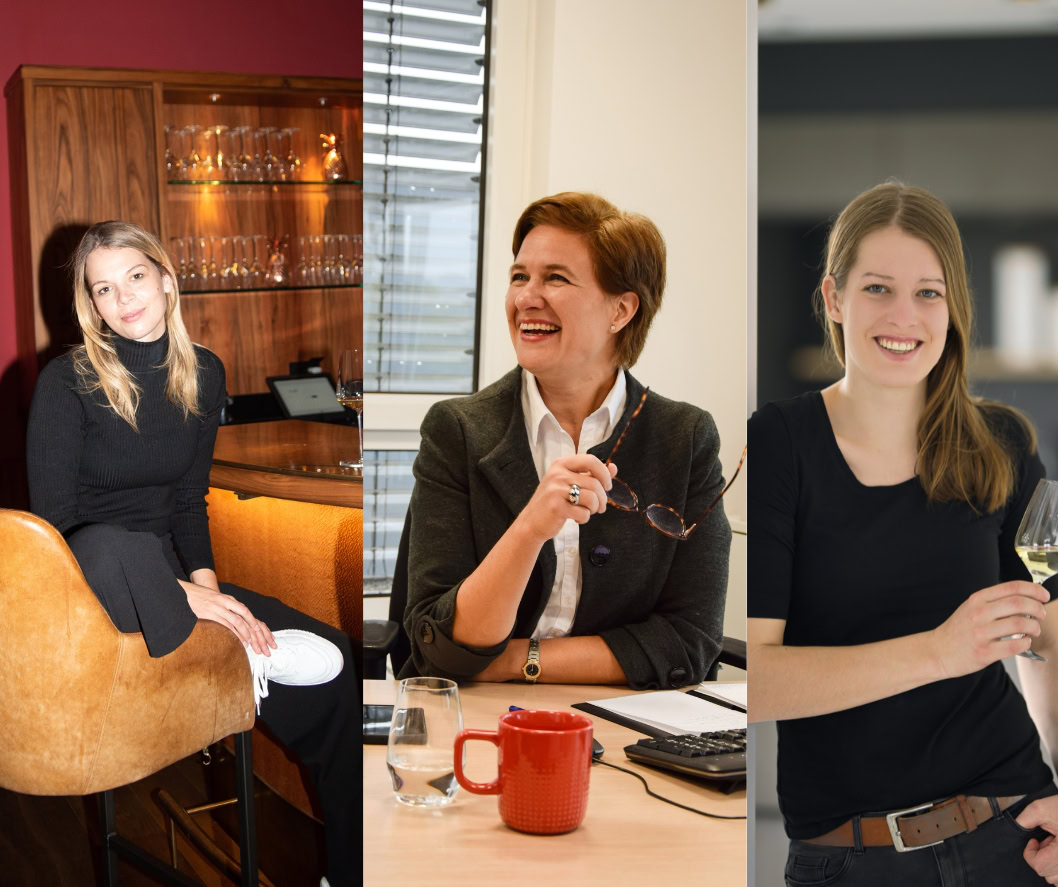
From left: Theresa Olkus, Melanie Broyé-Engelkes, Luise Böhme
Melanie Broyé-Engelkes, a seasoned marketing executive and entrepreneur from Paris and Luise Böhme, a former nationally competitive athlete from eastern Germany, have joined Theresa Olkus, a communications specialist from Württemberg, to form a triumverate that — in ways large and small — now steers the future of German wine.
Valerie Kathawala specializes in the wines of Germany and Austria. Her work appears in the pages of regularly in Noble Rot and SevenFifty Daily. She is the author of the "German Wine Scholar" (2025).
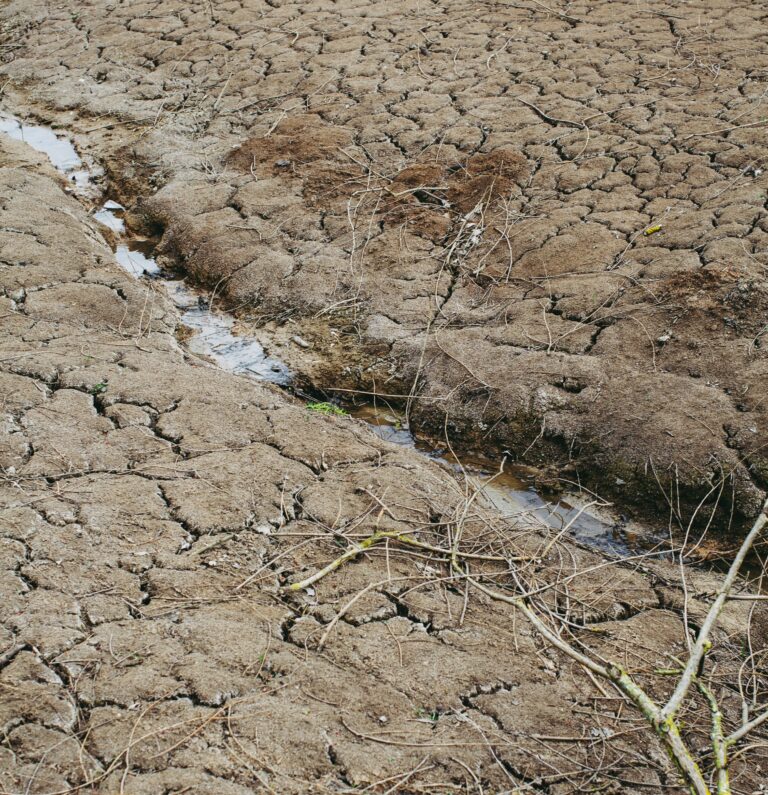
The photos that German astronaut Alexander Gerst sent back from the International Space Station during summer 2018 were deeply shocking: Germany was no longer green, but brown. The only visible green in the entirety of many of the wine regions was in fact the vines. RIP cool climate? While it was common knowledge that the summer of 2018 had been exceptionally warm, few people realize it was also the warmest ever recorded. The Average Growing Season Temperature (AVGST) registered at Geisenheim/Rheingau in 2018 was 17.8° Celsius, or 0.9° (1.6° on the Fahrenheit scale) above the previous record year, 1947. However, most were…...
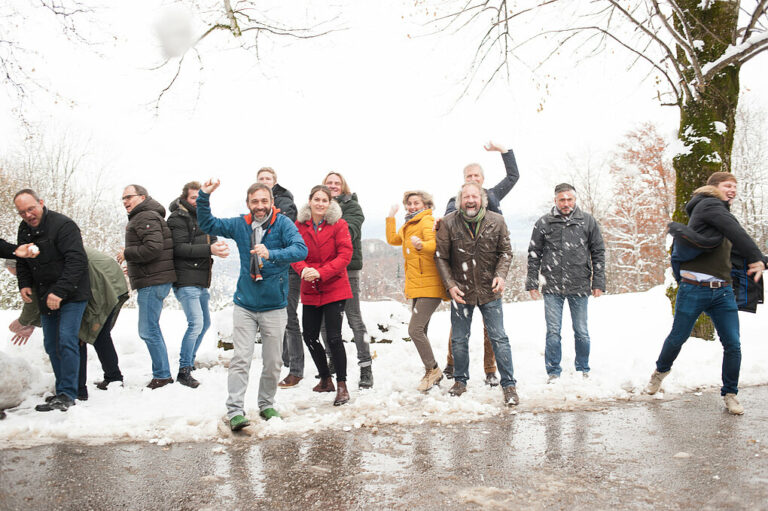
Why does biodynamics matter? Respekt-BIODYN is the ongoing effort of 25 growers from German-speaking wine regions to answer that question. Though there are many forms of holistic farming that benefit people, planet, vines and wines, this tight-knit Austria-based group believes that a shared commitment to viewing the teachings of philosopher and agricultural reformer Rudolf Steiner as a springboard for exchange, cooperation, shared learning, and support helps cultivate a sense of individuality that, ultimately, translates into more profound terroir expression and higher quality in their wines. Biodynamic Origins “The first 12 winemakers started in 2005,” explains the group’s leader, Michael Goëss-Enzenberg…...
While artists throughout the ages have longed to catch time in a bottle, it is winemakers who have indeed come closest to achieving this noblest of goals. A fine wine captures not just a single moment, but the span of a vintage, a lifetime, of eons of geology. A liquid suspension of sugar, acids, ethanol, tannins, phenolics, and chemical compounds can become a remarkable crucible of climate, soil, and vision. Yet unlike many other artistic disciplines, there is no fixed point at which the winemaker can lay down his pen or her brush and declare the bottle finished. There are certainly…...
Piri Naturel is Christine Pieroth's independent line of natural wines in Germany's Burg Layen. Her wines bring a breath of fresh air to more straightforward Nahe’s wine scene.