The Pfalz’s Unlikely Catch: A Fish Soup Story

A bowl of fish soup next to a glass of Pfalz Riesling
A fish soup of their own. Photo credit: Paul Kern

There is no fish soup in the Pfalz. Sad, but true. Like most of Germany’s winegrowing regions, the Pfalz is simply too far removed from the sea for fish to feature prominently in its traditional cuisine. By extension, Pfalz fish soup is practically a culinary contradiction. A delicious deception. A seafood swindle.  

A Pfalz cookbook is a celebration of rustic comfort: Leberknödel (liver dumplings), Kartoffelsuppe mit Speck (potato soup with bacon, often in unlikely combination with plum cake), and, of course, Saumagen (stuffed pig’s stomach). Arguably the region’s culinary signature dish, this is a hearty, sausage-y mix of pork, potato, chestnuts, and spices including marjoram and nutmeg, stuffed into a cleaned sow’s stomach and served with sauerkraut and roasted potatoes.

And were the Pfälzer to have a fish soup of their own, one might surmise its secret would lay in channeling the spirit of Saumagen.

But let’s not get ahead of ourselves. The idea of “falsifying,” or better yet Pfalz-ifiying, fish soup for the landlocked region came to me and winegrower Hans-Christoph (“Hansi”) Stolleis during the 2022 farm festival at Weingut Stolleis in Gimmeldingen – an event that in hindsight, served as the inaugural Pfälzer Fischsuppe festival. 

Membership Required

You must be a member to access this content.

View Membership Levels

Already a member? Log in here

Similar Posts

  • Specialist Retailers Are a Bright Spot for German Wine in the UK

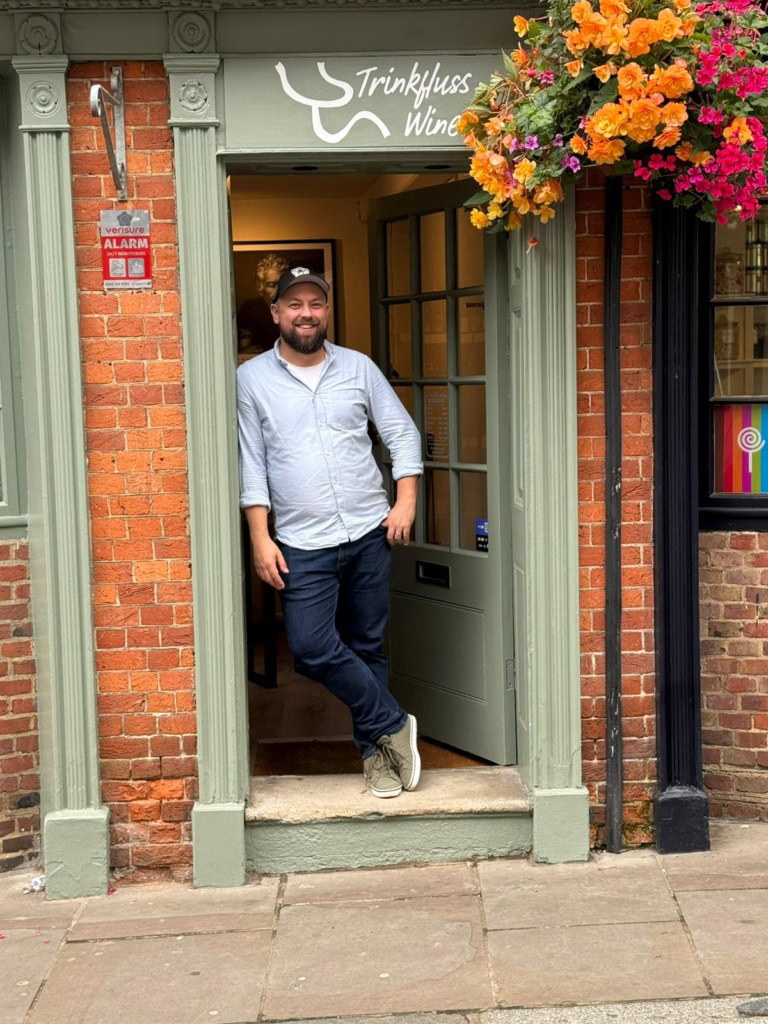
    “Where are all the dynamic, characterful wines from Germany?” Bastian Fischer asked in exasperation after 16 years in the UK wine trade. This year he answered that question himself by opening his own shop. Trinkfluss Wines, just outside London, focuses “on some of the most electric, food-friendly, and downright delicious wines anywhere,” in Fischer’s view. His new venture, baptized with the German word for drinkability, quenches the thirst for Germany’s full gamut of varieties. But one swallow doesn’t make a summer. The somms and wine aficionados who shop at specialist wine stores like Fischer’s may have embraced German wines, but…...

    Membership Required

    You must be a member to access this content.

    View Membership Levels

    Already a member? Log in here
  • ·

    Letter to My Younger Somm Self

    Don’t let anyone tell you those rocks are a waste of time.  Twenty-five years from now, sitting in a Koblenz classroom on your first day of wine school, you will be grateful for each and every one of them. Because there in the heart of German wine country, those stones and their secrets —  though you don’t know it yet — will be the foundation keeping you steady among your more experienced classmates, those vintners’ sons and daughters who boast seven, ten, 15 generations in the business, and counting. All while you are still trying to locate the Mosel on…...

    Membership Required

    You must be a member to access this content.

    View Membership Levels

    Already a member? Log in here
  • · ·

    Zellertal: The Newest Need-to-Know Spot on the German Wine Map

    When I arranged to meet H.O. Spanier of Weingut Battenfeld Spanier, one of Germany’s leading growers, in the Zellertal, he wrote to me: “Zellertal is probably one of Germany’s most dynamic regions. I began investing in its most limestone-rich sites 30 years ago.” Since then, interest in the Zellertal has built gradually. But in the past few years, that interest has exploded. Spanier has played a major role in this, as has the world-renowned father-son winemaking duo Klaus Peter and Felix Keller of Weingut Keller. Both estates are now significantly invested in Zellertal vineyards. There was no question their moves…...

    Membership Required

    You must be a member to access this content.

    View Membership Levels

    Already a member? Log in here
  • · ·

    Mosel – The Myth. The Legend. The Reality

    The Mosel, Germany’s oldest winegrowing region, knows how to beguile. The Rheingau swathes itself in the trappings of nobility, Baden boasts of its sunshine, the Mittelrhein beckons with Romanticism. The Mosel, however, reaches straight for myth.  There are many recaps of the growing region readily available, so let’s focus on something else instead: what makes the Mosel unique — now, then, and, likely, in the future. Not for nothing is the biggest annual wine fair along the Mosel River entitled “Mythos Mosel.” The name, and the event itself, attest to the enduring power the Mosel holds in the imagination of the wine-drinking…...

    Membership Required

    You must be a member to access this content.

    View Membership Levels

    Already a member? Log in here
  • ·

    Rotling Outlaws

    ​The sun blazes. The air shimmers. On the horizon four figures throw long shadows across the dry, crumbling ground. They are headed toward a city. Doors swing open. The four step from light into dark, their throats dusty and dry. Behind a deserted bar stands a man. He pushes four full glasses over to them. Out of the glasses sloshes a wine as red as the setting sun. If you aren’t thirsty by now, you should at least be hearing the melody of a harmonica. This is how the opening scene of a revival—the Rotling revival—could begin. The four men…...

    Membership Required

    You must be a member to access this content.

    View Membership Levels

    Already a member? Log in here

© 2026, TRINK Magazine. No portion of this article may be copied, shared or re-distributed without prior consent from TRINK.