
Pfalz

  • · · ·

    The Vanished Cellar

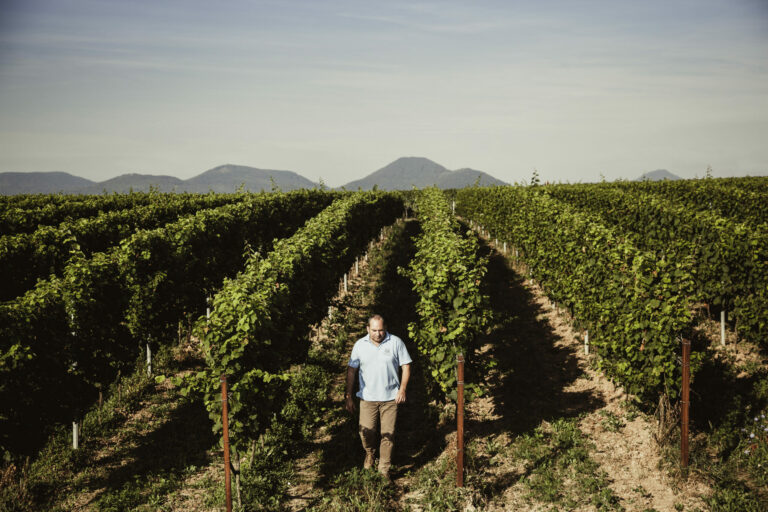
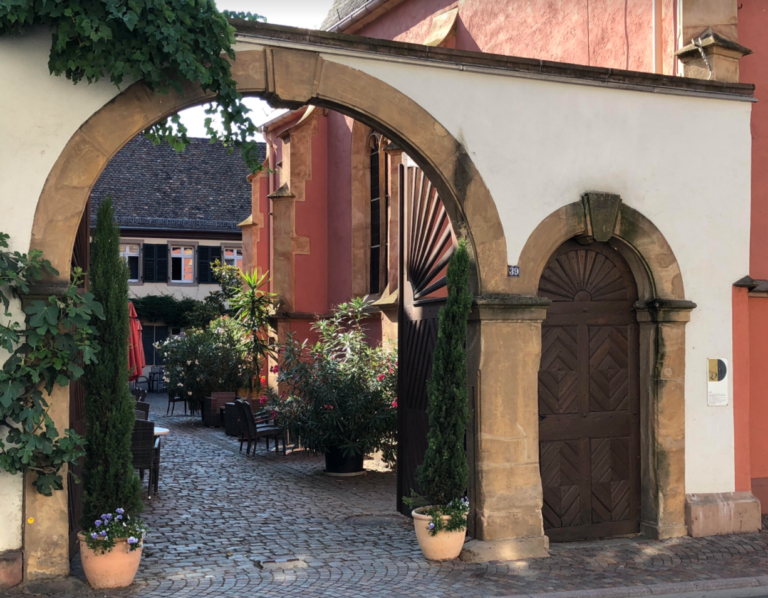
    The quiet whirr of my high-speed German train is a soothing reminder of Europe’s classy public transit I so miss in America. I’m headed south from Frankfurt towards a gentle landscape of vineyards, orchards and villages near the Rhine River and my Jewish father’s hometown. I’m much less comfortable with the muted conversations surrounding me. Like many children of Holocaust survivors, I grew up instinctively wary of the German language and all things German.  I’m on a symbolic journey alone back to Landau, the market town where my grandfather Heinrich Levy was a winemaker in the Pfalz in 1920s and ‘30s,…...

    Membership Required

    You must be a member to access this content.

    View Membership Levels

    Already a member? Log in here
  • · ·

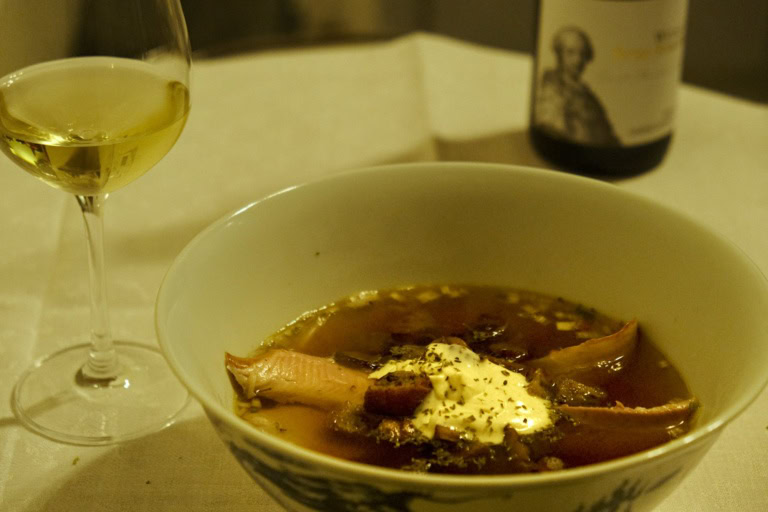
    The Pfalz’s Unlikely Catch: A Fish Soup Story

    There is no fish soup in the Pfalz. Sad, but true. Like most of Germany’s winegrowing regions, the Pfalz is simply too far removed from the sea for fish to feature prominently in its traditional cuisine. By extension, Pfalz fish soup is practically a culinary contradiction. A delicious deception. A seafood swindle.   A Pfalz cookbook is a celebration of rustic comfort: Leberknödel (liver dumplings), Kartoffelsuppe mit Speck (potato soup with bacon, often in unlikely combination with plum cake), and, of course, Saumagen (stuffed pig’s stomach). Arguably the region’s culinary signature dish, this is a hearty, sausage-y mix of pork, potato,…...

    Membership Required

    You must be a member to access this content.

    View Membership Levels

    Already a member? Log in here
  • ·

    Oliver Zeter’s Mise En Pfalz

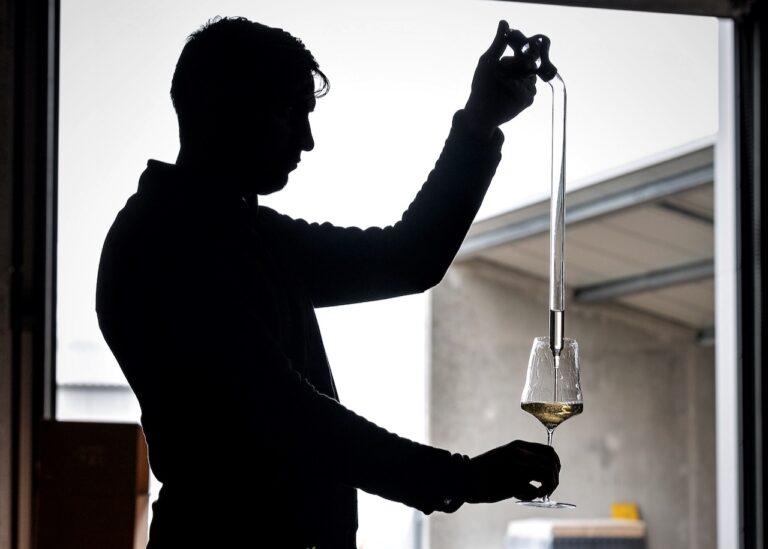
    Zeter assesses the natural bounty of his home, the Pfalz, with the eye of a chef. The soils are his mise en place — the basis of his work — the grape varieties are the ingredients he brings to the table and the bottle. His favorite ingredient — Sauvignon Blanc — has become his trademark. This love came early: in South Africa, 1992, at the Buitenverwachting winery in Cape Town. Now, he is celebrating 15 years as a Sauvignon Blanc iconoclast himself. A recent vertical tasting spanning his first vintage in 2007 to the current release, 2021, made clear the value of following palate…...

    Membership Required

    You must be a member to access this content.

    View Membership Levels

    Already a member? Log in here
  • · · ·

    Kabinett Trocken: Oxymoron or Opportunity?

    It’s an unfortunate paradox: the very climatic conditions that leave us thirsting for lightweight, refreshing and soul-satisfying dry wines render these hard to achieve. Yet, rather than leading the way in surmounting this viticultural challenge, Germany’s Riesling establishment routinely throws up roadblocks. That’s a crying shame.  THE CURIOSITY OF “KABINETT” To understand what’s become of “Kabinett trocken,” we must first retrace the steps leading to “Kabinett.” “Cabinet,” as a term applied to German Riesling, dates to 18th-century Rheingau, a derivative of “Cabinetstück” (alternatively, “Kabinet[t]stück”), in use for diverse objects worth displaying in a cabinet of curiosities or, by extension, worthy literary and…...

    Membership Required

    You must be a member to access this content.

    View Membership Levels

    Already a member? Log in here
  • · ·

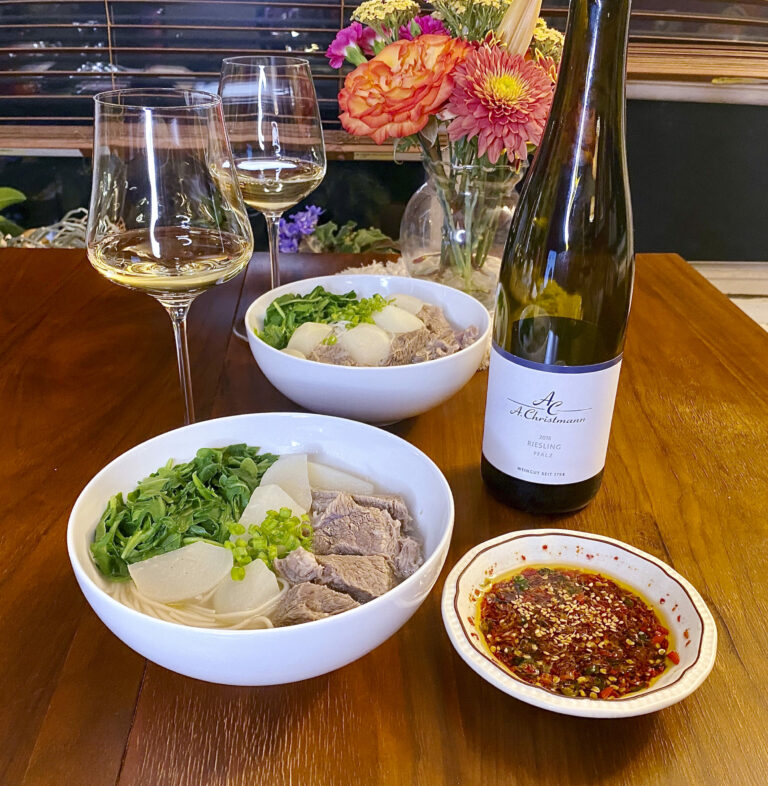
    EAT & TRINK | Pfalz Riesling and Taiwanese Beef Noodle Soup

    If you ask a person from Taiwan to choose the 10 dishes that best represent his or her cuisine, Taiwanese Beef Noodle Soup is inevitably on the list. More than a beloved national dish, the soup has become something of an obsession — like pizza to New Yorkers.  Taiwanese Beef Noodle Soup was created by soldiers who retreated with the Nationalist government from mainland China to Taiwan in the 1950s. For political reasons, they were banned from returning to their hometowns. Missing both family and familiar cuisine, the soldiers used local ingredients to create a dish that evoked the flavors…...

    Membership Required

    You must be a member to access this content.

    View Membership Levels

    Already a member? Log in here
  • · · ·

    Drink More Scheu!

    If there is an underdog in Germany’s largest winegrowing region, Rheinhessen, it is Scheurebe. Vinified sweet for many years, Scheurebe — pronounced SHOY-ray-beh — largely fell out of fashion. But things changed, and with the dry wine revolution in Germany over the last 20 years, Scheu is back, with — to quote Patti LaBelle — brand new ideas and a new attitude.  “Scheu,” as aficionados like to call it, was bred by German viticulturist Justus Georg Scheu in 1916. Unhappy with the many highly acidic and sour Rieslings he encountered, Scheu (the man, not the grape) wanted to create a…...

    Membership Required

    You must be a member to access this content.

    View Membership Levels

    Already a member? Log in here
  • · ·

    Pfalz comes into its own

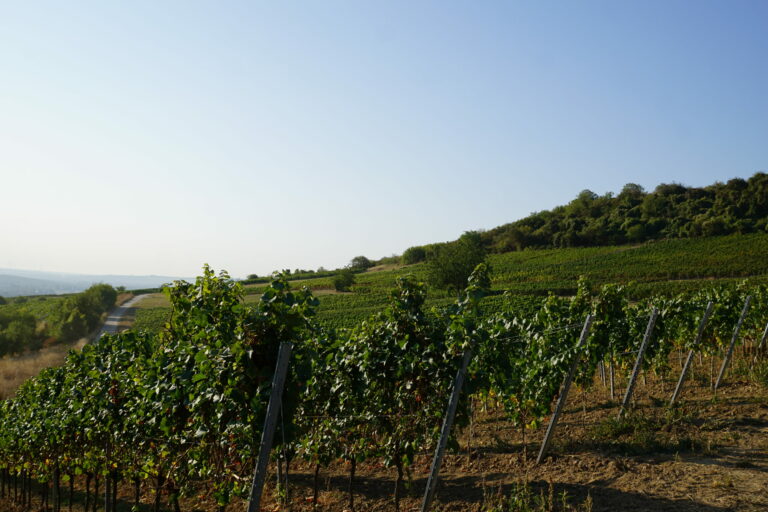
    The Pfalz is Germany’s second-largest wine region (by volume) — and perhaps its biggest surprise. The south-of-the-Alps feel of abundance and harmony stems from geographic confluence, where the sheltering Haardt mountains meet Rhine river plain. With Rheinhessen to its north and Alsace due south, it’s a wholly unexpected idyll of fig, lemon, and almond trees, pastel villas, and gentle vine-wrapped slopes as far as the eye can see. Amid this beauty, the Pfälzer live with French-inflected savoir-faire. This amplitude is all there in the wines.  Within a compact 85-km north-south span, 130 villages and seemingly countless vineyards are tightly packed north to…...

    Membership Required

    You must be a member to access this content.

    View Membership Levels

    Already a member? Log in here
  • · · · ·

    Time in a Bottle: Good Things Come to Those Who Late

    While artists throughout the ages have longed to catch time in a bottle, it is winemakers who have indeed come closest to achieving this noblest of goals. A fine wine captures not just a single moment, but the span of a vintage, a lifetime, of eons of geology. A liquid suspension of sugar, acids, ethanol, tannins, phenolics, and chemical compounds can become a remarkable crucible of climate, soil, and vision.  Yet unlike many other artistic disciplines, there is no fixed point at which the winemaker can lay down his pen or her brush and declare the bottle finished. There are certainly…...

    Membership Required

    You must be a member to access this content.

    View Membership Levels

    Already a member? Log in here
  • · ·

    Germany’s Blanc de Noir: In Praise of B Sides

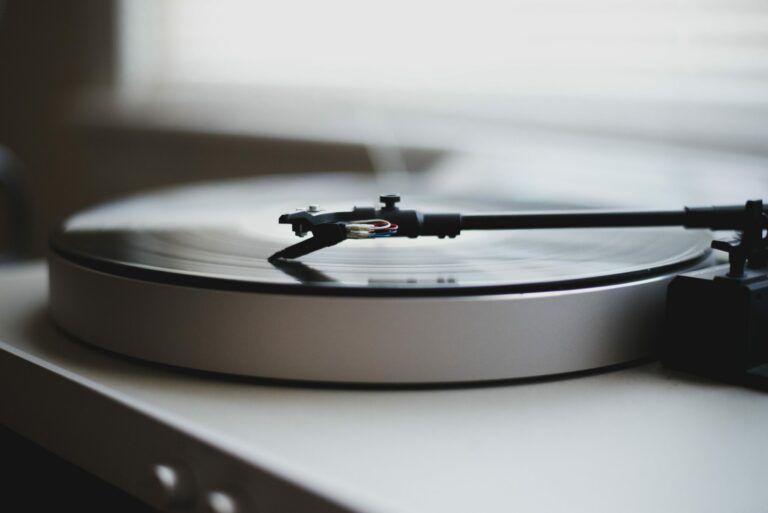
    I’ve been a fan of B sides since, well, pretty much since there have been B sides. Record companies have historically used vinyl’s flipside as a holding pen for unreleased or less desirable concept material. Pieces that don’t fit the brand; supplementary songs with minimal hopes and lower aspirations. Filler. Yet, to me B sides embody the edgy and unpredictable, the vulnerable creative underbelly of both artist and medium.  Let’s call rosé, the pink “wunder” of the last decade, our A side.  Industry figures show that rosé now constitutes some 9% of the global wine market. Thirty-nine percent of wine drinkers in…...

    Membership Required

    You must be a member to access this content.

    View Membership Levels

    Already a member? Log in here