It’s an unfortunate paradox: the very climatic conditions that leave us thirsting for lightweight, refreshing and soul-satisfying dry wines render these hard to achieve. Yet, rather than leading the way in surmounting this viticultural challenge, Germany’s Riesling establishment routinely throws up roadblocks. That’s a crying shame. THE CURIOSITY OF “KABINETT” To understand what’s become of “Kabinett trocken,” we must first retrace the steps leading to “Kabinett.” “Cabinet,” as a term applied to German Riesling, dates to 18th-century Rheingau, a derivative of “Cabinetstück” (alternatively, “Kabinet[t]stück”), in use for diverse objects worth displaying in a cabinet of curiosities or, by extension, worthy literary and…
David Schildknecht trained in philosophy and worked as a restaurateur before spending a quarter century in the U.S. wine trade. His tasting reports, ones from Austria and Germany prominent among them, have since the late 1980s been fixtures of Stephen Tanzer's International Wine Cellar; Robert Parker's Wine Advocate; and, since 2015, Vinous. A columnist and feature contributor for Wine & Spirits, The World of Fine Wine, and Austria’s Vinaria, he is responsible for the German and Austrian entries in the The Oxford Companion to Wine and a co-author of the 7th edition of Robert Parker's Wine Buyer's Guide. David has also addressed issues of aesthetics in contexts academic and otherwise, and his life in wine leaves time to pursue his passions for cooking, music, history, and his infinitely tolerant wife of five decades.
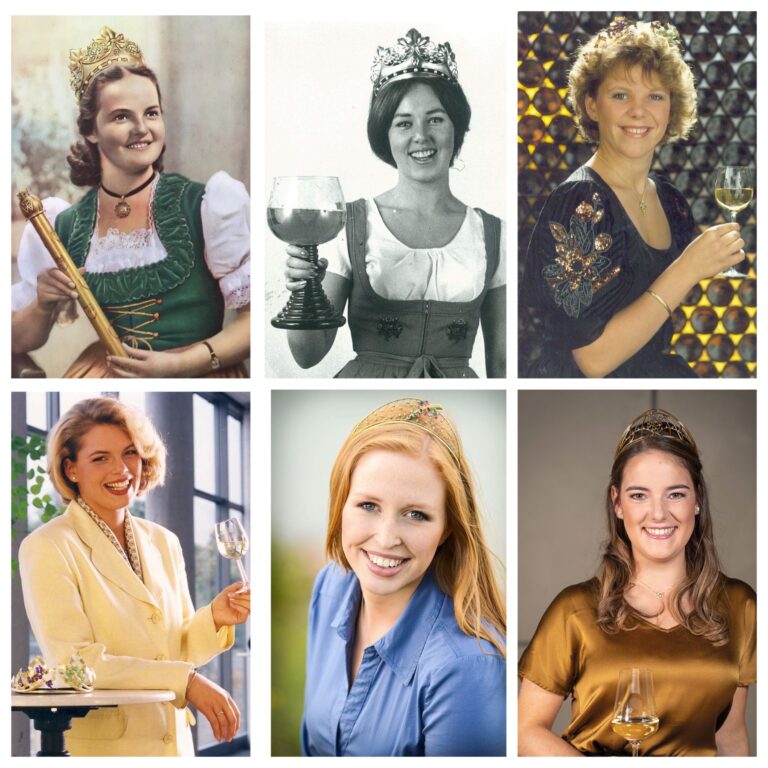
The story starts with a pedicure and a camping van. Each year when the German wine queen visits New York City, Paul Grieco treats her to a pedicure. (If the queen’s mother is also visiting, she gets one, too.) Grieco is a sommelier, vocal Riesling advocate, and owner/manager of Terroir wine bar in New York. He is also part jester, reveling in the micro-tradition of the pedicure while also pointing toward the intellectual esteem in which he holds every queen he’s ever met. Grieco honors the queens, he said, “because we [at Terroir] are fans of history and culture and [the queens] are an…...
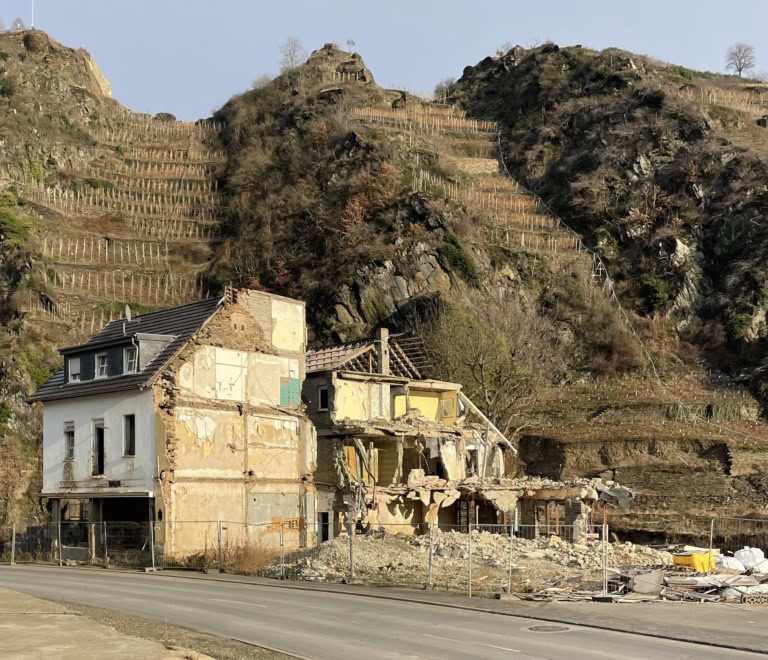
From last Wednesday night into Thursday morning, 148 liters/square meter of rain fell on the Ahr. In a normal July, the region gets about 80 liters/square meter — in the entire month. This immense volume of precipitation in such a short span dilated creeks into torrents. Torrents rose and swiftly emptied into the Ahr itself, which morphed into an implacable, surging mass of water. As we’ve now all seen on the news, the river ripped through the villages that line its banks — Ahrweiler, Dernau, Mayschoss will be names familiar to German wine lovers — shocking everyone from the authorities charged…...
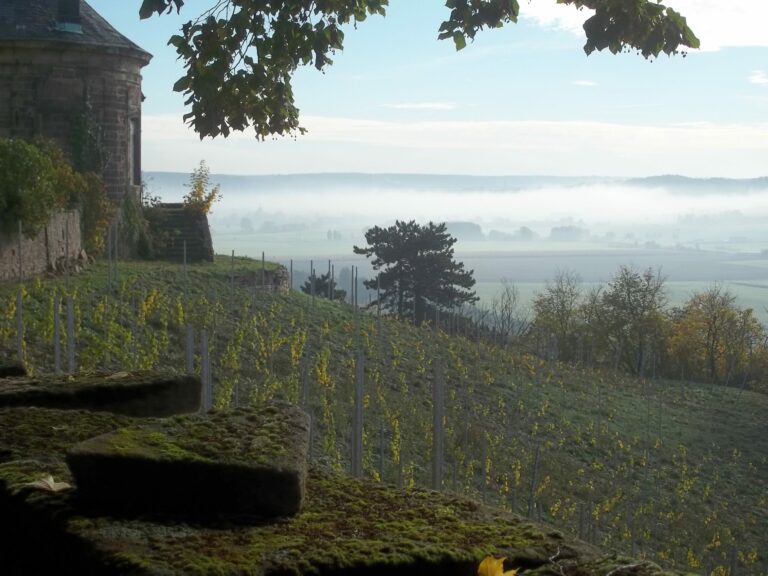
Trink Magazine | That viticulture is still possible in Germany's Saale-Unstrut in an age of climate crisis is due to the microclimate of the valleys and the perseverance of its growers.
Editors’ Note: Data open tantalizing invitations to speculation. Wine economist Dr. Karl Storchmann of the American Association of Wine Economists is a master at collecting information, presenting it in clear, compelling graphics, and stepping away to allow each of us to draw our own conclusions. When he looked at wine, beer, and spirits consumption in three of TRINK’s coverage zones over the past century, he found striking disparities and a surprising convergence. What story do they tell you? Per capita wine consumption in Austria, Germany, and Switzerland has fluctuated significantly since the late 19th century (see Figure 1). Switzerland has…...