
When the Mosel Rose in Revolt
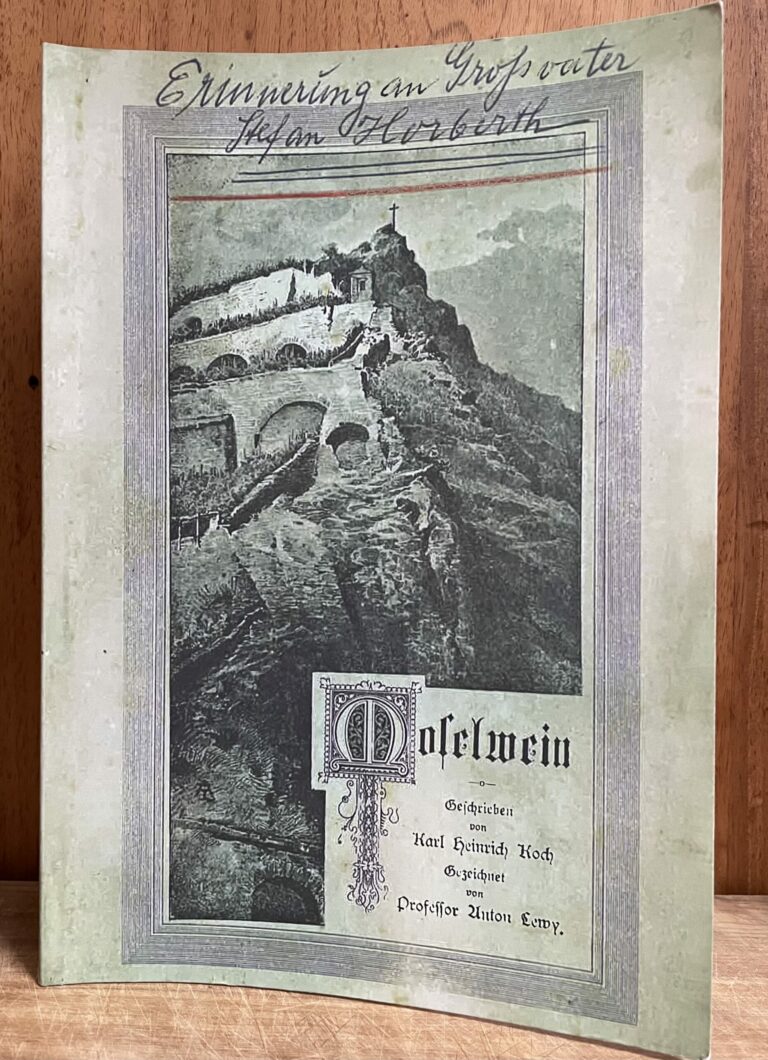
100 years ago this month, the Mosel spilled its banks. Not with water, with fury.
The resurrected Zach. Bergweiler-Prüm Erben wines from Weingut Dr. Loosen offer a new definition of Mosel Riesling: one where the winemaker’s role is found in surrender, not forged by control.
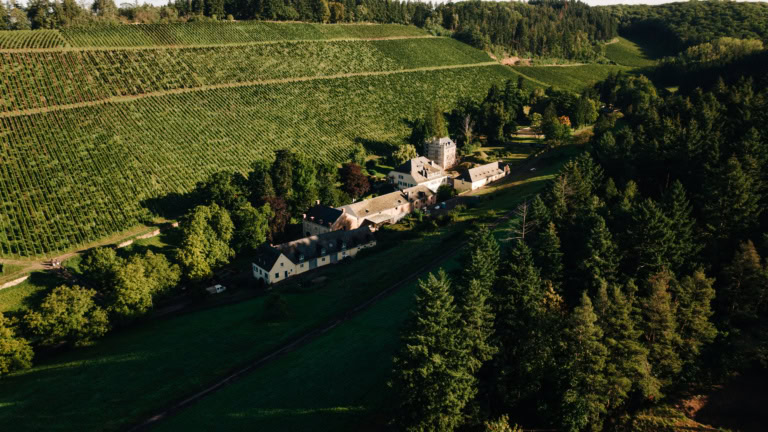
At a time when some Mosel producers are shedding vineyards like snakeskins, Ernst “Erni” Loosen, who already has 90 hectares at his disposal, is trying on a new one. A few years ago, a cousin of Loosen’s called to say he was selling a parcel. Lammertslay, a steep, mid-slope, two-and-a-half-hectare plot within the Wehlener Sonnenuhr, is hallowed ground for Riesling. The vines were largely wurzelecht (ungrafted), planted around 1895 in pure blue slate soil on a south-facing slope. Loosen was sold. The parcel had belonged to his great-grandfather, Dr. Zacharias Bergweiler-Prüm. Loosen saw it as a rare chance to honor…...
The power, pride and potential of old vines. And it turns out, the Mosel really could be where it all started..
Konzer Talchen is where the Saar keeps its cool.
Learn more about the most dynamic way to interact with 120 producers in just one weekend.
How a former chef's trip from the Norwegian Fjords to Germany's Mosel valley took wine appreciation to the next level.
A new direction is taking shape at an ancient estate in the Ruwer.
Winemakers in the Mosel are tending an old tradition that is budding anew. These modern Pinots reach for elegance and complexity, edginess and vitality. and the world is finally taking notice.
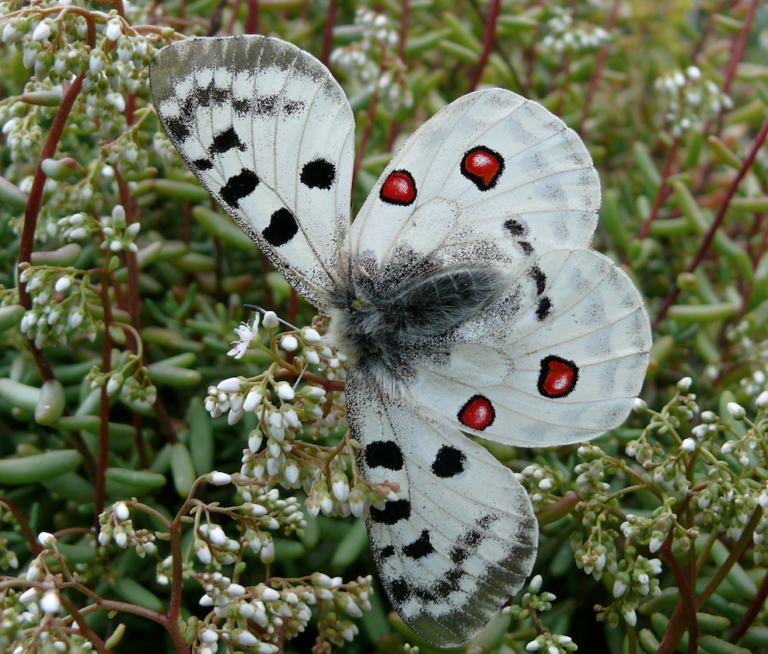
The future of the Mosel Apollo butterfly and its habitat of the Mosel terraces are endangered. Can a solution be found that allows both to continue to coexist?
Jonas Dostert is relaxing in the inner courtyard of his family’s Southern Mosel estate in Nittel. The sun is shining, the grapes were harvested in late October. Dostert is one of the growers of note at the southern end of the Mosel, a stretch long known as Obermosel. It’s a name many young growers in particular have rejected, as part of an effort to separate themselves from the region’s poor image in the past. “Obermosel” conjures images of accommodating, appeasing wines, the very definition of compromise. Dostert has quite a different understanding of winegrowing: “What I do is different from what’s…...
With production levels dwindling, many German wine circles are asking the uncomfortable question “Is Auslese finished?” David Schildknecht answers.
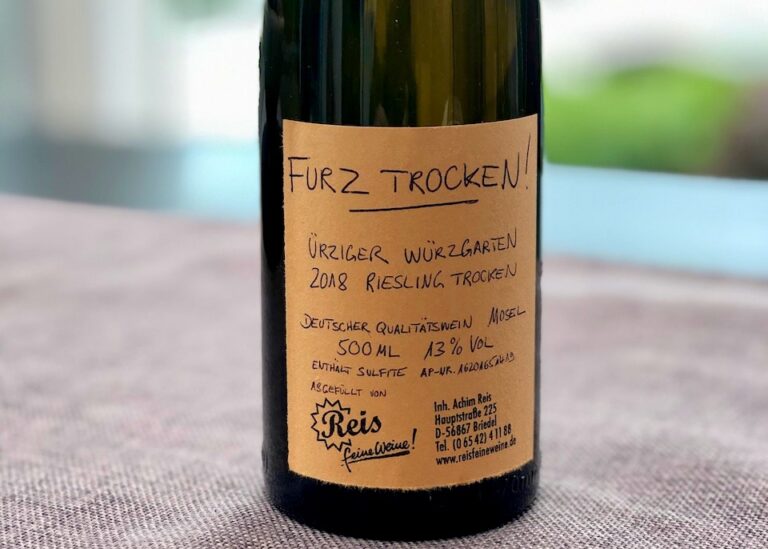
The dark wit of Berlin. Dangerously low water levels in the Rhine River. Black bread. Germany does trocken like few others. And then there’s the wine. Despite its reputation as the land of Blue Nun, more than 60 percent of the wines made in Germany are dry. And within that 60 percent, there are discernible levels of dry, drier, and driest. So dry, in fact, that there’s a strangely specific word for it. (Of course there’s a word. It’s Germany. There’s always a word.) Furztrocken. Fart Dry. Literally. As difficult to grasp as I find a term like feinherb, it’s Kinderspiel when compared to furztrocken. Then again, mindset…...
The Mosel, Germany’s oldest winegrowing region, knows how to beguile. The Rheingau swathes itself in the trappings of nobility, Baden boasts of its sunshine, the Mittelrhein beckons with Romanticism. The Mosel, however, reaches straight for myth. There are many recaps of the growing region readily available, so let’s focus on something else instead: what makes the Mosel unique — now, then, and, likely, in the future. Not for nothing is the biggest annual wine fair along the Mosel River entitled “Mythos Mosel.” The name, and the event itself, attest to the enduring power the Mosel holds in the imagination of the wine-drinking…...
This is a story for the wine romantics among us who dream of bygone varieties, who hunker down to listen to the old stone terraces telling stories of yesteryear, of those with a weak spot for growers and wines committed to character. It is in this world of nostalgia and nerds that this story is set. Enter Ulrich “Uli” Martin, a viticulturist from Gundheim in Rheinhessen. “Such a reliable companion!” he says. “Honest, direct, and amiable. You sense it immediately.” This high praise, however, is not aimed at his best friend, at least not in the traditional sense. Rather, at a grape…...
We like to think of Mosel wine as eternally glorious. The river valley’s nearly 2,000-year vinous history, its relics of Roman civilization and tributes to Celtic wine gods, its very viticulture carved with seeming permanence into stony banks all suggest an unbroken line. But an excellent new book, edited by Lars Carlberg, with able assistance from David Schildknecht, Kevin Goldberg, and Per Linder, underscores the extent to which the Mosel’s glory has been far more ebb than flow. Such awareness only makes the late 19th-century golden age that is the book’s focus more luminous. The book nests together several components…....
Not long ago, in my merchant days, I scored a few cases of mature Mosel wines from a grower I didn’t know. It wasn’t much wine, the prices were attractive, and I was able to eke out a few bottles for my cellar, which can never have too many ready-to-drink Rieslings. They were 1982s and 1985s. I had a wine friend over and opened one of the bottles to begin the evening’s festivities. “Oh I do like old Riesling,” my friend said, “And isn’t it amazing how well even a Kabinett can age?” “It is indeed,” I said. “But this isn’t a…...
On an early autumn night, in a quietly insiderish neighborhood of Queens, New York, deep beats and warping, hypnotic sound penetrate the stillness. Trapezoids of light slant onto the dark sidewalk through the broad windows of a corner restaurant, the music’s source. Silhouetted figures mingle and shift in projection. Robert Dentice, noted collector of Riesling and vinyl, stands near the door, a bottle of Keller Abts E — one of Germany’s, if not the world’s, most coveted wines — in hand, greeting new arrivals with hugs and heavy pours. Inside, there’s an invitingly louche aura of fin-de-siècle Vienna or Berlin. A slew of wine is open, almost…...