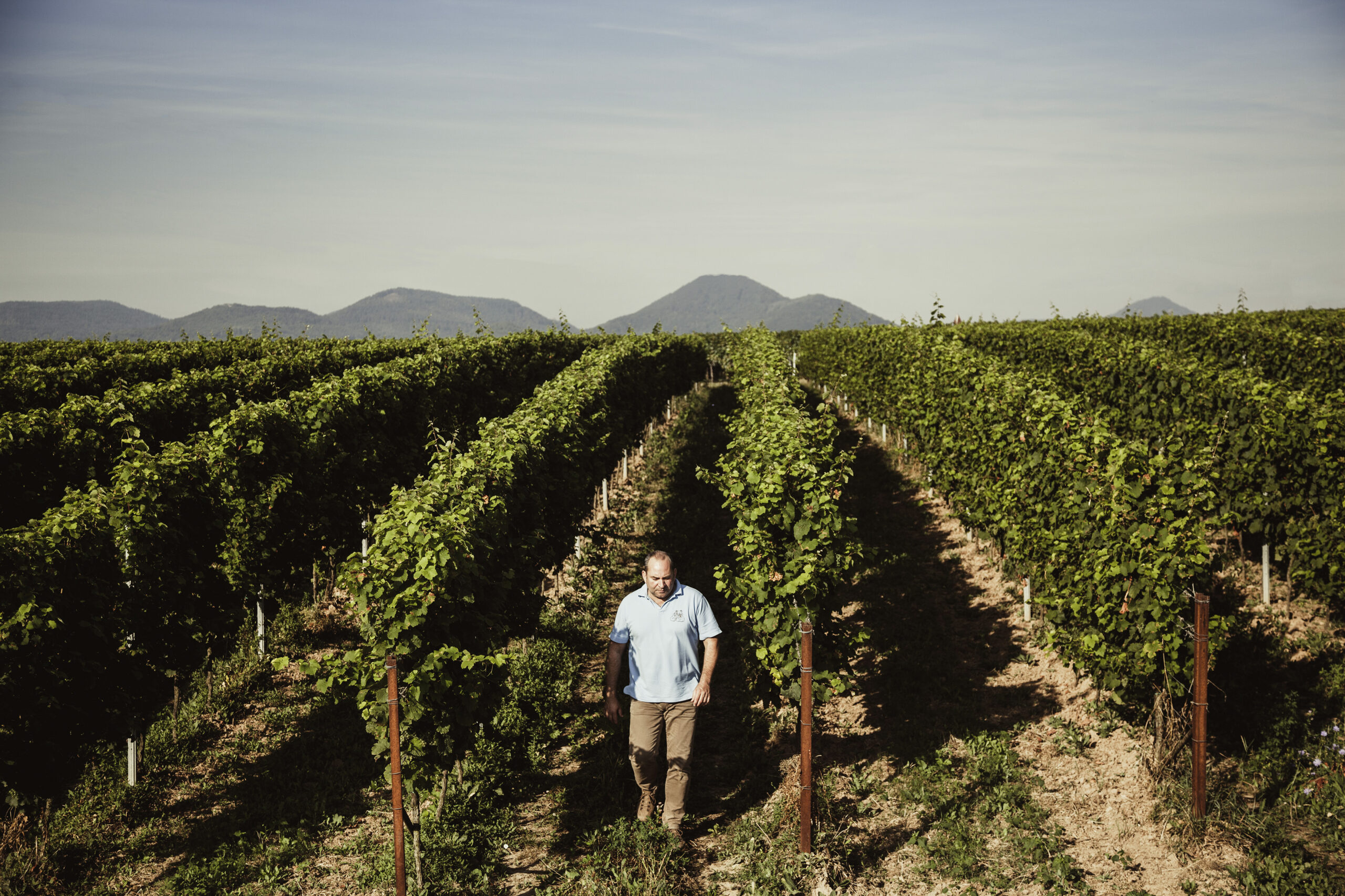
Zeter assesses the natural bounty of his home, the Pfalz, with the eye of a chef. The soils are his mise en place — the basis of his work — the grape varieties are the ingredients he brings to the table and the bottle. His favorite ingredient — Sauvignon Blanc — has become his trademark. This love came early: in South Africa, 1992, at the Buitenverwachting winery in Cape Town. Now, he is celebrating 15 years as a Sauvignon Blanc iconoclast himself. A recent vertical tasting spanning his first vintage in 2007 to the current release, 2021, made clear the value of following palate…
Kevin Puls works in advertising and PR. His passion for Austrian wine began nearly two decades ago and he's regularly tasted the vintages of the Alpenrepublik from the Wachau to Styria. His weakness for estates that work organically and for natural wines started with Gut Oggau's 2007 vintage. He's also a regular visitor to Franken. He blogs about food, wine, and the people who make them.
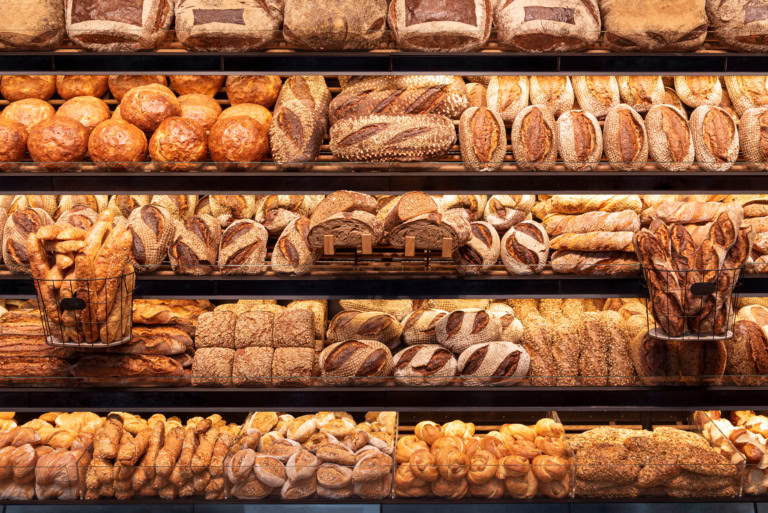
On a chilly April morning, I sat in the tasting room of an renowned old Alsatian winery, under the spell of an enchanting rose-and-peach-inflected, off-dry Gewurztraminer from vines right outside the winery’s door. I chatted with the person pouring the wine. They asked what brought me to Alsace. I answered that I had just studied German bread baking at the Akademie Deutsches Bäckerhandwerk. “I’ve never thought about German bread before,” they responded. We were less than 30 kilometers from the German border, in a town with a German name, at a winery with a German name. But they’d never even…...
The quiet whirr of my high-speed German train is a soothing reminder of Europe’s classy public transit I so miss in America. I’m headed south from Frankfurt towards a gentle landscape of vineyards, orchards and villages near the Rhine River and my Jewish father’s hometown. I’m much less comfortable with the muted conversations surrounding me. Like many children of Holocaust survivors, I grew up instinctively wary of the German language and all things German. I’m on a symbolic journey alone back to Landau, the market town where my grandfather Heinrich Levy was a winemaker in the Pfalz in 1920s and ‘30s,…...
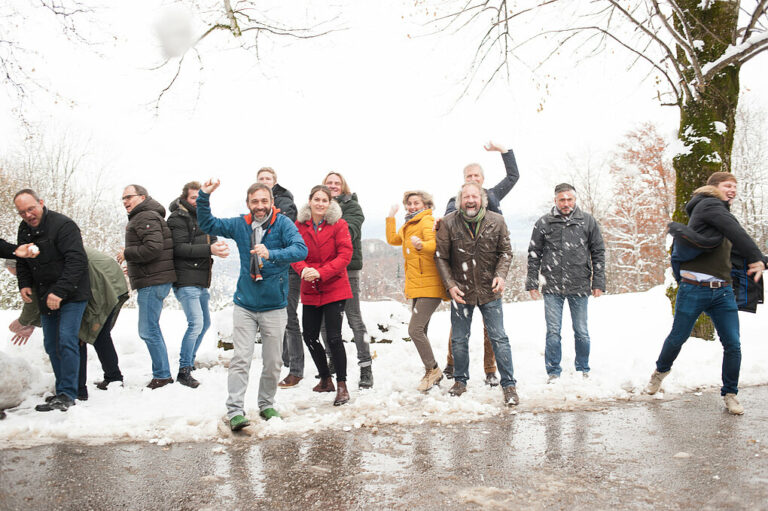
Why does biodynamics matter? Respekt-BIODYN is the ongoing effort of 25 growers from German-speaking wine regions to answer that question. Though there are many forms of holistic farming that benefit people, planet, vines and wines, this tight-knit Austria-based group believes that a shared commitment to viewing the teachings of philosopher and agricultural reformer Rudolf Steiner as a springboard for exchange, cooperation, shared learning, and support helps cultivate a sense of individuality that, ultimately, translates into more profound terroir expression and higher quality in their wines. Biodynamic Origins “The first 12 winemakers started in 2005,” explains the group’s leader, Michael Goëss-Enzenberg…...
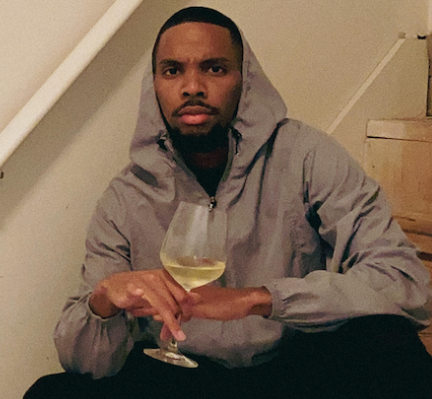
Mason Washington wants to set himself apart in the wine world. He’s convinced his German identity is the ticket. The 24-year-old digital media marketer grew up in Fayetteville, North Carolina, a small city in the American south that Washington charitably describes as being “what you make of it.” It was an unlikely place for a young Black man to be raised in a German family. But his grandmother Ingrid, a native of Berlin, and his mother, Carmen, born in Munich, were just that. “The biggest thing for me is the German heritage on my mom’s side,” says Washington. Now, he’s digging into…...
The Rheingau. A small, splendidly historic region of aristocratic estates and superb terroir awaiting an energizing charge. The steady ship in Germany’s often storm-tossed seas, navigating a course of admirable quality through the centuries. Its large estates set global benchmarks; its noble mien, iconic landscapes, and heralded vineyards have always set it apart. In recent times, however, the Rheingau’s identity has become somewhat obscured by the dominance of large, in some cases impersonal estates and global warming has diminished its long-held prominence as one of the few German wine regions capable of achieving consistent ripeness. If it is often described as “underachieving,” the word does hint at…...