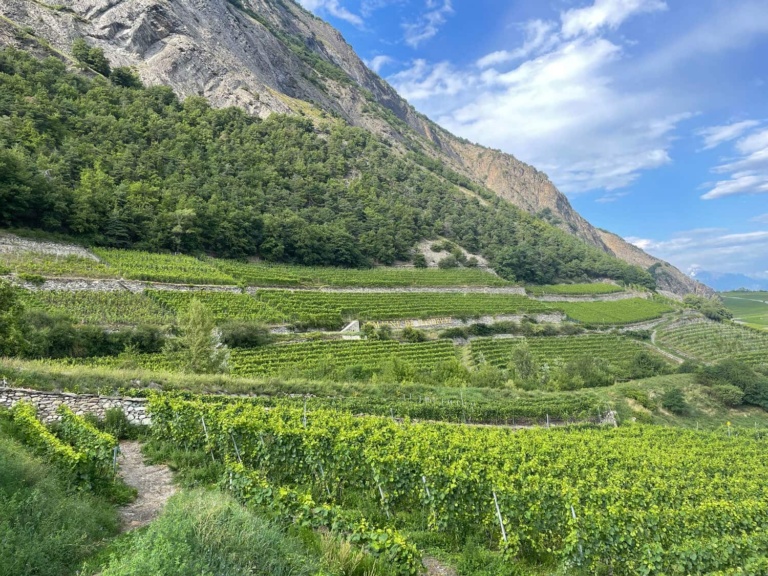
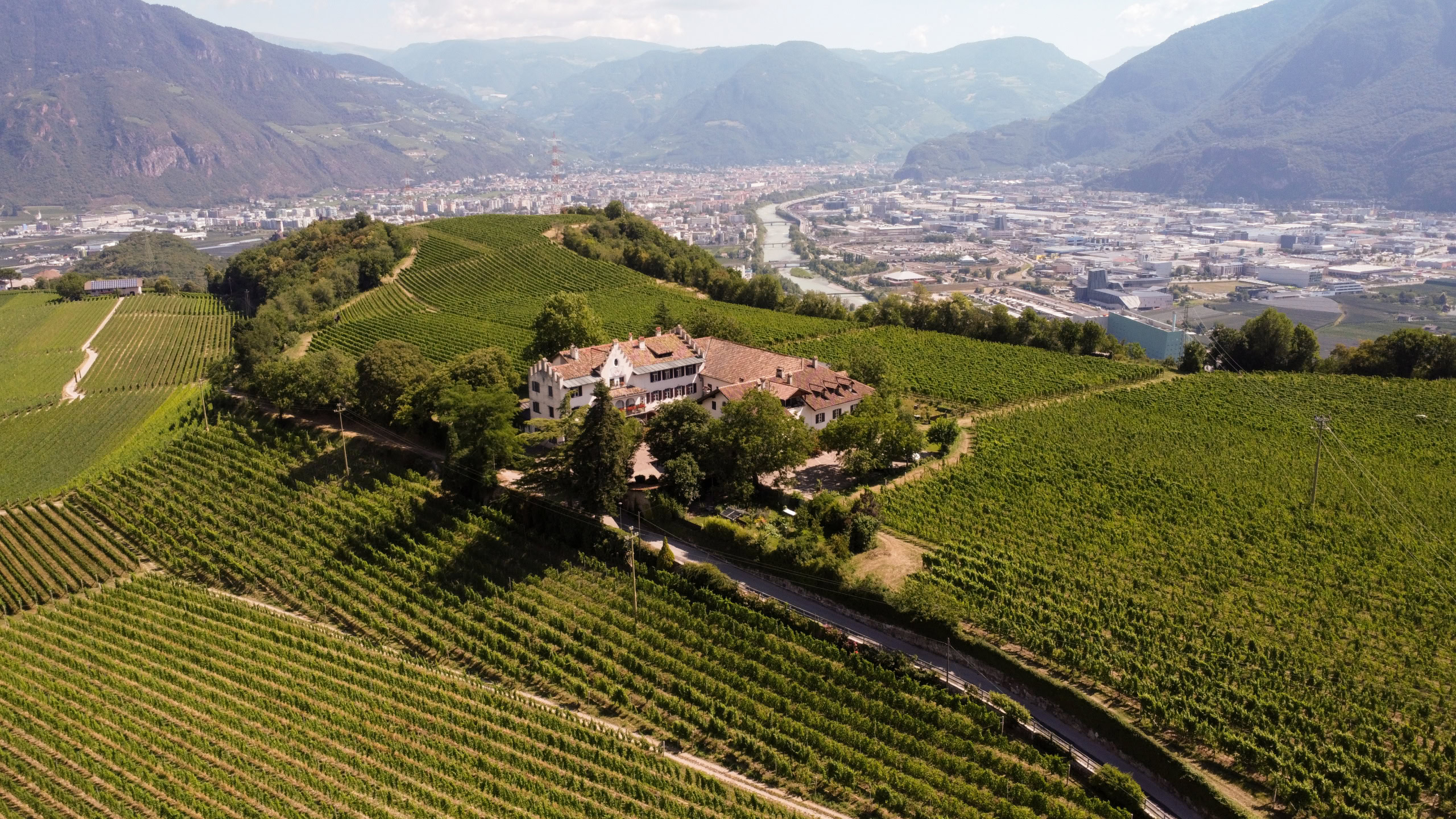
“The Foehn wind is a real affineur of grapes . . .” from the diary of Weingut Bründlmayer Evidence from wine regions everywhere suggests that if cool climate viticulture is to survive, then it must move north — or, in Switzerland’s case, up. Warming temperatures in formerly marginal regions such as Burgundy and Piedmont now require changes in viticulture and/or additions to the permitted roster of grapes just to keep up. Even with successful change, however, the freshness, delicacy, and intricate architecture we love in Pinot Noir and Nebbiolo may be harder to come by. By contrast, Switzerland and parts…
After a career in the restaurant business, including several detours into wine, I came to Switzerland to marry the love of my life, my wife Veronica. Little did I know the local wine scene would grab my attention as well. The diversity of grapes and styles in Switzerland is amazing and with the new youth movement firmly in place, the Swiss are riding a wave of innovation and self-discovery. My blog artisanswiss.com is a sketch pad, of sorts, for the reference book I'm writing and the impetus to travel to every corner of the country in search of the story. So far, it's been a most rewarding journey.
It was biodynamic wine that helped me to find my footing in Europe. Yet, as a Black American woman living in Europe, Rudolf Steiner's interests and views present a complicated and troubling legacy.
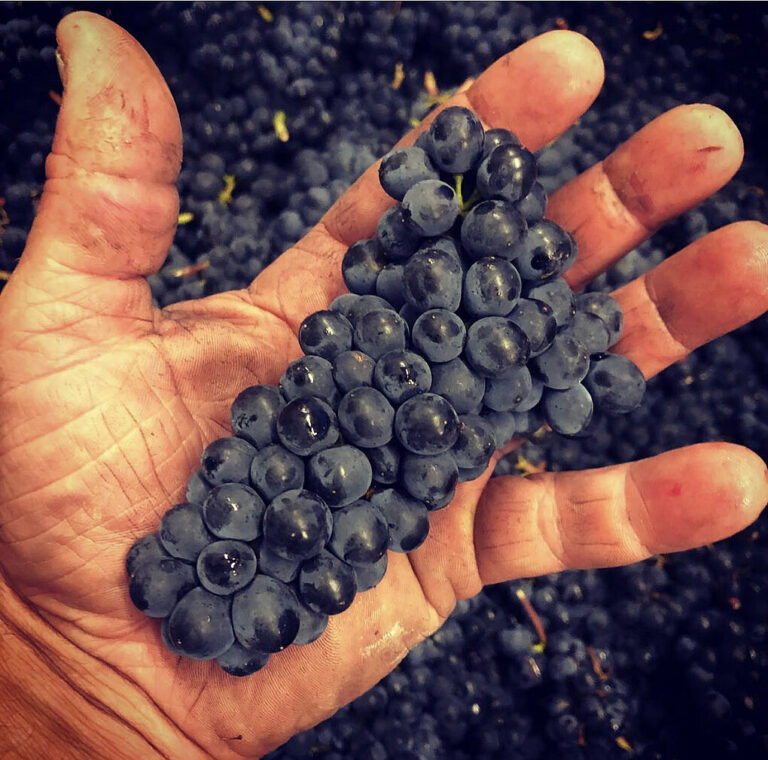
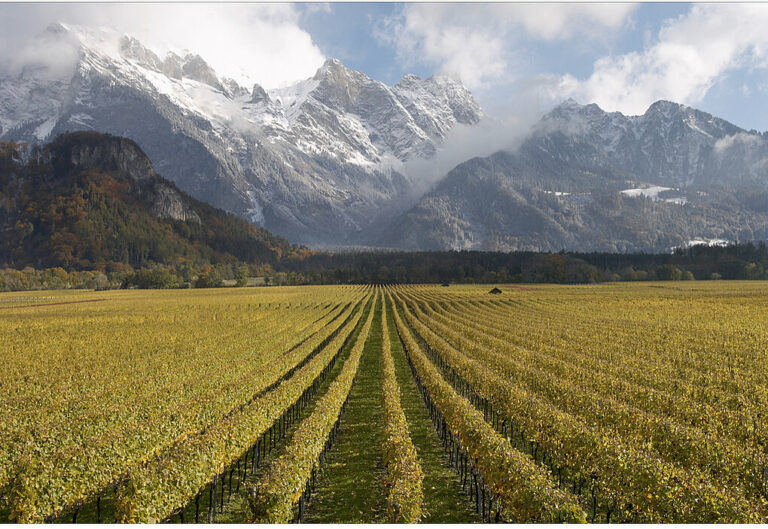
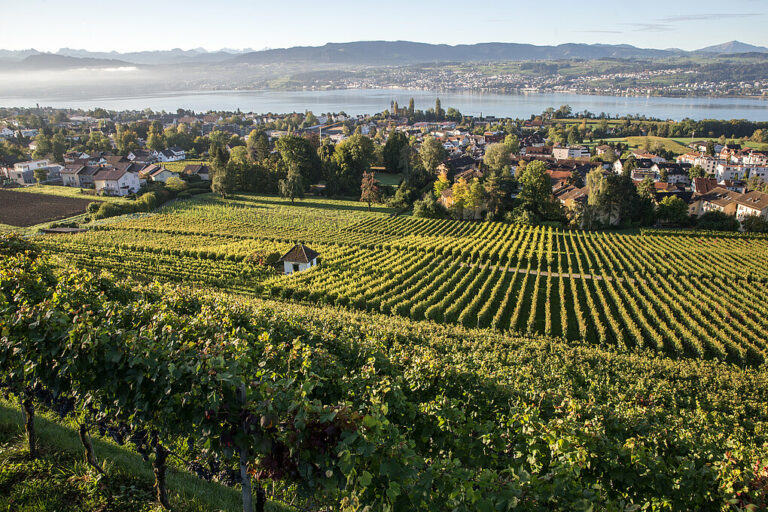
Pinot Noir from Switzerland? Gantenbein! Donatsch! Hardly another country exists whose reputation among international wine lovers for producing quality wines from this variety boils down to just two names. It’s high time that other Swiss producers get some of that spotlight – and there’s no reason why they shouldn’t come from the Canton of Zürich. Deutschschweiz, the sizable swath of eastern Switzerland that is German-speaking, is Pinot Noir land. Reportedly, the vine was introduced to Graubünden in 1631 by the Duke of Rohan, as a gift to local farmers, to win them over as mercenaries during the 30 Years War…....
As more cool-climate regions like Germany's Mittelrhein seek grapes that can beat the heat, the rare Swiss variety Petite Arvine offers a surprising possibility.
For most of us, it would be easier to climb the Matterhorn in flip-flops than to lay hands on a bottle of wine made by Daniel and Martha Gantenbein. The couple painstakingly grow and make minute quantities of Pinot Noir, Chardonnay, and Riesling on 6 hectares of high Alpine valley in German-speaking Switzerland. Before the wines have even been bottled, each and every one is already sold to long-time customers. How has this modest couple, working in unheralded terrain, become the emblem of Swiss wines par excellence? After nearly 40 vintages, Daniel and Martha have fine-tuned every element within their control — from…...
March 25, 2024 Update: Schmetterling has closed. It’s owners hope to reopen in the future. Are there parallels between German and Austrian wines, small-scale farming, and the queer community? If so, the most essential may be a shared need for safe space. Schmetterling, a queer-forward natural wine and vinyl shop that opened this summer in rural Vermont, aims to offer just that. By prioritizing the needs of communities at — admittedly starkly unequal — risk, owners Danielle Pattavina and Erika Dunyak have created an unlikely outpost for low-intervention German, Austrian, and other Alpine wines. The shop is both an incubator…...
Räuschling isn’t just wonderfully umlauted, it’s also one of the most exciting autochthonous white wine varieties in German-speaking Switzerland. This became clear to me on a March afternoon in 2015. I had accepted an invitation from Mémoire des Vins Suisses to come to Zürich and take part in a Räuschling vertical tasting — featuring vintages that stretched back to 1935 — at Weingut Schwarzenbach in Meilen on Lake Zürich. Since then, I taste every Räuschling I can get my hands on. The lively acidity, fine citrus aromatics, and aging potential of this rare variety fascinate me over and over. Native…...