Don’t let anyone tell you those rocks are a waste of time. Twenty-five years from now, sitting in a Koblenz classroom on your first day of wine school, you will be grateful for each and every one of them. Because there in the heart of German wine country, those stones and their secrets — though you don’t know it yet — will be the foundation keeping you steady among your more experienced classmates, those vintners’ sons and daughters who boast seven, ten, 15 generations in the business, and counting. All while you are still trying to locate the Mosel on…
Paula Redes Sidore moves smoothly between the worlds of wine and words. In 2012, she founded Weinstory, a creative content and translation agency dedicated to transposing the world of German-speaking wine into English. TRINK is the natural extension of that pursuit. She is the German and Austrian regional specialist for jancisrobinson.com and a member of the Circle of Wine Writers. Paula has a Masters degree in fiction writing, and her work has been featured in jr.com, Sevenfifty Daily, Feinschmecker, and Heated. She lives on the northern wall of wine growing with her family in Bonn, Germany.
Piri Naturel is Christine Pieroth's independent line of natural wines in Germany's Burg Layen. Her wines bring a breath of fresh air to more straightforward Nahe’s wine scene.
What does one drink, when one doesn’t drink? Isabella Steiner opts for an oat milk latte. On the sun-kissed, hipster corner of Berlin known as Paul-Lincke-Ufer, a line for almond croissants forms from a crowd that looks more house party than home office. Steiner takes her spot, her poodle-mix by her side. Steiner and her business partner, Katja Kauf, manage Nüchtern Berlin, a platform for “Sober Culture — Made in Germany.” It appears to tap into something even deeper than the global wellness trend. “The selection of non-alcoholic alternatives [in Germany] rose sharply in 2020,” says 32-year-old Steiner. “This year they…...
Words are like viruses. They appear in culture and may lie dormant then suddenly they are everywhere, swirling about, adapting to their hosts, mutating to survive. In the wine world, this process can happen fast. "Purity," it turns out, is anything but pure.
We British are not the world’s most noted linguists, but that doesn’t seem to put off some of us from drinking “German-speaking” wines. That said, the market for these wines has had a rough ride at times, which makes their current increasing popularity all the more intriguing. Germany has historically boasted a well-established presence in the U.K. wine market. In the 19th– and early 20th– centuries German wines were famously on par with Bordeaux, Burgundy, Champagne, and Port in terms of price. After the fall of Napoleon, the Rhineland and the Mosel both entered a period of prosperity, initiated by…...
Why does biodynamics matter? Respekt-BIODYN is the ongoing effort of 25 growers from German-speaking wine regions to answer that question. Though there are many forms of holistic farming that benefit people, planet, vines and wines, this tight-knit Austria-based group believes that a shared commitment to viewing the teachings of philosopher and agricultural reformer Rudolf Steiner as a springboard for exchange, cooperation, shared learning, and support helps cultivate a sense of individuality that, ultimately, translates into more profound terroir expression and higher quality in their wines. Biodynamic Origins “The first 12 winemakers started in 2005,” explains the group’s leader, Michael Goëss-Enzenberg…...
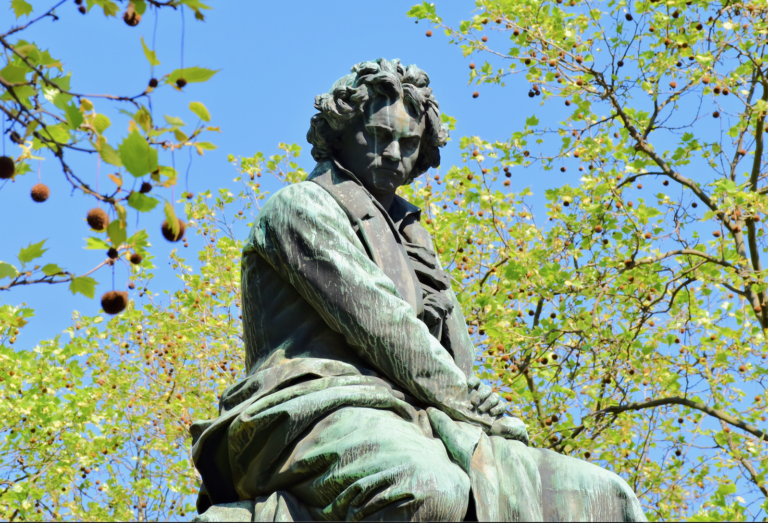
On the dark morning of March 26, 1827, a heavy snowstorm was falling outside the fogged window panes of Ludwig van Beethoven’s Vienna apartment. Everything was unusually quiet in this space, so customarily filled with music. Beethoven’s house servant walked into the room to announce that a long-awaited shipment of Rheingau Rieslings, wines sent at his behest by his music publisher Schott, had just arrived. Barely able to muster the energy, the composer sat up in his bed, shook his fist in anger, and muttered these very last words: “Pity, pity, it’s too late…” He sank back into his bed,…...