Watercolor by Werner Krumsiek, used with permission of artist
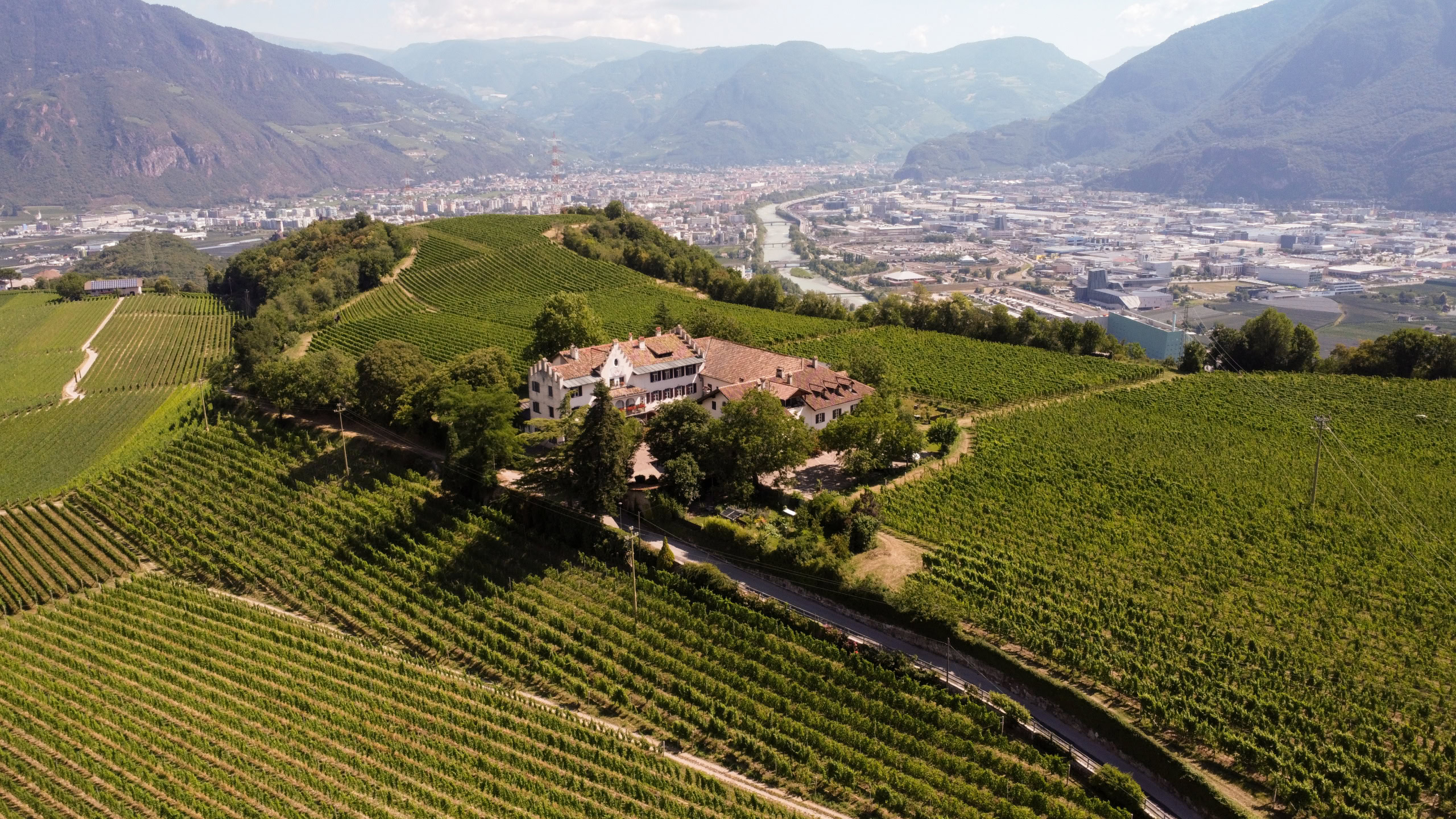
By Rudolf Trossen The sun recedes, the summer wanes,the ripe grapes long since gifted.A chill arrives under the guise of evening wind,Long shadows stretch heavy like leadacross golden vineyards’ last light. Alone on the slope,I watch in silence. But in old caskschurns young wine,roaring with the summer’s solar might,lust and longing into the night,cheering, laughing, singing bright. I bow beforethe deity’s vigor. November 1994 From the collection Was die Reben Sagen Translated September 2021…
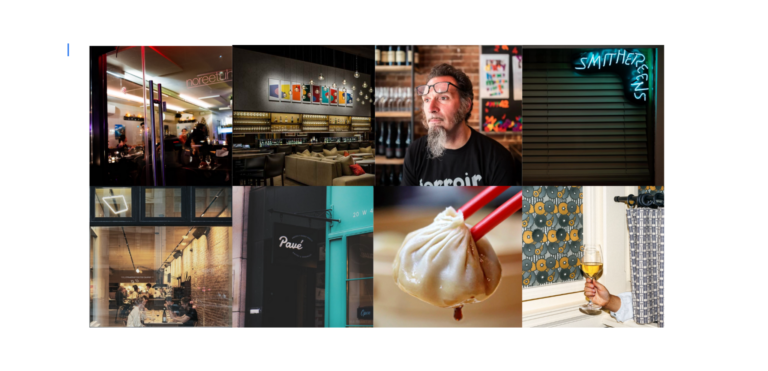
Whether you’re dropping into town for the bacchanalia that is Rieslingfeier or you’re a native New Yorker curious to get a taste of the latest and greatest in German and Austrian wines, here’s your hit list of bars and restaurants that make NYC the country’s best (if priciest) city to drink auf Deutsch. Updated November 2025 to remove Koloman, which has closed. G = German focus A = Austrian focus Noreetuh (G) Manager and co-owner Jin Ahn has turned this decade-old Lower East Side Hawaiian spot into the city’s ultimate insider Riesling hangout. Ahn’s exceptionally well-informed list is divided into Rieslings…...
Known to his 18,000-plus Instagram followers as @soilpimp, Robert Dentice is a German wine collector and vinyl fanatic, founder of the Riesling Study event series, and a driving force behind a brand new project called sourcematerialwine that is set to spread his evangelical zeal for German wine to the wide world. Short of spending an evening at one of his legendary Riesling-, Silvaner-, or Weissburgunder-fuelled music events — and he’d sincerely love nothing more than to have you there — the next best way to get a sense of the radiant positivity he brings to German wine is to cue…...
It’s an unfortunate paradox: the very climatic conditions that leave us thirsting for lightweight, refreshing and soul-satisfying dry wines render these hard to achieve. Yet, rather than leading the way in surmounting this viticultural challenge, Germany’s Riesling establishment routinely throws up roadblocks. That’s a crying shame. THE CURIOSITY OF “KABINETT” To understand what’s become of “Kabinett trocken,” we must first retrace the steps leading to “Kabinett.” “Cabinet,” as a term applied to German Riesling, dates to 18th-century Rheingau, a derivative of “Cabinetstück” (alternatively, “Kabinet[t]stück”), in use for diverse objects worth displaying in a cabinet of curiosities or, by extension, worthy literary and…...
There’s no end to writings about how wine affects people. It begets relaxation and well-being, of course, but also stimulating discussion. The right bottle can be just the spark needed to light up a dull evening. But can certain wines channel our moods and perceptions — our very psychology — in different ways? This question was often posed by Wolf-Dietrich Salwey, a vintner who passed away in a car accident in 2011. Known for his unconventional character, Salwey routinely invited neighbors, colleagues, and friends to his estate in Oberrotweil in the Kaiserstuhl to explore the influence of specific grape varieties…...
Hans Ruck, 74, is fully at home in front of a stove. The German vintner, of Weingut Ruck in Iphofen, has been a serious chef for five decades, with a healthy stash of self-composed recipes — all harmonized to the wines from his estate at the edge of the Steigerwald in central Franken. “I’ve never had a beer with a meal in my life,” Ruck claims. “The harmony between food and wine is what truly brings the enjoyment.” Once Ruck gets rolling, it’s hard to stop him. You soon feel like you’re standing at the stove with him, peeking into…...