For a Jewish baby boomer like me, the Holocaust was always part of my DNA. Yet, I was not the child of survivors. My Polish grandparents were safely in the United States by the 1920s. The family they left behind were mostly killed. In yeshiva, where I spent a dozen years splitting my curriculum between religious and secular studies, we were frequently subjected to footage of emaciated bodies, piled up for burning or disposal. Teachers didn’t hide the numbers tattooed on their arms. But the personal horror stories my cousins told of Polish concentration camps and ghettos were the images…
Alice Feiring is a journalist, author, and natural wine expert. Her book titles include Natural Wine for the People, The Dirty Guide to Natural Wine, For the Love of Wine, Naked Wine, and The Battle for Wine and Love. Her newsletter, The Feiring Line, focuses on natural, organic, and biodynamic wines from the ground up.
The Jewish State was proclaimed in 1948; the Federal Republic of Germany founded a year later. There was a pregnant pause when many wondered if West Germany would acknowledge the past. In 1951, Chancellor Konrad Adenauer acknowledged Germany’s “unspeakable crimes toward Jewish people.” The spell of silence was broken, and Israeli Prime Minister David Ben-Gurion and Adenauer began the long, painful, still unfinished journey toward healing. In the decades since, the people of Germany and Israel have followed their lead, with financial and cultural exchanges that each serve as a profound demonstration of human transcendence. It’s clear we have much…...
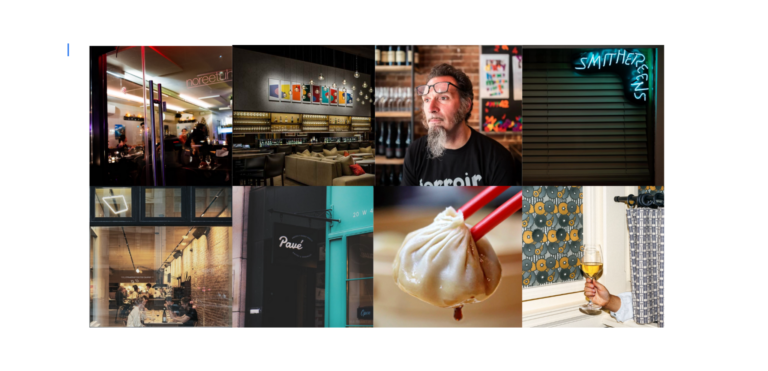
Whether you’re dropping into town for the bacchanalia that is Rieslingfeier or you’re a native New Yorker curious to get a taste of the latest and greatest in German and Austrian wines, here’s your hit list of bars and restaurants that make NYC the country’s best (if priciest) city to drink auf Deutsch. Updated November 2025 to remove Koloman, which has closed. G = German focus A = Austrian focus Noreetuh (G) Manager and co-owner Jin Ahn has turned this decade-old Lower East Side Hawaiian spot into the city’s ultimate insider Riesling hangout. Ahn’s exceptionally well-informed list is divided into Rieslings…...
Not long ago, in my merchant days, I scored a few cases of mature Mosel wines from a grower I didn’t know. It wasn’t much wine, the prices were attractive, and I was able to eke out a few bottles for my cellar, which can never have too many ready-to-drink Rieslings. They were 1982s and 1985s. I had a wine friend over and opened one of the bottles to begin the evening’s festivities. “Oh I do like old Riesling,” my friend said, “And isn’t it amazing how well even a Kabinett can age?” “It is indeed,” I said. “But this isn’t a…...
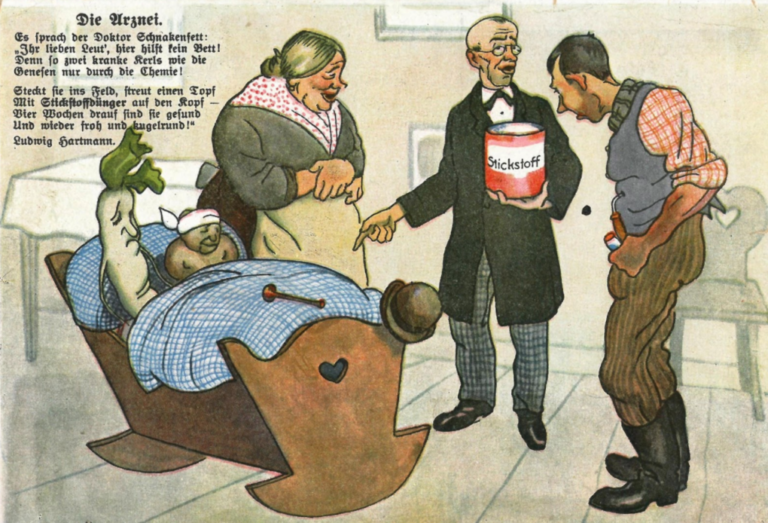
Above, a postcard from the German fertilizer industry of the 1920s. At the time, perspectives on soil were changing: Until then, people had spoken of plant growth as being affected by forces; afterward, it was substances. Deficiencies could simply be addressed with the help of agrochemistry. As recently as a decade ago, biodynamic viticulture could be shrugged off as “some dogma about phases of the moon and cow horns.” But now that we find a who’s who of the wine world on the member lists of relevant biodynamic organizations, it’s no longer so easy to cancel adherents to this form of farming. Those…...
Melanie Broyé-Engelkes, a seasoned marketing executive and entrepreneur from Paris and Luise Böhme, a former nationally competitive athlete from eastern Germany, have joined Theresa Olkus, a communications specialist from Württemberg, to form a triumverate that — in ways large and small — now steers the future of German wine.
12/14/2020 Eat & TRINK | Alpkäse and Kamptal Riesling By Ursula Heinzelmann The entirely spontaneous, yet infinitely harmonious tinkling of cow bells. The crunching of my boots along a narrow mountain path. The joyous gurgling of a stream winding its way down among rocks, moss, and roots. This is one of my favorite cheese soundtracks. The accompanying “smelltrack” is of warm stables in the haze of first light and earthy, pungent bodies, redolent of the basic facts of life. Wood smoke rising from under a round copper vat. And of course the reassuring, lactic aroma of warm milk and whey,…...