Restaurant Sheepskamel, Photo Credit Bart de Vries
“When I started drinking wine, wine was French,” my father told me recently over dinner at Scheepskameel, a Dutch restaurant known for its excellent wine menu. He never spends more than 10 euro on a bottle, and rarely drinks white, but that evening he unexpectedly admitted, he preferred our glass of German Riesling to our bottle of red Bordeaux. A few days later, I hosted a Riesling tasting for some serious wine friends. They have accounts with posh traders and their own cellars, which are typically stocked with Burgundies and Bordeaux. They were impressed. But, I wondered, would they buy…
A geographer by training, Bart’s understanding of soil, geomorphology, and climate, important factors in winemaking, was kindled at an early age. But it was his move to Basel, on the doorstep of Baden and Alsace, that really stirred up his interest for wine. Since his studies at the Austrian Weinakademie, wine has been his profession. Apart from writing for several European publications, such as Perswijn (NL), Apéritif (Norway), Metropole (Austria), Bart organizes wine trips and moderates tastings. An avid amateur flautist, Bart is also very honored to be writing the English program notes for the Sinfonieorchester Basel for the fourth season running.
Silvaner. It’s complicated. Ask about its nature or character, and like as not you’ll get one answer: asparagus. With delicate vegetal aromas and moderate acidity, Silvaner is indeed a near perfect pairing for the fabled stalk that emerges from the earth to fill German grocery stores and market stalls annually between April and June. Yet, stop for a minute and imagine: what if there were more? Silvaner is viewed as a national counterpoint to Burgundian Chardonnay or Saumur Chenin Blanc. For many years Silvaner was Germany’s most important grape variety, less inclined toward fruity fun and more toward structure, texture, spice, and earth. De facto it…...
As more cool-climate regions like Germany's Mittelrhein seek grapes that can beat the heat, the rare Swiss variety Petite Arvine offers a surprising possibility.
“Free your mind and the rest will follow.” Coming from one of the co-owners of Germany’s oldest wine trading houses, one might suspect a quote from Goethe, Schiller, or Nietzsche. It’s actually the American R&B/pop group, En Vogue. And that makes for a jarring, if fitting, introduction to my conversation with these stewards of tradition in German wine that look back to 1786 in Worms as easily as they look ahead to 2019 Organic Madonna. P.J. Valckenberg has the history and the pedigree, no question. Its customers have included the Swedish royal family and Charles Dickens. In addition to a truly impressive portfolio…...
For the longest time, Sekt was a dirty word. It stood for bottles of inexpensive, easy fizz with obnoxious plastic corks to be found on the street, next to the debris of spent fireworks, on New Year’s Day. Leftovers from high jinks and cheap thrills the night before. But that was then. Today, Sekt’s star is once again on the rise. We cannot even say that it is returning to its former glory because the story of German Sekt today is unprecedented and, quite literally, effervescent. It was the 20th century that destroyed with consummate efficiency what was once so promising, so frivolous,…...
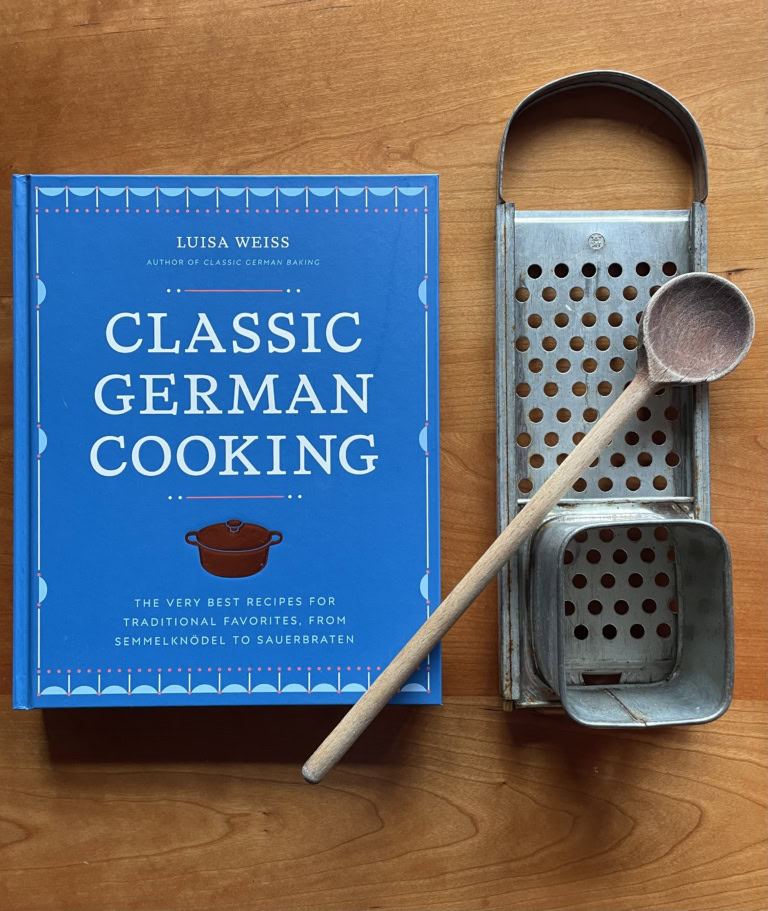
“Germans are particularly nostalgic about the food of their grandmothers,” writes Luisa Weiss, furnishing a sturdy thesis for her handsome, welcoming new cookbook. Weiss, whom you may — should — know, is a food writer. She was born, partly raised, and now lives full-time in Berlin. She blogged about food for more than a decade from New York as The Wednesday Chef, then moved to Germany. There she wrote her way deeper into the German culinary world: the food-driven memoir My Berlin Kitchen: A Love Story with Recipes (2012) and Classic German Baking (2016). She now writes a Substack organized…...