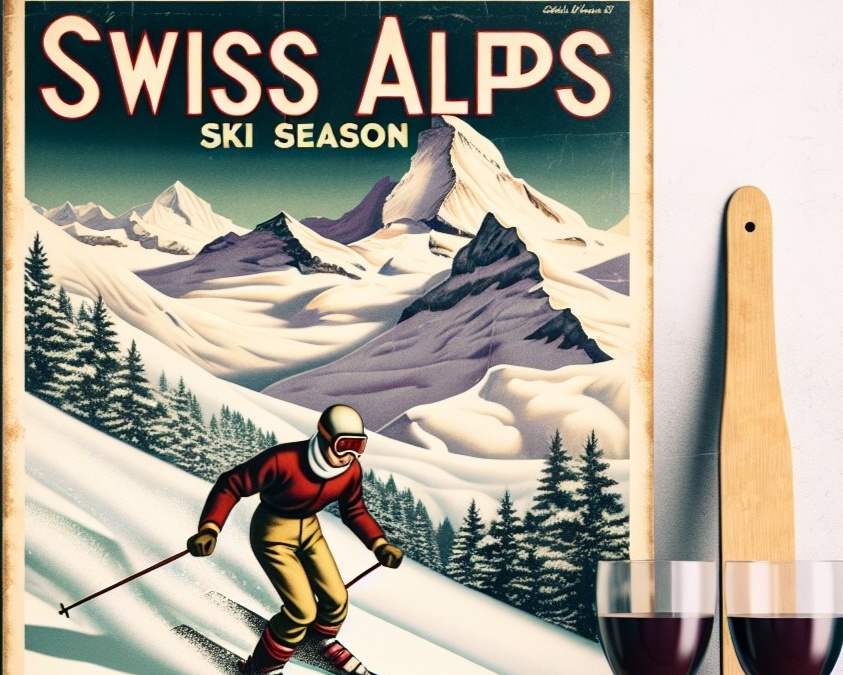
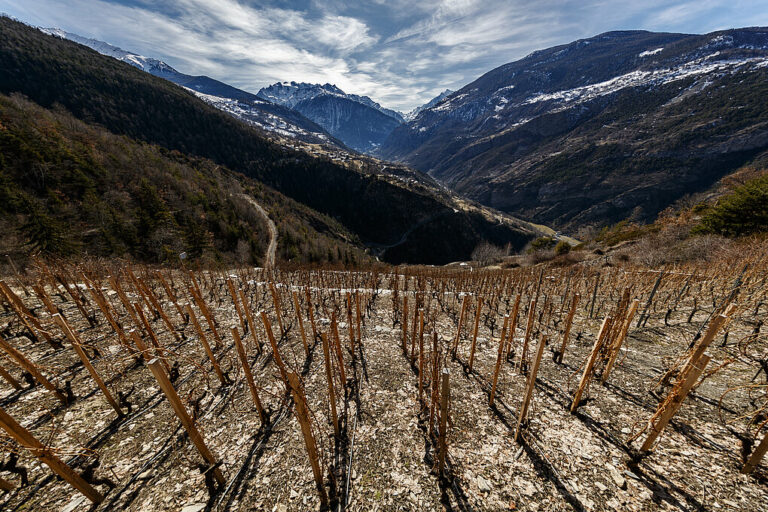
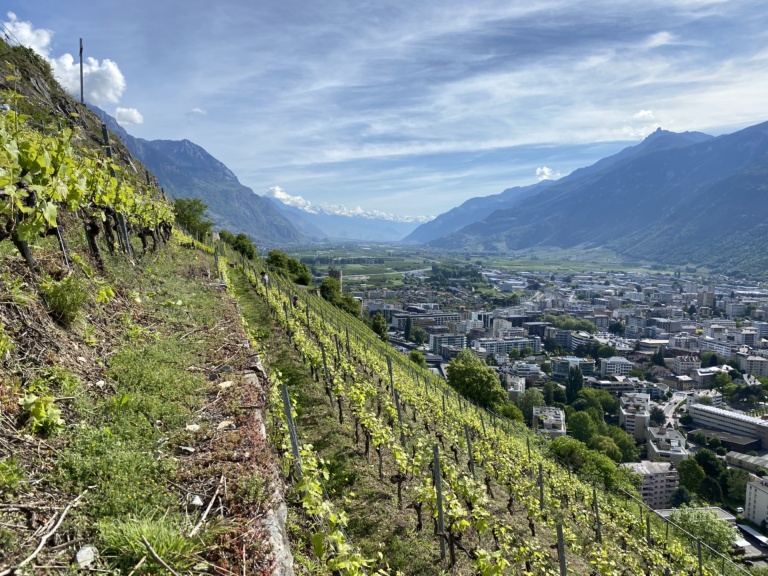
In most wine regions, it’s common to think of harvest as the season’s grand finale, giving way to a quieter period spent in the winery and cellar. For Switzerland’s premier winemaking cantons of Wallis and Graubünden, however, the wine is barely in barrels before these regions face an even busier time: ski season. In Switzerland, skiing and tourism are intertwined, notwithstanding a strong domestic affinity for the sport. The practice in its modern form was imported from Norway in the 1890s. It was initially embraced by members of the British upper class taking winter holidays in resort areas such as…
Alexandra McInnis is a wine writer and professional based in New York City, with a passion for cool climate wines. She is also the co-founder of the Alpine Wine Society, a newsletter exploring Alpine wine, food, and lifestyle.
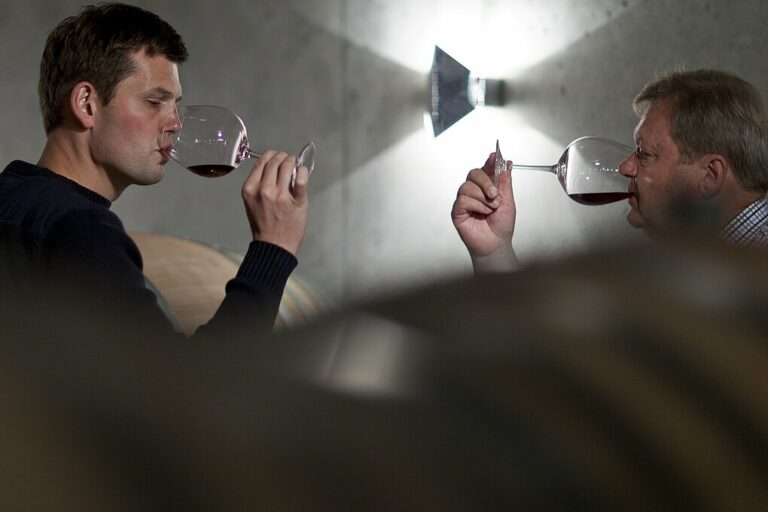
The Donatschs were never conformists. Starting in the 1970s, Thomas Donatsch of Graubünden turned the Swiss wine landscape on its head with his illegal Chardonnay plantings and barrique experiments. In 2019, his son Martin broke the price record for Swiss wine with his Réserve Privée. Yet it hasn’t always been easy. A conversation with Martin reveals a few of the reasons why Swiss wines remain an insider secret. When it comes to wine, what makes Switzerland so unique? Switzerland is an extremely multifaceted country. Two radically different regions can exist within mere kilometers of each other. Ticino for example embodies…...
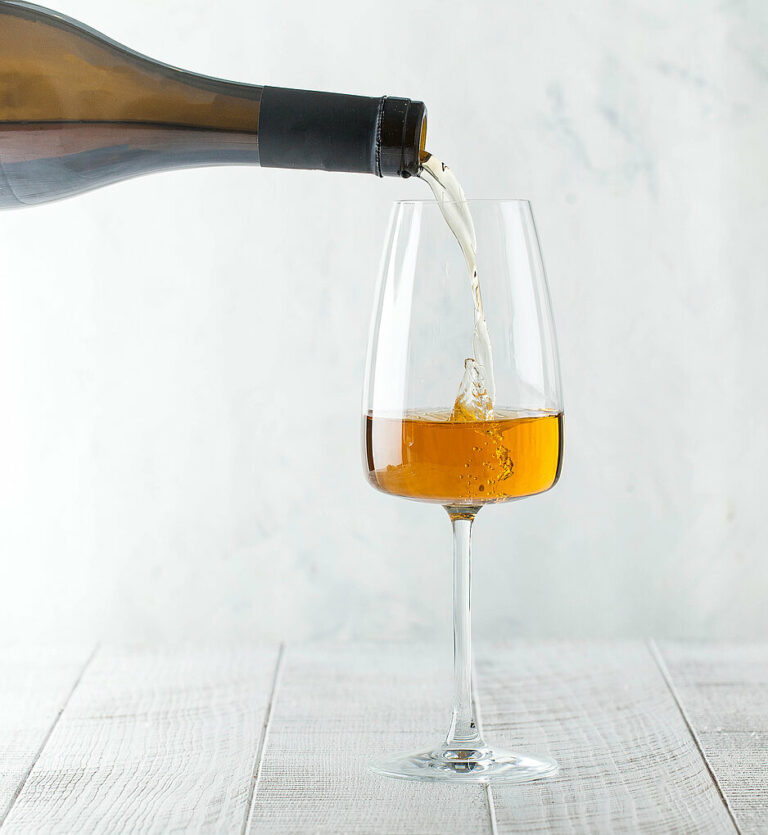
Skin-contact white wines may have their revolutionary roots in Georgia, Slovenia, and Friuli, but the umlaut zone also stakes a strong claim for orange expressions. Austria was an early and highly successful adopter (think Tschida and Tscheppe, Muster and Meinklang). For this, thank geographic proximity, shared traditions, a former empire’s worth of fascinating white varieties, and the remarkable open-mindedness of producers, especially in Styria and Burgenland. Germany came later to the game. The country has been slower to embrace natural and experimental styles generally and its signature variety, Riesling, requires an exceptionally deft hand to succeed in skin-fermented form. However, German…...
The lure of 007 and having bubbles at their fingertips in the Bollinger Suite pulls some people into Erlinsbach, in northern Switzerland, for a night or two of intrigue. Others fantasize about being lulled to sleep surrounded by gently aging (shhhh) vintage Burgundies in the Wine Cellar Suite. For the rest of us, it’s a simpler dream of a night that opens with great food and a hard-to-find bottle of a Swiss vintage wine. Albi von Felten was ahead of his time when he bought the Landhotel Hirschen from his parents 22 years ago. He and his wife Silvana are gratified to…...
The world of sparkling wines is changing for the better. The number of producers approaching this beverage in serious, artisanal, and creative ways continues to climb. “Grower Sekt” from Austria and Germany is very much en vogue. We are witnessing a tremendous push to quality. For a long time, “mass over class” was the motto, especially in Germany. But for a new generation, awareness of terroir and a trend toward reducing residual sugar are increasingly the focus. No stone has been left unturned in Austria, either. For several years, Austrian Sekt has been governed by a three-tiered quality pyramid: “Sekt…...