My first true Blaufränkisch moment came in 2013, at a now-shuttered restaurant in Hamburg. Thirty-six bottles from a swath of Austria’s appellations stood open for tasting, from classics like Prieler’s Goldberg 1995 to Marienthal from Ernst Triebaumer to Ried Point from Kolwentz. Those wines impressed me, as they had in the past, even as they failed to inspire me. This time, however, other wines had joined the lineup. The Spitzerberg of Muhr-van der Niepoort (today Weingut Dorli Muhr) , for example; the 2010 Reserve Pfarrgarten from Wachter-Wiesler; and the 2002 Lutzmannsburg Alte Reben from Moric. Suddenly, I was electrified. The wine in the glass was entirely unlike anything I…
Christoph Raffelt is one of an exciting new vanguard of voices when it comes to German wine. And voices is not a euphemism here, as it is indeed his voice together with his stellar cast of winemakers and guests that come together on his monthly podcast Originalverkorkt.de; while his words appear in his online magazine of the same name. He's been on the road since 2016 with Büro für Wein & Kommunikation as a freelance journalist, copywriter and all-round wordsmith. His work has appeared in such esteemed publications as Meiningers, Weinwirtschaft, Weinwelt, Sommelier, Champagne-Magazin and Schluck.
Was everything really better in the past? Well, people were at least more patient. Vaccines were developed over the course of years. Under Communism in eastern Germany it could take up to a decade to get a car. OK, bad examples. But even food and drink were given more time. Today, fermentation and preservation are back on the front burner in kitchens — and in cellars, too. Vintners typically work within the natural rhythms of the year, giving their wines time in cask or tank until just before the next harvest. But some are stepping deeper into the past…...
To mark a recent milestone anniversary, Austria’s association of traditional wine estates (ÖTW) invited into its fold a region that is in many regards the epitome of Herkunft, or origins. The Thermenregion, often held up as Austria’s Burgundy, brings a suitably deep and glorious wine tradition. The ÖTW’s intake process for the Thermenregion is in the final stages of fine-tuning, reports chairman Michael Moosbrugger. Most likely, white wines from Erste Lage, or premier cru, sites from the 2022 vintage will be the first to be classified, followed by the reds. “In joining the ÖTW, it was crucial that the region’s…...
Trink Magazine | Valerie Kathawala hazards forecasts for the future of wines from Alto Adige-Südtirol, Austria, Germany, and German-speaking Switzerland.
The year is 1806. The date June 17th. Privy Councilor Goethe sits in Frankfurt — high and dry. He reaches for his quill and writes a letter to a friend: “Send me some Würzburger wine, for no other wine satisfies, and I am morose without my accustomed favorite drink.” While the line may not be poetic, the composition Johann Wolfgang von Goethe thirsted for is. The wine in question was, quite possibly, “Frentsch” (local dialect for Altfränkischer Satz or Old Franconian Mixed Set): a field blend of some 20 grape varieties, all planted, harvested, and fermented together. What once gave growers a bit of…...
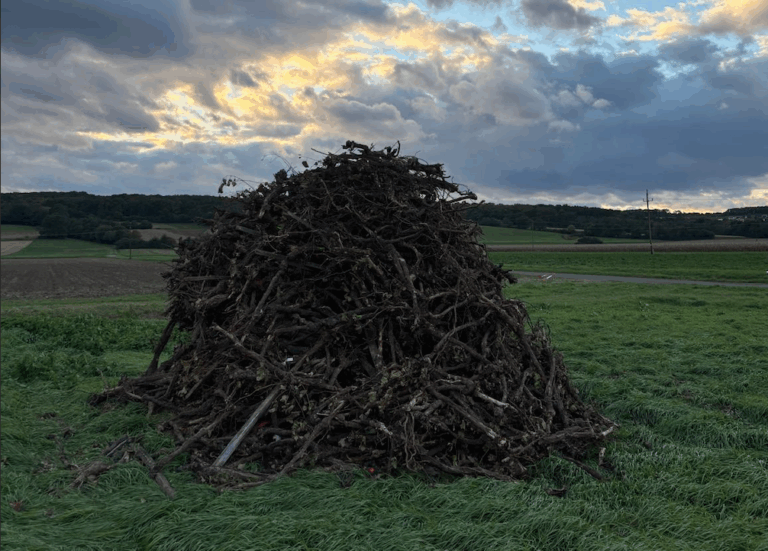
In slanting early morning light, a shadow crosses a vineyard. The figure moves row by row, ripping out vines and casting them onto a large, burning pyre. The blaze stretches to greet the sun as it rises above a mountainous horizon. There is fire from all points of the compass. Death is in the air. The culprit is a phytoplasm fatal to Vinifera vines. Its spread is aided by the American grapevine leafhopper (Scaphoideus titanus), a dwarf cicada native to North America. As it feasts on the vines, it transmits the pathogen of what is known in German as Goldgelbe…...