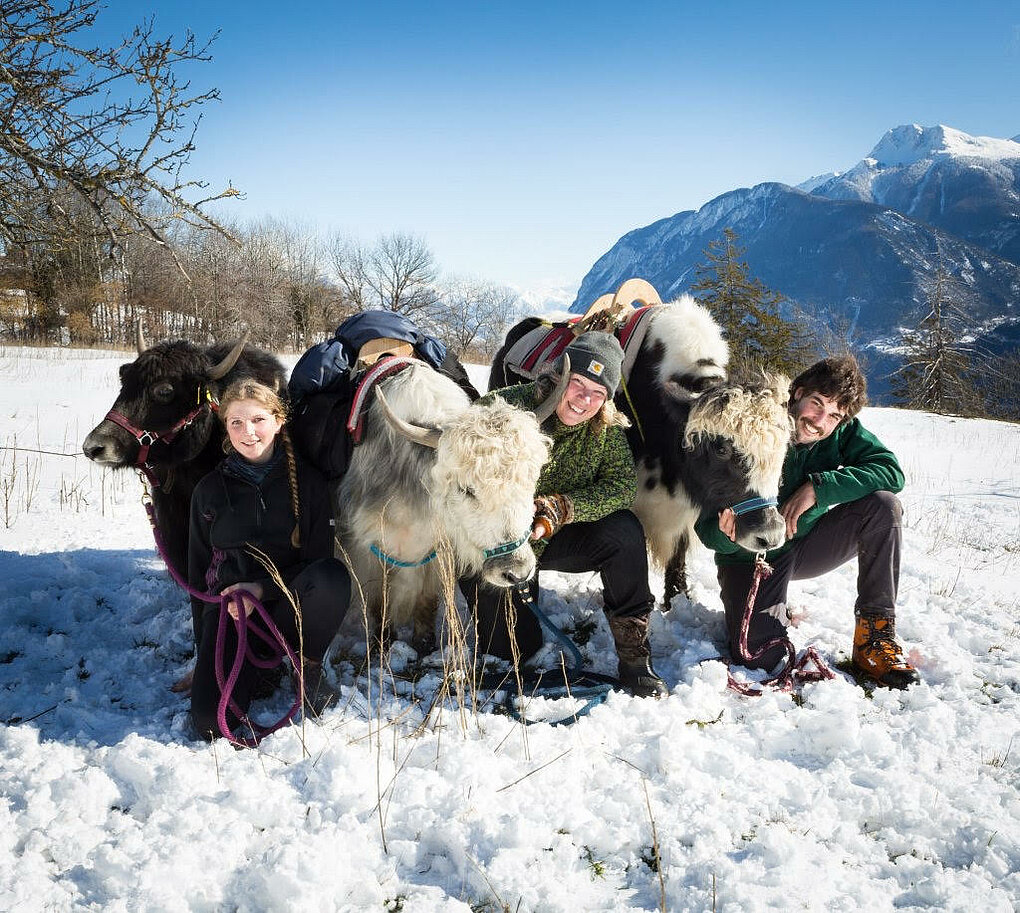
There’s no “yak crossing” sign in front of Caves du Paradis. Nevertheless, in September cars and trucks on the busy industrial road at the edge of Sierre, Switzerland were forced to cede to sturdy yaks trekking from the vines across to the Paradis cellar, their broad backs loaded with ripe Gamay grapes. The yaks appeared to enjoy their new temporary jobs, unusual work for a yak, who normally tills or treks. The pickers in the vineyard quickly made friends with the quiet, gentle creatures, recalls winery owner Olivier Roten, once they realized that the long horns would not get in…
Ellen Wallace is the author of Wine Hiking Switzerland, a selection of 50 hikes and 50 wines, to be published 1 September 2022 by Helvetiq, in English, German and French. Ellen is an American-raised Swiss who lives high in the Alps. She is the author of the introductory book Vineglorious! Switzerland’s Wondrous World of Wines and she publishes an independent blog and newsletter in English whose main focus is journeying through the landscape (wines, vineyards, people, history, culture) of Swiss wines, to make these more accessible to wine-lovers in Switzerland and outside the country. Ellen is also a regular presenter of Swiss wines to groups and clubs, in English. She has judged at the Mondial de Bruxelles, Mondial des Pinots, Mondial des Merlots and the national Grand Prix des Vins Suisses.
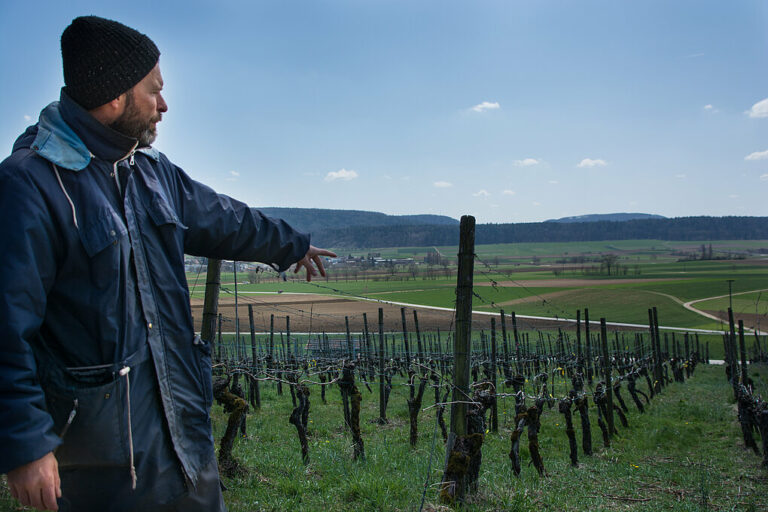
Swiss wines remain rare on the international wine scene. But a new generation of talent committed to uncompromising work and meaningfully sustainable viticulture is slowly changing this. Markus Ruch has been cultivating his own vineyards in the Klettgau, part of Switzerland’s northernmost canton, since 2007. He is widely credited with producing the first Swiss natural wines and leads the movement today. His Pinot Noirs and orange Amphore are served from NOMA in Copenhagen to Konstantin Filippou in Vienna. Ruch’s wines are classy. With a twist. For those less familiar with Swiss geography, the canton of Schaffhausen is situated north of…...
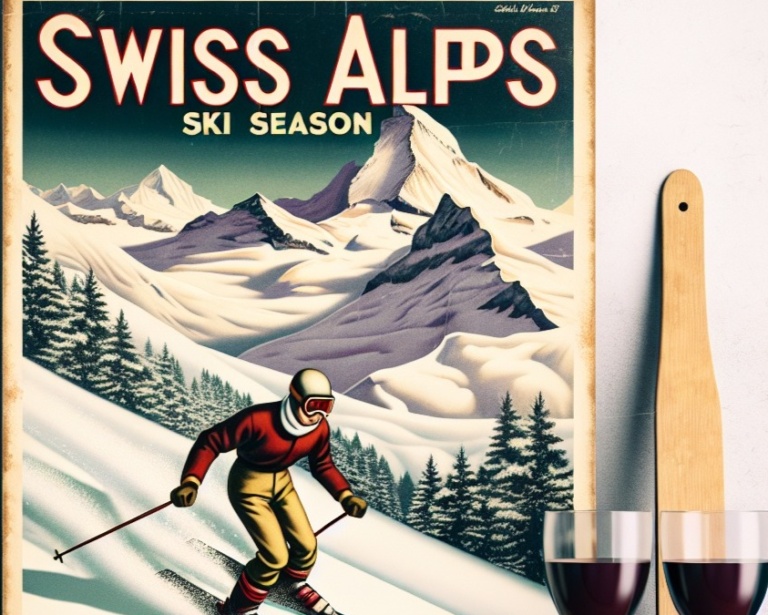
In most wine regions, it’s common to think of harvest as the season’s grand finale, giving way to a quieter period spent in the winery and cellar. For Switzerland’s premier winemaking cantons of Wallis and Graubünden, however, the wine is barely in barrels before these regions face an even busier time: ski season. In Switzerland, skiing and tourism are intertwined, notwithstanding a strong domestic affinity for the sport. The practice in its modern form was imported from Norway in the 1890s. It was initially embraced by members of the British upper class taking winter holidays in resort areas such as…...
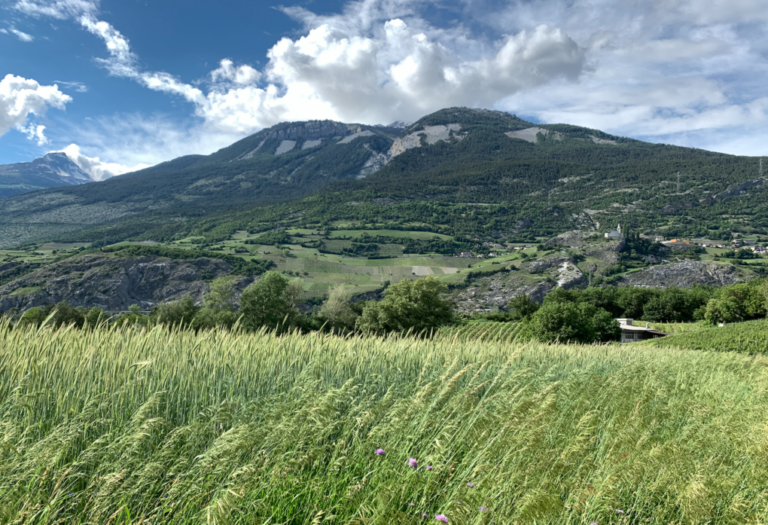
In a Swiss park, a footpath leads from Leuk, a village straddling the Rhone, up to Varen, which is perched on a cliff. The trail is steep and strewn with pebbles in early summer. But three lightfooted young people with small backpacks move at a steady pace, in the way the Swiss tend to do when they grow up hiking in the Alps. The trio checks a list of clues they picked up at the Leuk tourism office. This treasure hunt will take them along groomed trails for eight hours (several pauses included) to wineries within the extraordinary Pfyn Nature…...
The lure of 007 and having bubbles at their fingertips in the Bollinger Suite pulls some people into Erlinsbach, in northern Switzerland, for a night or two of intrigue. Others fantasize about being lulled to sleep surrounded by gently aging (shhhh) vintage Burgundies in the Wine Cellar Suite. For the rest of us, it’s a simpler dream of a night that opens with great food and a hard-to-find bottle of a Swiss vintage wine. Albi von Felten was ahead of his time when he bought the Landhotel Hirschen from his parents 22 years ago. He and his wife Silvana are gratified to…...
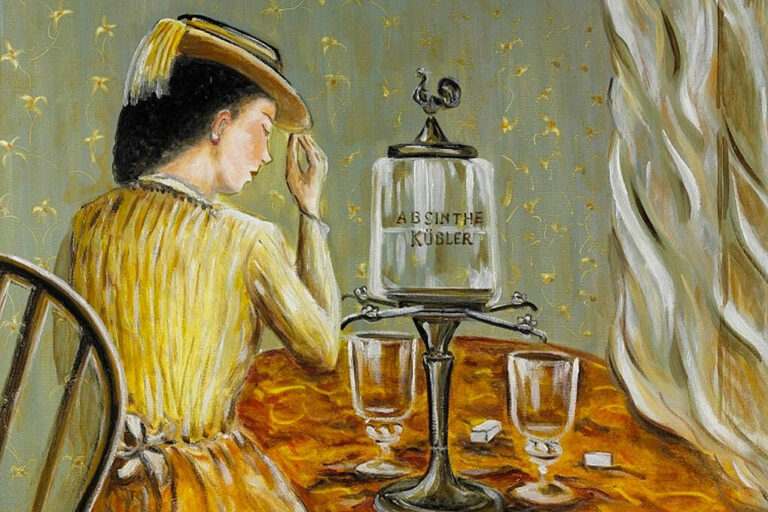
Banned and beloved, feared and revered, one would assume the birth story of absinthe to be as spirited as its character. Yet its quite conventional beginnings can be clearly traced back to the mild-mannered region of Val-de-Travers, Switzerland, below the limestone-cliffed Jura mountains, where a greenish-gray perennial that gave the herbal elixir its name thrives on the lush borders of the region’s forests and roadsides. And so it is that neither the what nor the where, but rather the who of absinthe’s beginnings that has been called into question, becoming only the first in a long twisted tale of controversy…...