Classic German Cooking, Luisa Weiss, photo credit: Valerie Kathawala
“Germans are particularly nostalgic about the food of their grandmothers,” writes Luisa Weiss, furnishing a sturdy thesis for her handsome, welcoming new cookbook. Weiss, whom you may — should — know, is a food writer. She was born, partly raised, and now lives full-time in Berlin. She blogged about food for more than a decade from New York as The Wednesday Chef, then moved to Germany. There she wrote her way deeper into the German culinary world: the food-driven memoir My Berlin Kitchen: A Love Story with Recipes (2012) and Classic German Baking (2016). She now writes a Substack organized around…
Valerie Kathawala specializes in the wines of Germany and Austria. Her work appears in the pages of regularly in Noble Rot and SevenFifty Daily. She is the author of the "German Wine Scholar" (2025).
Words are like viruses. They appear in culture and may lie dormant then suddenly they are everywhere, swirling about, adapting to their hosts, mutating to survive. In the wine world, this process can happen fast. "Purity," it turns out, is anything but pure.
The world of sparkling wines is changing for the better. The number of producers approaching this beverage in serious, artisanal, and creative ways continues to climb. “Grower Sekt” from Austria and Germany is very much en vogue. We are witnessing a tremendous push to quality. For a long time, “mass over class” was the motto, especially in Germany. But for a new generation, awareness of terroir and a trend toward reducing residual sugar are increasingly the focus. No stone has been left unturned in Austria, either. For several years, Austrian Sekt has been governed by a three-tiered quality pyramid: “Sekt…...
Liora Levi, high-profile sommelier, television personality, and president of ASI Norwegian Sommelier Association, came late to wine. In its own odd way, that only bolsters her bona fides as a daughter of the north. The countries to the north of the umlaut region can generally be viewed as latecomers to the joys of wine, and white wine in particular. But times change, and opinion makers like Levi have now helped the Nordics become prime drivers of the Riesling Revolution. It is a boom time for whites under the northern lights. As Levi explains in an interview with TRINK, the delayed…...
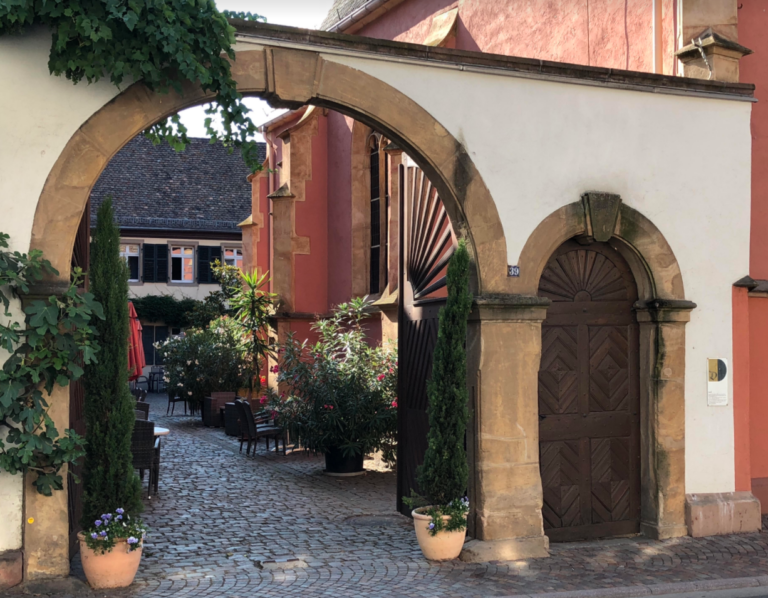
The Pfalz is Germany’s second-largest wine region (by volume) — and perhaps its biggest surprise. The south-of-the-Alps feel of abundance and harmony stems from geographic confluence, where the sheltering Haardt mountains meet Rhine river plain. With Rheinhessen to its north and Alsace due south, it’s a wholly unexpected idyll of fig, lemon, and almond trees, pastel villas, and gentle vine-wrapped slopes as far as the eye can see. Amid this beauty, the Pfälzer live with French-inflected savoir-faire. This amplitude is all there in the wines. Within a compact 85-km north-south span, 130 villages and seemingly countless vineyards are tightly packed north to…...
Not long ago, in my merchant days, I scored a few cases of mature Mosel wines from a grower I didn’t know. It wasn’t much wine, the prices were attractive, and I was able to eke out a few bottles for my cellar, which can never have too many ready-to-drink Rieslings. They were 1982s and 1985s. I had a wine friend over and opened one of the bottles to begin the evening’s festivities. “Oh I do like old Riesling,” my friend said, “And isn’t it amazing how well even a Kabinett can age?” “It is indeed,” I said. “But this isn’t a…...
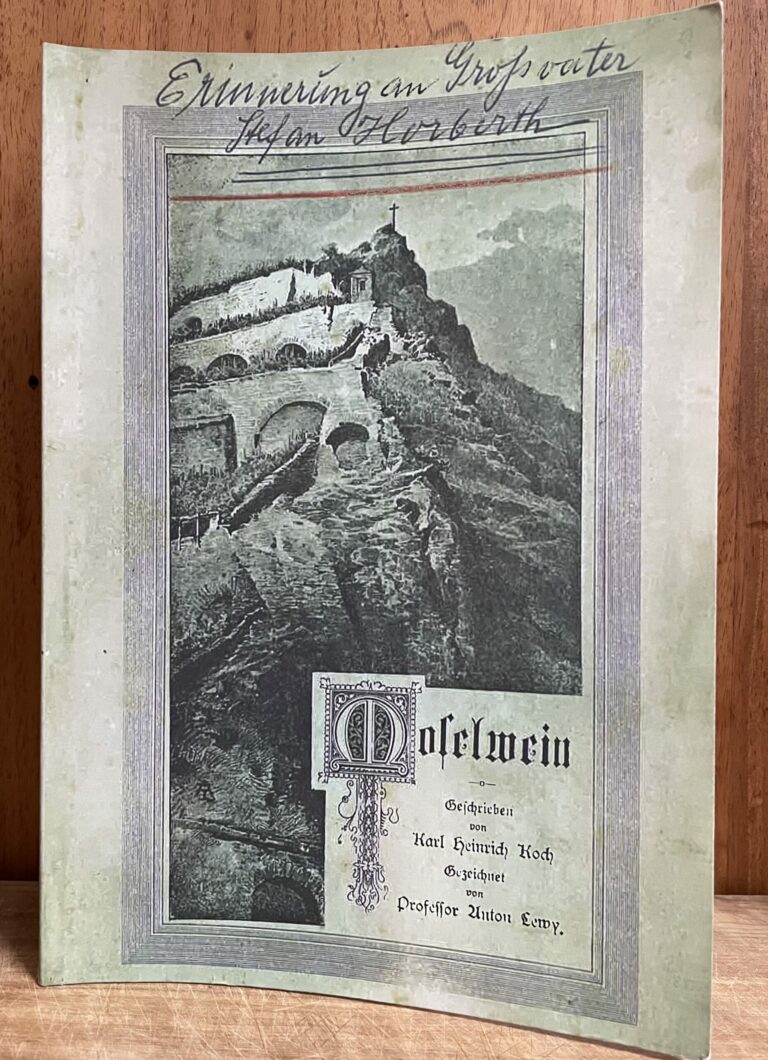
We like to think of Mosel wine as eternally glorious. The river valley’s nearly 2,000-year vinous history, its relics of Roman civilization and tributes to Celtic wine gods, its very viticulture carved with seeming permanence into stony banks all suggest an unbroken line. But an excellent new book, edited by Lars Carlberg, with able assistance from David Schildknecht, Kevin Goldberg, and Per Linder, underscores the extent to which the Mosel’s glory has been far more ebb than flow. Such awareness only makes the late 19th-century golden age that is the book’s focus more luminous. The book nests together several components…....