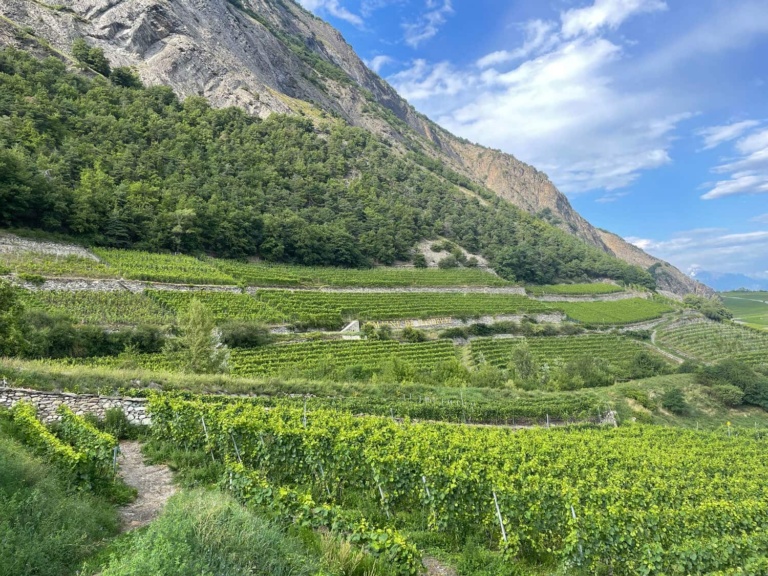
for S.B. with love Die Rebe ist ein Sonnenkind. Sie liebt den Berg und haβt den Wind.So open your door already—for god’s sake, just let me in! Nothing to fear from wild slopes—a matter of terraces and grading.Sankt Aldegund, your roses—they labor on unforgiving slate. Vigor derives from parameters. The desert ends with water.Ritual is an amphora: it gives life room to breathe. The hag at the door is never a hag—she’s always a secret queen. Don’t you fear that ugly mug comes bringing revelation. The special red plum from the Mosel is imbued with healing power.If you go to the…
Amanda Smeltz studied philosophy and literature, and holds an MFA in poetry. She has been a sommelier and wine buyer in New York City for twelve years, most recently at the restaurants Estela and Altro Paradiso in Manhattan. Smeltz’ wine writing has appeared in Esquire and SevenFifty Daily. Her debut poetry collection is Imperial Bender (2013), and her verse has appeared in journals such as Prelude, [PANK], and Barrow Street, among others. In the summer of 2021, Smeltz was a fellow at The Mastheads, a writer’s residency held in Pittsfield, MA, on the grounds of Herman Melville’s farm.
On Saturday 13 September, Germany lost a winemaking legend when Werner Näkel passed away at the age of 72 in Dernau, his home village in the Ahr Valley and seat of the family estate, Weingut Meyer-Näkel. Werner Näkel will be remembered as a founding father of great German Pinot Noir, a wine which under the name of Spätburgunder had for a long time simply languished in the vinous doldrums of Germany, before, in the 1980s, Näkel and a handful of like-minded colleagues began to wonder why the grape, so highly revered worldwide for its red Burgundy renditions, should not be…...
Gerhild Burkhard, founder of the International Sparkling Festival, reveals everything you've always wanted to know about sekt (*but were afraid to ask).
“Free your mind and the rest will follow.” Coming from one of the co-owners of Germany’s oldest wine trading houses, one might suspect a quote from Goethe, Schiller, or Nietzsche. It’s actually the American R&B/pop group, En Vogue. And that makes for a jarring, if fitting, introduction to my conversation with these stewards of tradition in German wine that look back to 1786 in Worms as easily as they look ahead to 2019 Organic Madonna. P.J. Valckenberg has the history and the pedigree, no question. Its customers have included the Swedish royal family and Charles Dickens. In addition to a truly impressive portfolio…...
As more cool-climate regions like Germany's Mittelrhein seek grapes that can beat the heat, the rare Swiss variety Petite Arvine offers a surprising possibility.
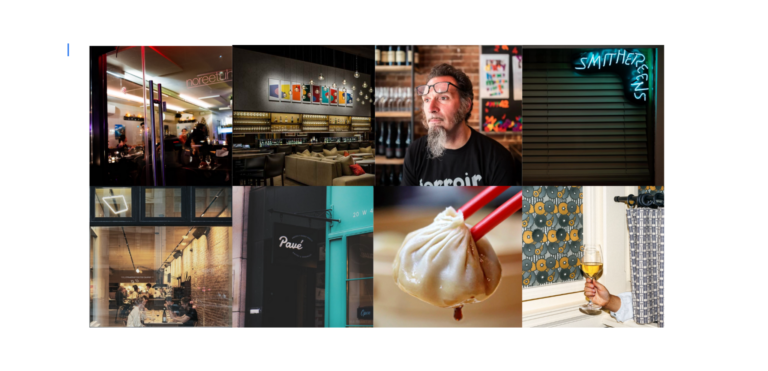
Whether you’re dropping into town for the bacchanalia that is Rieslingfeier or you’re a native New Yorker curious to get a taste of the latest and greatest in German and Austrian wines, here’s your hit list of bars and restaurants that make NYC the country’s best (if priciest) city to drink auf Deutsch. Updated November 2025 to remove Koloman, which has closed. G = German focus A = Austrian focus Noreetuh (G) Manager and co-owner Jin Ahn has turned this decade-old Lower East Side Hawaiian spot into the city’s ultimate insider Riesling hangout. Ahn’s exceptionally well-informed list is divided into Rieslings…...
What do one of the Mosel’s oldest winemaking estates and a country with a fledgling wine-drinking culture have in common? The answer, as with most things in life, is Riesling. “German Riesling has become a synonym for white wine in Finland,”” says Heidi Mäkinen MW, Portfolio Manager for Viinitie Oy, one of that country’s largest importers of German wine. “Finns like the freshness and fruit, and Riesling is one of those wine words that’s incredibly easy to pronounce.” As Viinitie’s new portfolio manager, Mäkinen, for whom work and private life has little separation, has kicked off her holidays 2,000 kilometers south of her…...