The Jewish State was proclaimed in 1948; the Federal Republic of Germany founded a year later. There was a pregnant pause when many wondered if West Germany would acknowledge the past. In 1951, Chancellor Konrad Adenauer acknowledged Germany’s “unspeakable crimes toward Jewish people.” The spell of silence was broken, and Israeli Prime Minister David Ben-Gurion and Adenauer began the long, painful, still unfinished journey toward healing. In the decades since, the people of Germany and Israel have followed their lead, with financial and cultural exchanges that each serve as a profound demonstration of human transcendence. It’s clear we have much…
Kathleen Willcox has been writing about the business and culture of wine and food for more years than she’d care to reveal. Her work appears regularly in Wine Enthusiast, Wine Searcher, SevenFifty Daily, The Vintner Project, and many other publications. She co-authored the book "Hudson Valley Wine: A History of Taste & Terroir" (2017).
For a Jewish baby boomer like me, the Holocaust was always part of my DNA. Yet, I was not the child of survivors. My Polish grandparents were safely in the United States by the 1920s. The family they left behind were mostly killed. In yeshiva, where I spent a dozen years splitting my curriculum between religious and secular studies, we were frequently subjected to footage of emaciated bodies, piled up for burning or disposal. Teachers didn’t hide the numbers tattooed on their arms. But the personal horror stories my cousins told of Polish concentration camps and ghettos were the images…...
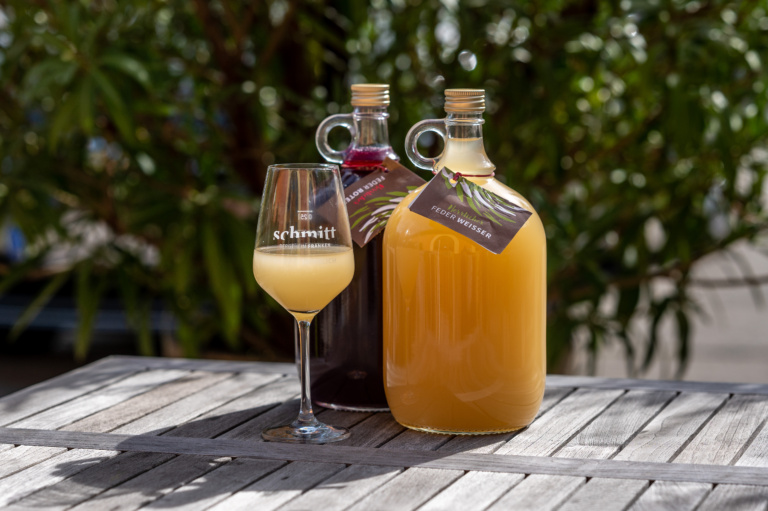
A bottle of wine is a foregone harvest, a transmuted measure of the soil, sun, and rain that fed erstwhile grapes. Federweißer, however, is an immediate taste of the harvest. In 2007, I was fresh out of college and living in Mainz, Germany, a gateway to major wine regions like the Rheingau and Rheinhessen, when I first encountered the young, sweet, low-alcohol wine called Federweißer and its red counterpart, Federroter. It was late summer when wooden stalls selling Federweißer materialized throughout the pedestrianized city center. There, I had my first swigs alongside Zwiebelkuchen, a flaky onion tart with a caramelized…...
Words are like viruses. They appear in culture and may lie dormant then suddenly they are everywhere, swirling about, adapting to their hosts, mutating to survive. In the wine world, this process can happen fast. "Purity," it turns out, is anything but pure.
The world of sparkling wines is changing for the better. The number of producers approaching this beverage in serious, artisanal, and creative ways continues to climb. “Grower Sekt” from Austria and Germany is very much en vogue. We are witnessing a tremendous push to quality. For a long time, “mass over class” was the motto, especially in Germany. But for a new generation, awareness of terroir and a trend toward reducing residual sugar are increasingly the focus. No stone has been left unturned in Austria, either. For several years, Austrian Sekt has been governed by a three-tiered quality pyramid: “Sekt…...