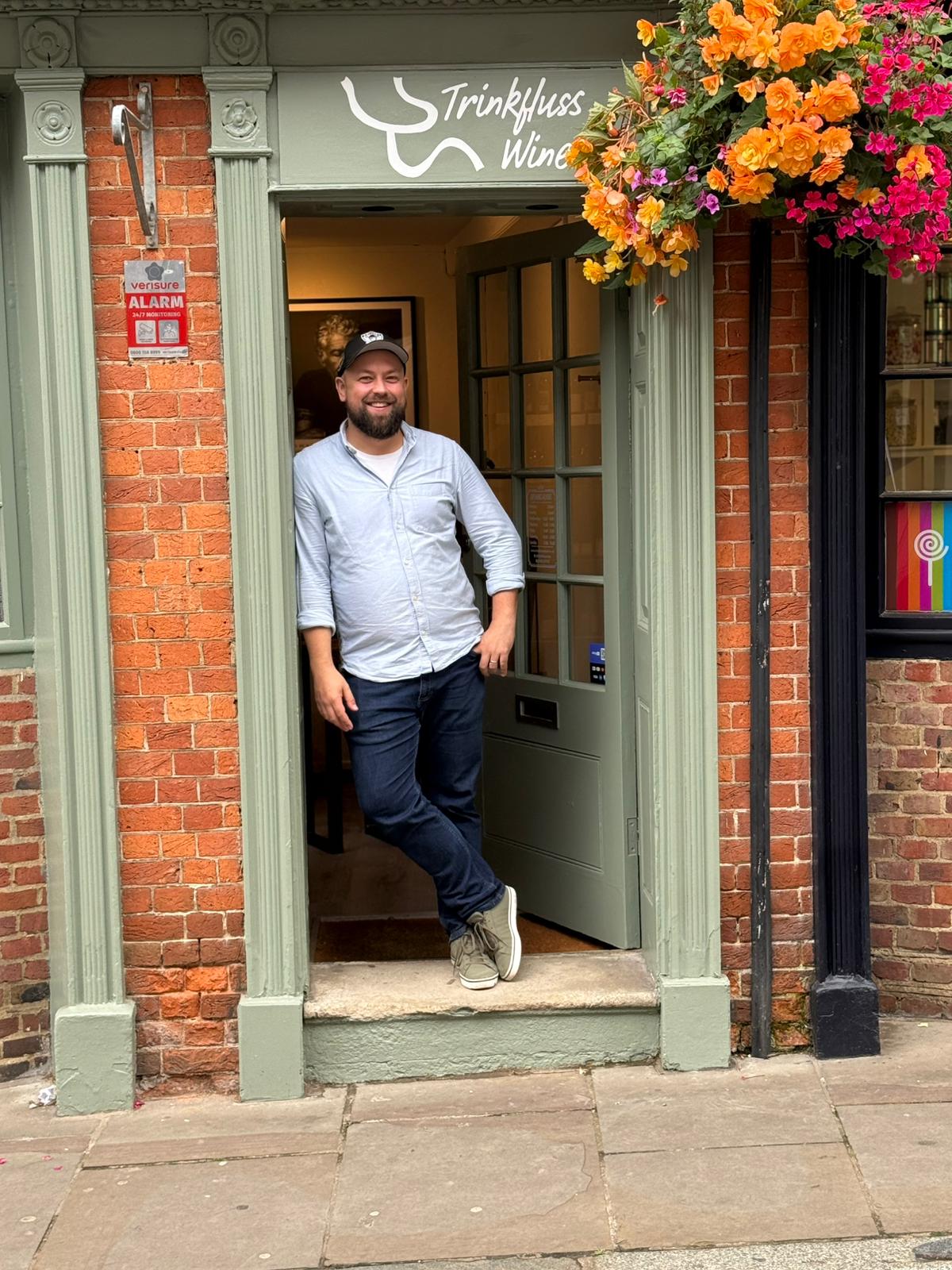
Bastian Fischer in front of his German wine focused shop, Trinkfluss, photo credit Trinkfluss Wines
“Where are all the dynamic, characterful wines from Germany?” Bastian Fischer asked in exasperation after 16 years in the UK wine trade. This year he answered that question himself by opening his own shop. Trinkfluss Wines, just outside London, focuses “on some of the most electric, food-friendly, and downright delicious wines anywhere,” in Fischer’s view. His new venture, baptized with the German word for drinkability, quenches the thirst for Germany’s full gamut of varieties. But one swallow doesn’t make a summer. The somms and wine aficionados who shop at specialist wine stores like Fischer’s may have embraced German wines, but…
A geographer by training, Bart’s understanding of soil, geomorphology, and climate, important factors in winemaking, was kindled at an early age. But it was his move to Basel, on the doorstep of Baden and Alsace, that really stirred up his interest for wine. Since his studies at the Austrian Weinakademie, wine has been his profession. Apart from writing for several European publications, such as Perswijn (NL), Apéritif (Norway), Metropole (Austria), Bart organizes wine trips and moderates tastings. An avid amateur flautist, Bart is also very honored to be writing the English program notes for the Sinfonieorchester Basel for the fourth season running.
André Gussek remembers very clearly how it all got started: Right around the time he was hired as cellar master at the historic eastern German Kloster Pforta winery in 1982, “the first Spätburgunder vines, West German clones obtained via foreign trade,” arrived at the estate in Naumburg an der Saale, roughly 60 kilometers from Leipzig and some 220 kilometers from Berlin. “In the fog of history, it was difficult to see precisely where they came from,” Gussek explains with characteristic calm. Much clearer is what they became: a catalyst for red wine to assume “an ever-larger role” in the former…...
Editors’ Note: Data open tantalizing invitations to speculation. Wine economist Dr. Karl Storchmann of the American Association of Wine Economists is a master at collecting information, presenting it in clear, compelling graphics, and stepping away to allow each of us to draw our own conclusions. When he looked at wine, beer, and spirits consumption in three of TRINK’s coverage zones over the past century, he found striking disparities and a surprising convergence. What story do they tell you? Per capita wine consumption in Austria, Germany, and Switzerland has fluctuated significantly since the late 19th century (see Figure 1). Switzerland has…...
Winemakers in the Mosel are tending an old tradition that is budding anew. These modern Pinots reach for elegance and complexity, edginess and vitality. and the world is finally taking notice.
Silvaner. It’s complicated. Ask about its nature or character, and like as not you’ll get one answer: asparagus. With delicate vegetal aromas and moderate acidity, Silvaner is indeed a near perfect pairing for the fabled stalk that emerges from the earth to fill German grocery stores and market stalls annually between April and June. Yet, stop for a minute and imagine: what if there were more? Silvaner is viewed as a national counterpoint to Burgundian Chardonnay or Saumur Chenin Blanc. For many years Silvaner was Germany’s most important grape variety, less inclined toward fruity fun and more toward structure, texture, spice, and earth. De facto it…...
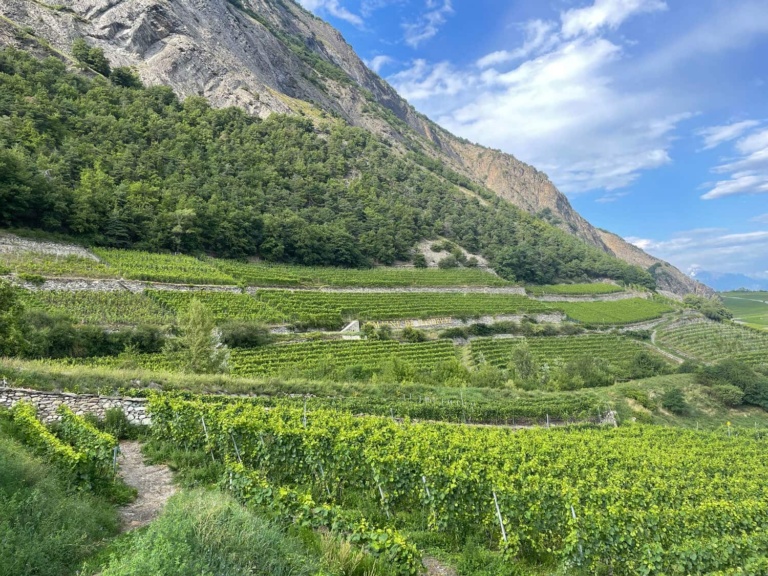
As more cool-climate regions like Germany's Mittelrhein seek grapes that can beat the heat, the rare Swiss variety Petite Arvine offers a surprising possibility.
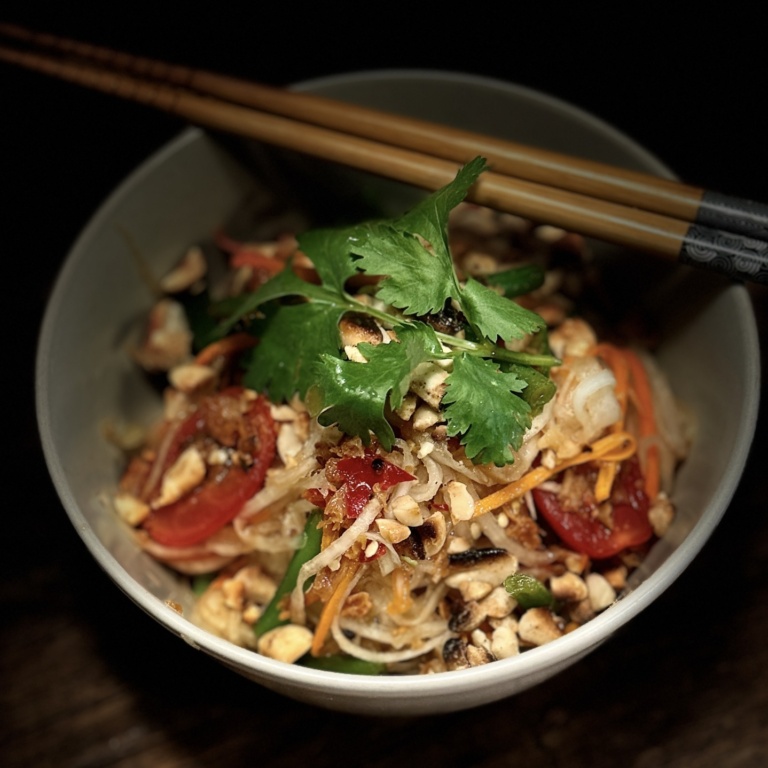
Just in time for the tropical temperatures of summer 2026, I made myself Som Tam Thai (ส้มตำ), a Thai papaya salad. At 30°C (86°F) or above, few of us have much of an appetite. But you have to eat something eventually. With no green papaya on hand, kohlrabi cut a surprisingly good figure. And the bold, intensely seasoned dressing did the rest. So, what to drink with it? They recommend you should consume an extra two liters of fluid at these temperatures, and who am I to argue? Off to the wine cellar to find a good bottle. Oddly, the…...