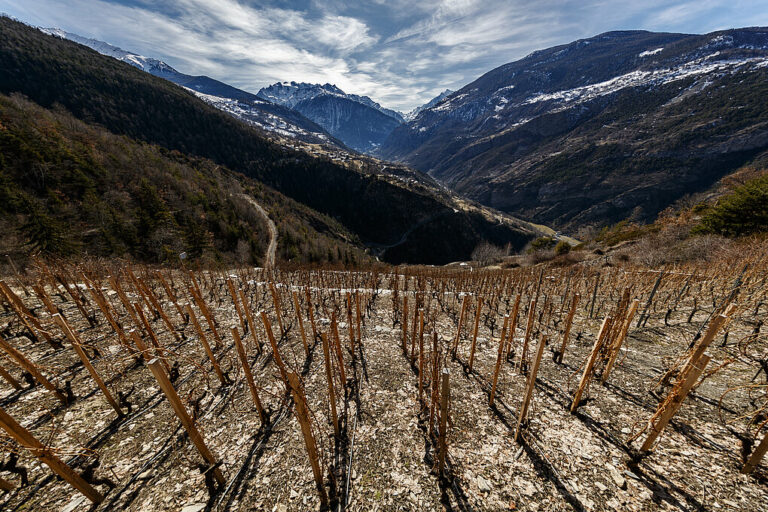
This article is adapted from Natural Trailblazers: 13 Ways to Climate-Friendly Wine, to be published on 21 October 2024 and currently available for pre-order. In the Swiss Alps, husband-and-wife Romaine and Hans-Peter Schmidt have created an island for humans and animals, insects and microbes to thrive in a sea of conventional vineyards. A combination of no-till, green manure, vitoforestry, and biochar makes their legendary winery Mythopia carbon neutral in the vineyard. I’m outside a bakery in Sion, with a view of the railway tracks and the snowy peaks on the horizon. It’s a surreal combination of nature and industry. A…
Camilla Gjerde is a passionate natural wine lover. Ever since her first sip of Arianna Occhipinti’s Il Frappato in 2008, she has explored the world of natural wine. But what matters most to her is the passion and the person behind the wine. She is the author of the first book on women in natural wine, "We Don’t Want Any Crap in Our Wine." Her second book "Natural Trailblazers" celebrates winegrowers and importers who slash wine’s carbon footprint, out in October 2024. @gjerdecamilla
Picture yourself at a German holiday market (if such things were happening in 2020) — a mug of glühwein in hand and the scent of fresh pfeffernuss cookies in the air. It’s no surprise that these warm, spicy aromas are key attributes in many wines from Germany and Austria, South Tyrol, and the German-speaking parts of Switzerland. And there’s a hidden world of compounds and precursors to thank for this distinctive and alluring range. Much like a chef in the kitchen, growers can influence the aromatic and flavor complexity of their wines by playing with soil type, exposition, vine age,…...
“The Foehn wind is a real affineur of grapes . . .” from the diary of Weingut Bründlmayer Evidence from wine regions everywhere suggests that if cool climate viticulture is to survive, then it must move north — or, in Switzerland’s case, up. Warming temperatures in formerly marginal regions such as Burgundy and Piedmont now require changes in viticulture and/or additions to the permitted roster of grapes just to keep up. Even with successful change, however, the freshness, delicacy, and intricate architecture we love in Pinot Noir and Nebbiolo may be harder to come by. By contrast, Switzerland and parts…...
Trained mason Tom Litwan began crafting elegant yet edgy, biodynamic, low-intervention Pinot Noirs and Chardonnays in Switzerland’s Aargau back in 2006. Today his wines play in the same league as top French and German producers. Normally, the Aargau is better known for its notoriously jammed locations along the A1 highway connecting Zürich with Bern and French-speaking Switzerland. The canton’s sole claim to gustatory fame is a carrot cake, Aargauer Rüeblitorte. Litwan’s decision to make wine here may initially surprise, but looking a bit closer, it actually makes a lot of sense. Before phylloxera bedeviled the old world at the end of…...
I’ve read about as widely on Swiss wines as an Anglophone can: the relevant chapters of Jason Wilson’s delicious Godforsaken Grapes. The late Sue Style’s charming, informative Landscape of Swiss Wine. Ellen Wallace’s colorful Vineglorious. Dennis Lapuyade’s expert blog ArtisanSwiss. Stephan Reinhardt’s candid, convincing coverage in the Wine Advocate. But it is Dr. José Vouillamoz’s Swiss Grapes: History and Origin that has done the most to help me wrap my head around the marvelously confounding world of Swiss wines. The English edition, published in 2019 (two years after the original French), is a startlingly accessible and appealingly personal exploration of the trove…...
A new wave of vignerons is gathering strength in Swiss wineries. They are young, eclectic, and often organic or biodynamic in their work. Most are keenly focused on sustainability and trying disease-resistant grapes. Thirty of them, who go by JSNW (Junge Schweiz Neue Winzer, or Young Switzerland New Vignerons), offer a snapshot of this generation, all under age 40. The association was created in 2010 in Zurich to put “sharing” in boldface: of experience and ideas, but most of all of their wines and feedback, at regular meetups. The group has expanded to include vignerons from the French- and Italian-speaking…...