On Saturday 13 September, Germany lost a winemaking legend when Werner Näkel passed away at the age of 72 in Dernau, his home village in the Ahr Valley and seat of the family estate, Weingut Meyer-Näkel. Werner Näkel will be remembered as a founding father of great German Pinot Noir, a wine which under the name of Spätburgunder had for a long time simply languished in the vinous doldrums of Germany, before, in the 1980s, Näkel and a handful of like-minded colleagues began to wonder why the grape, so highly revered worldwide for its red Burgundy renditions, should not be…
Michael is likely best known for his tenure as the German wine correspondent for Jancis Robinson's website. He began his career as a wine journalist in 1982, contributing to publications like the Sunday Telegraph Good Wine Guide, the Wine Report, and Sotheby's World Wine Encyclopedia. In 1980, he became the first German to earn the Diploma of the WSET. He returned to Germany in 2009 and continued to write for publications such as FINE and Weinwisser, and has contributed to Hugh Johnson's World Atlas of Wine for editions seven, eight, and nine (upcoming).
The Pfalz is Germany’s second-largest wine region (by volume) — and perhaps its biggest surprise. The south-of-the-Alps feel of abundance and harmony stems from geographic confluence, where the sheltering Haardt mountains meet Rhine river plain. With Rheinhessen to its north and Alsace due south, it’s a wholly unexpected idyll of fig, lemon, and almond trees, pastel villas, and gentle vine-wrapped slopes as far as the eye can see. Amid this beauty, the Pfälzer live with French-inflected savoir-faire. This amplitude is all there in the wines. Within a compact 85-km north-south span, 130 villages and seemingly countless vineyards are tightly packed north to…...
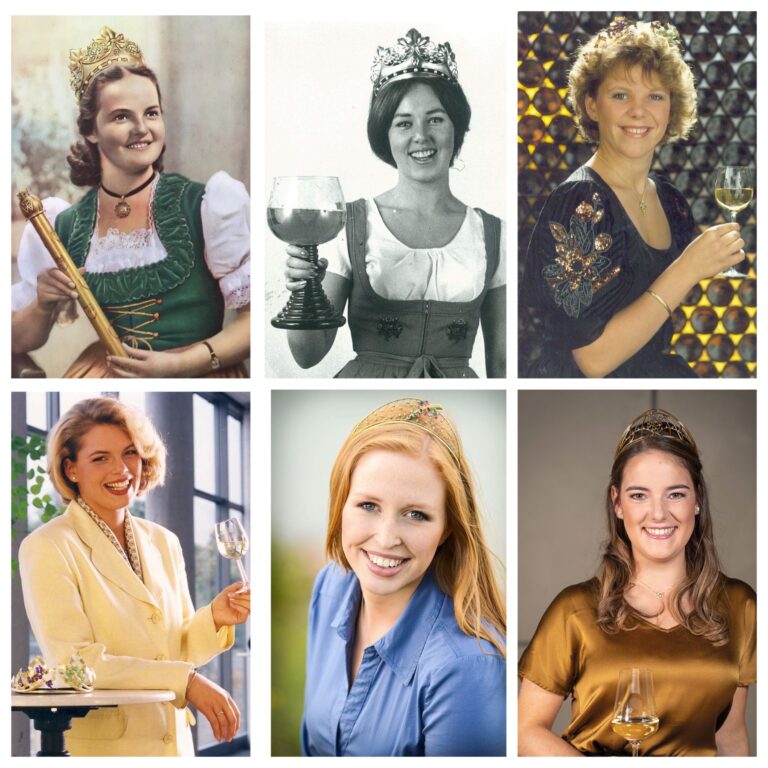
The story starts with a pedicure and a camping van. Each year when the German wine queen visits New York City, Paul Grieco treats her to a pedicure. (If the queen’s mother is also visiting, she gets one, too.) Grieco is a sommelier, vocal Riesling advocate, and owner/manager of Terroir wine bar in New York. He is also part jester, reveling in the micro-tradition of the pedicure while also pointing toward the intellectual esteem in which he holds every queen he’s ever met. Grieco honors the queens, he said, “because we [at Terroir] are fans of history and culture and [the queens] are an…...
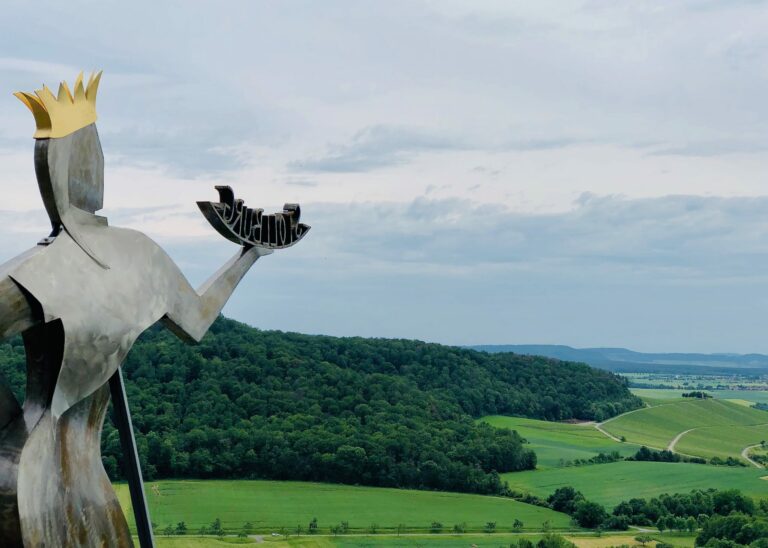
We’ll come right out and say it: Franken (Franconia) is Germany’s most underrated region. If you still think of it as the source of wan wines poured from squat flagons and drunk mostly at home, we’re here to let you in on a secret: there has never been a more exciting time for this corner of northern Bavaria, where wine, not beer, rules the day. The region sits just below the 50th parallel and at the cool, eastern edge of Germany’s wine core. It’s a perilous position for viticulture. As decades of frost-crimped and extreme-heat-affected vintages attest, its starkly continental…...
Winemakers in the Mosel are tending an old tradition that is budding anew. These modern Pinots reach for elegance and complexity, edginess and vitality. and the world is finally taking notice.
When I arranged to meet H.O. Spanier of Weingut Battenfeld Spanier, one of Germany’s leading growers, in the Zellertal, he wrote to me: “Zellertal is probably one of Germany’s most dynamic regions. I began investing in its most limestone-rich sites 30 years ago.” Since then, interest in the Zellertal has built gradually. But in the past few years, that interest has exploded. Spanier has played a major role in this, as has the world-renowned father-son winemaking duo Klaus Peter and Felix Keller of Weingut Keller. Both estates are now significantly invested in Zellertal vineyards. There was no question their moves…...