
Austria

One of the best places to start a study of German-speaking wines isn’t Germany: it’s Austria. 

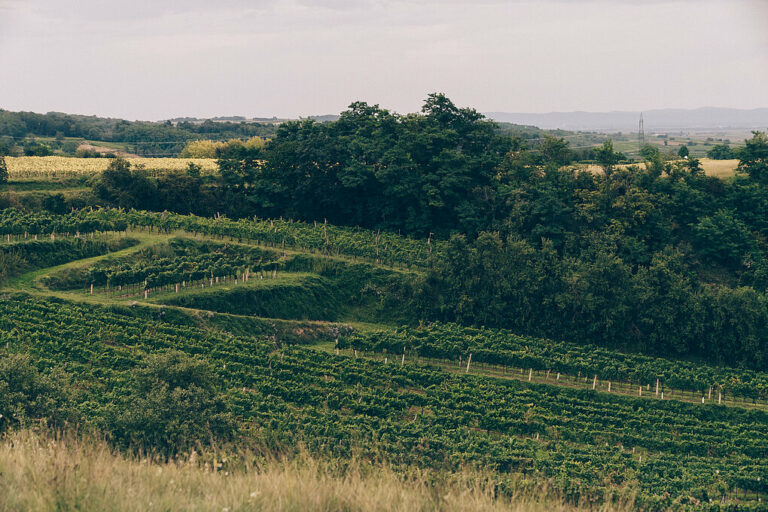
Why? Because Austria’s compact size makes it easy to get a handle on geography (ski in the west, grow wine in the east, as the Austrians themselves say) and varieties (come for the Grüner Veltliner, stay for the Blaufränkisch). Although Austria’s wine history runs deep, tradition and a flair for elegance rub shoulders with dynamic experimentation and impressive stylistic diversity.

  • Non-vintage Is Timeless 

    ​ Was everything really better in the past? Well, people were at least more patient. Vaccines were developed over the course of years. Under Communism in eastern Germany it could take up to a decade to get a car. OK, bad examples. But even food and drink were given more time. Today, fermentation and preservation are back on the front burner in kitchens — and in cellars, too.  Vintners typically work within the natural rhythms of the year, giving their wines time in cask or tank until just before the next harvest. But some are stepping deeper into the past…...

    Membership Required

    You must be a member to access this content.

    View Membership Levels

    Already a member? Log in here
  • ·

    ​3 Can’t-Miss Wines from Carnuntum​

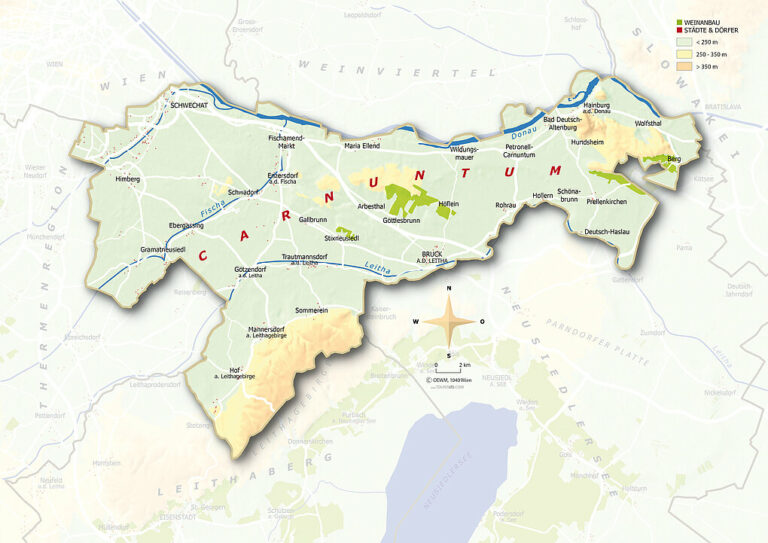
    ​The little wine region of Carnuntum sits east of Vienna and south of the Danube. With a mere 900 hectares under vine, it distinguishes itself through an awareness of regionality developed early on. In 1992, when Austria was still largely classifying its wines by variety rather than origin, Carnuntum implemented the idea of a regionally typical red wine with the name Rubin Carnuntum. But reaching DAC origin status – oriented to the regional, village, single-vineyard wine concept – was still a long road away. This only took effect in 2019 and today Zweigelt Rubin Carnuntum is a regional wine. Although white…...

    Membership Required

    You must be a member to access this content.

    View Membership Levels

    Already a member? Log in here
  • ·

    3 Can’t-Miss Wines from Vulkanland Steiermark

    In Vulkanland Steiermark — “volcanic Styria” — the name says it all. Some 1,500 hectares of vineyard are, for the most part, sited on the slopes of extinguished volcanic cones that rise from a gently hilly landscape. Here Pannonian warmth from the east meets the Illyric balminess of the Adriatic. Among the best-known growers in Vulkanland are Weingut Neumeister, Winkler-Hermaden, and Ploder-Rosenberg. As throughout Styria, white varieties are most strongly represented, with Welschriesling and Weißburgunder (aka Pinot Blanc) statistically far in the lead, followed by Sauvignon Blanc, Müller-Thurgau, and Chardonnay; Zweigelt yields respectable red wines here as well. Traminer from…...

    Membership Required

    You must be a member to access this content.

    View Membership Levels

    Already a member? Log in here
  • 3 Can’t-Miss Wines from Austria’s Thermenregion

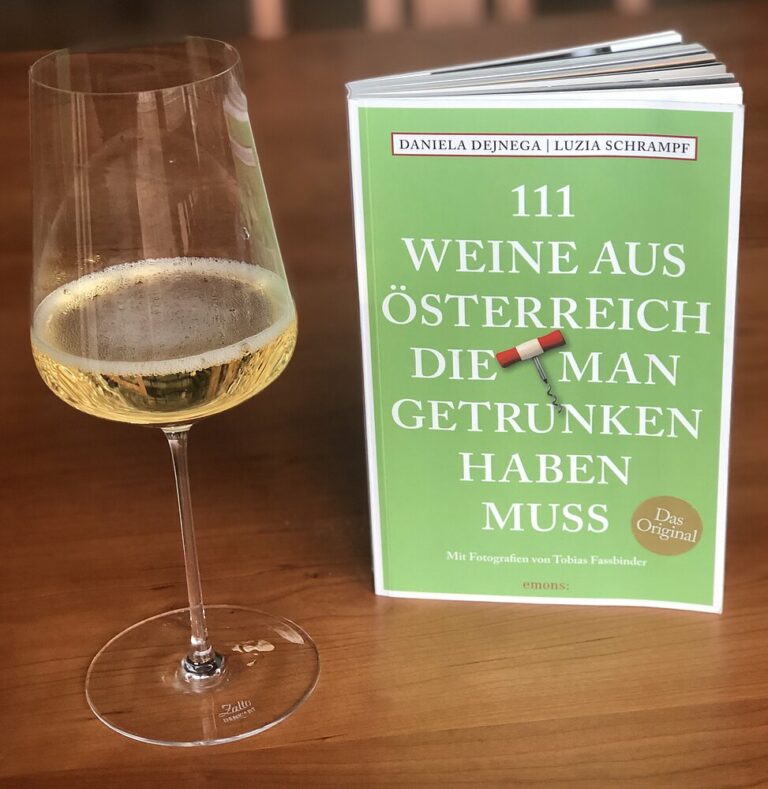
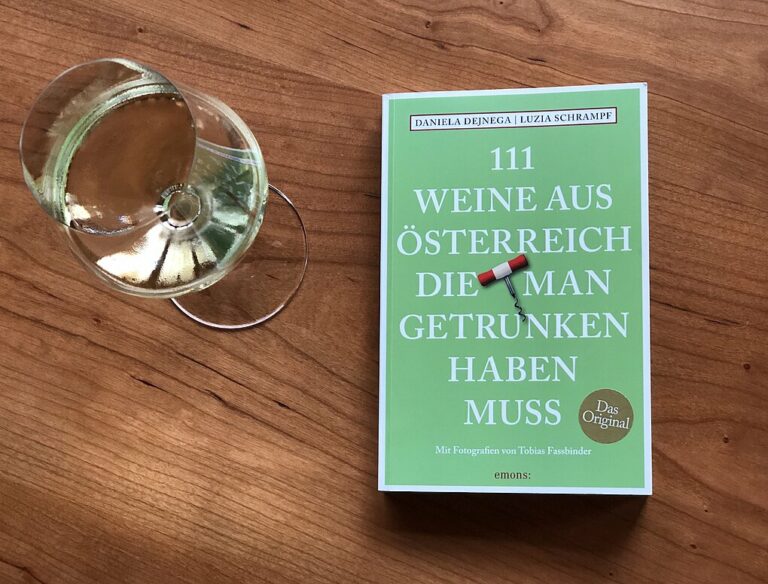
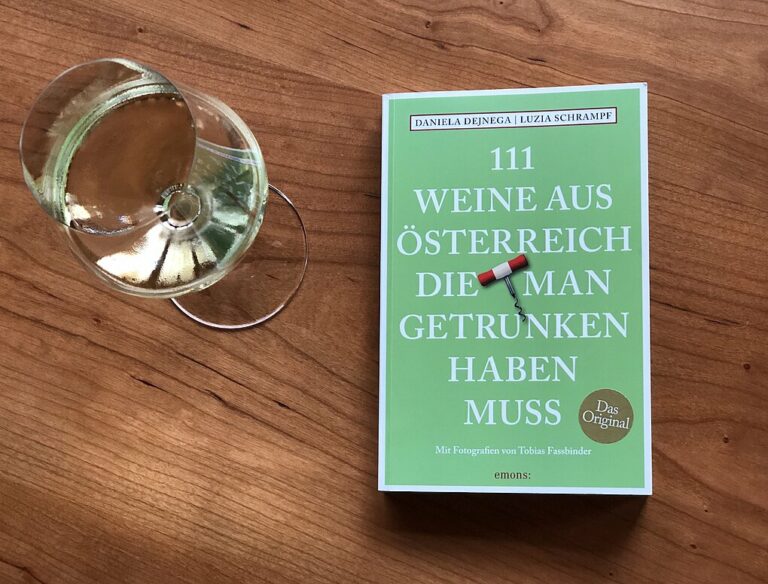
    ​With its nearly ideal set of conditions — location, climate, indigenous varieties —Austria’s Thermenregion curiously remains an insider secret. In addition to a colorful mix of varieties common in Austria, this region just south of Vienna devotes 200 of its 2,200 hectares to the autochthonous grapes Rotgipfler and Zierfandler. They are the region’s great opportunity and are now back in growers’ sights, as illustrated by their well-deserved inclusion in the book 111 Weine aus Österreich, die man getrunken haben muss. Beyond this, some producers here are venturing into new areas, like pét-nat, while among red wines, Sankt Laurent and Pinot…...

    Membership Required

    You must be a member to access this content.

    View Membership Levels

    Already a member? Log in here
  • Once and Future St. Laurent

    ​St. Lawrence, the man, was born in Valencia, Spain, sometime around 225 CE. He moved to Rome to work with Pope Sixtus II, became a deacon, and earned a reputation as a champion of the poor. On August 10, 258, Roman Emperor Valerian sentenced him to die by being lashed to a bed of hot coals. But so great was his devotion to god, the legend goes, that he resisted the flames, demanding that his tormentors flip him like a steak. A martyr was made. St. Laurent, the grape, is thought to have originated in what is now eastern Austria…...

    Membership Required

    You must be a member to access this content.

    View Membership Levels

    Already a member? Log in here
  • ·

    How Austrian Biodynamic Growers Put Individuality First, Together

    Why does biodynamics matter? Respekt-BIODYN is the ongoing effort of 25 growers from German-speaking wine regions to answer that question.  Though there are many forms of holistic farming that benefit people, planet, vines and wines, this tight-knit Austria-based group believes that a shared commitment to viewing the teachings of philosopher and agricultural reformer Rudolf Steiner as a springboard for exchange, cooperation, shared learning, and support helps cultivate a sense of individuality that, ultimately, translates into more profound terroir expression and higher quality in their wines.  Biodynamic Origins “The first 12 winemakers started in 2005,” explains the group’s leader, Michael Goëss-Enzenberg…...

    Membership Required

    You must be a member to access this content.

    View Membership Levels

    Already a member? Log in here
  • ·

    The Art and Science of Martin and Andi Nittnaus

    Shaping our wines is like sculpting: you start with a rock and you chisel out the sculpture,” Martin Nittnaus, 34, states confidently. The arts are never far away when you speak to the oldest son of winemakers Anita and Hans Nittnaus. Like his father, who dreamt of becoming a musician, Martin never planned on a life in wine. He went to university to study English literature and philosophy. But blood is thicker than water, and this year marked his sixth vintage working the plots his father gave to him and his brother, Andreas (Andi, 31). The Nittnaus estate is in Gols,…...

    Membership Required

    You must be a member to access this content.

    View Membership Levels

    Already a member? Log in here
  • ·

    Weingut Heinrich: Finding Freedom in Less

    ​It takes little to be happy. And he who is happy is king.”  This 19th-century German song – with just two lines – expresses how good a simple life, with little, can be. Just how little is something each of us has experienced, almost daily, this year. Finding the joy in this can be difficult, and regrettably few have managed to perceive the freedom in “less.”   Two people who did so long ago are Heike und Gernot Heinrich of Weingut Heinrich in Austria’s Burgenland. I visited them in early September, during Europe’s pandemic lull. The timing couldn’t have been better…....

    Membership Required

    You must be a member to access this content.

    View Membership Levels

    Already a member? Log in here
  • 3 Can’t-Miss Austrian Sparkling Wines

    Austrian sparkling wines are filled with adventure, from serious Winzersekt (Austria’s answer to grower Champagne) to the refreshing fizz of pét-nat, a style the country was quick to embrace. The adoption of a three-tiered quality pyramid for Austrian sparkling wine in 2015 helped set the stage. The book 111 Austrian Wines You Must Not Miss includes nine sparkling wines that illustrate this effervescent trend. Three I’d like to spotlight here are the outstanding Winzersekte of Ebner-Ebenauer and Fred Loimer, which represent the absolute pinnacle of quality, as well as a pét-nat that was one of the first to make a splash…...

    Membership Required

    You must be a member to access this content.

    View Membership Levels

    Already a member? Log in here
  • Roter Veltliner: Comeback of a Diva?

    Though its name suggests otherwise, Roter Veltliner isn’t a red wine grape at all. Yet at maturity the grapes do take on a scarlet hue. And this juxtaposition is precisely what captivated Austrian winemaker Toni Söllner: “Even as a child, I was fascinated by Roter Veltliner. The grapes were red, but the wine they made was colorless.” Söllner’s organic estate is in Wagram, Roter Veltliner’s home turf. He has restored 2.5 ha to the old autochthonous variety. Söllner is not alone in his engagement on behalf of the rarity, but rather is one of 10 Austrian organic growers who have…...

    Membership Required

    You must be a member to access this content.

    View Membership Levels

    Already a member? Log in here
  • ·

    Three Ways to Pine for Zirbenschnaps

    ​The scent of pine trees is a time machine, a brusque mix of barbed, balsamic beauty. I have a million pine memories. One good whiff and I’m transported home, sap streaking the inside of my scraped arms as I scale the tall white pine in our neighbor’s backyard, lunchbox dangling from the rear belt loop of my short pants. Lost in a cross-hatching of aromatic needles. I’m in the warming house of the town rink, my toes aching with cold. Silhouetted skaters float and spin on the bumpy ice outside. A pine fire acrid with resin heaves black smoke up…...

    Membership Required

    You must be a member to access this content.

    View Membership Levels

    Already a member? Log in here
  • Eat & TRINK | Alpkäse and Kamptal Riesling

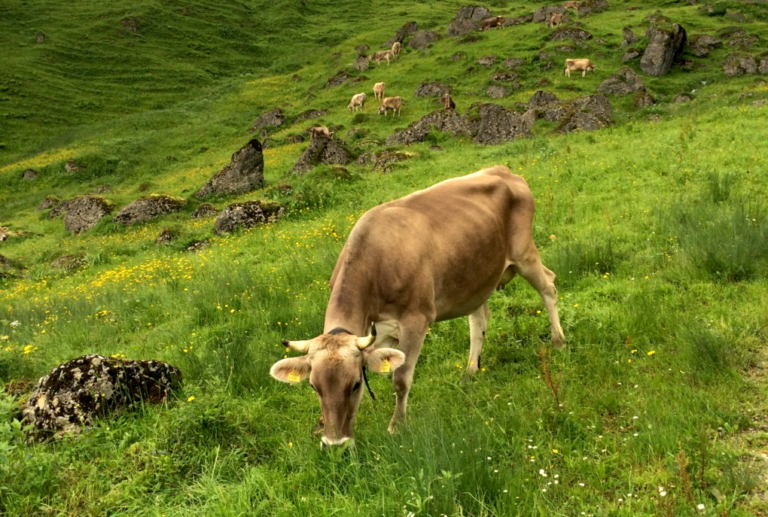
    12/14/2020 Eat & TRINK | Alpkäse and Kamptal Riesling By Ursula Heinzelmann ​ The entirely spontaneous, yet infinitely harmonious tinkling of cow bells. The crunching of my boots along a narrow mountain path. The joyous gurgling of a stream winding its way down among rocks, moss, and roots. This is one of my favorite cheese soundtracks. The accompanying “smelltrack” is of warm stables in the haze of first light and earthy, pungent bodies, redolent of the basic facts of life. Wood smoke rising from under a round copper vat. And of course the reassuring, lactic aroma of warm milk and whey,…...

    Membership Required

    You must be a member to access this content.

    View Membership Levels

    Already a member? Log in here
  • 3 Can’t-Miss Austrian Natural Wines

    111 Austrian Wines You Must Not Miss showcases the diversity and range of Austria’s wine landscape — beyond the ubiquitous fresh and fruity Grüner Veltliner. In it, wine journalist Luzia Schrampf and I tell 111 short, engaging stories, packed with wine knowledge and insight into what goes into growing and making a wine, as well as the many and varied ideas and philosophies of Austria’s vintners. An extraordinary number – nearly 80 per cent – of those featured in this book farm organically and more than a few produce natural wines. Here are three wines – white, orange, and red, from…...

    Membership Required

    You must be a member to access this content.

    View Membership Levels

    Already a member? Log in here