
Is It Truly ‘Aus’ with Auslese?
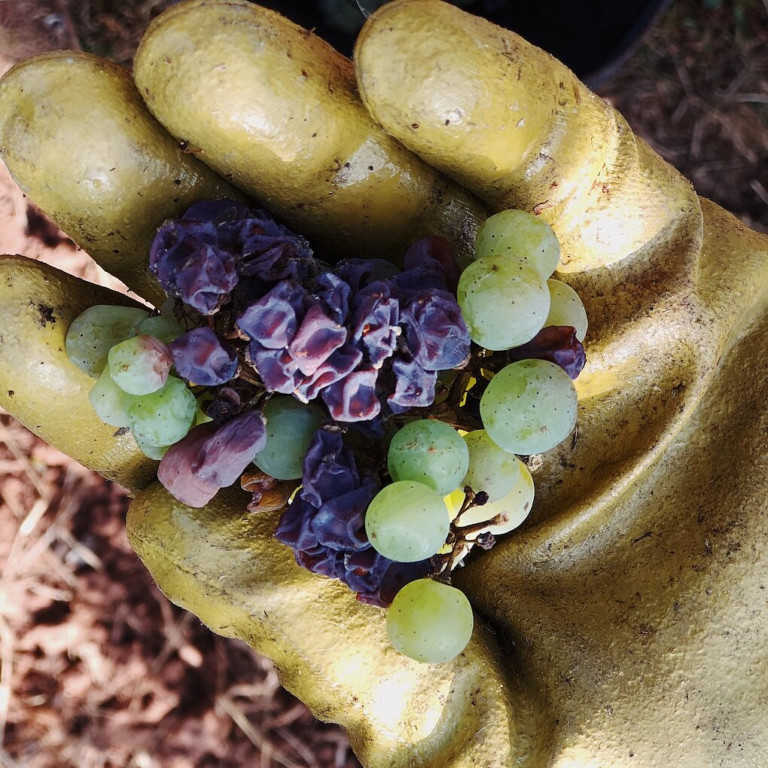
With production levels dwindling, many German wine circles are asking the uncomfortable question “Is Auslese finished?” David Schildknecht answers.
No other wine country repays attention to detail the way Germany does. Plenty of us are familiar with the specificity of German wine labels, but few realize the focus, heritage, and love behind them. German wine is in the midst of a stunning transformation. It is moving from safe toward thrilling — and at blinding speed. Riesling reigns supreme, but there’s been a significant shift in the direction of Spätburgunder and Chardonnay that is very much worth tracking.
With production levels dwindling, many German wine circles are asking the uncomfortable question “Is Auslese finished?” David Schildknecht answers.
March 25, 2024 Update: Schmetterling has closed. It’s owners hope to reopen in the future. Are there parallels between German and Austrian wines, small-scale farming, and the queer community? If so, the most essential may be a shared need for safe space. Schmetterling, a queer-forward natural wine and vinyl shop that opened this summer in rural Vermont, aims to offer just that. By prioritizing the needs of communities at — admittedly starkly unequal — risk, owners Danielle Pattavina and Erika Dunyak have created an unlikely outpost for low-intervention German, Austrian, and other Alpine wines. The shop is both an incubator…...
Weingut Blankenhorn It wasn’t love at first sight for Martin and Yvonne Männer of Weingut Blankenhorn in Schliengen. On a trip to Switzerland in spring 2015, they were initially disappointed by the Gutedel (a.k.a. Chasselas) they found there. Or, to be more precise: by how the vintners they encountered vinified it. But when they ordered a bottle of 18-year-old Chasselas Médinette Dézalay Grand Cru from Domaine Louis Bovard on their last night in Geneva, at the Michelin-starred Le Chat-Botté, they realized they had found the key to making a multifaceted, indeed divine Gutedel. Ever since, Langlebigkeit, or longevity, has been part of Weingut Blankenhorn’s DNA. Their wines tell a…...
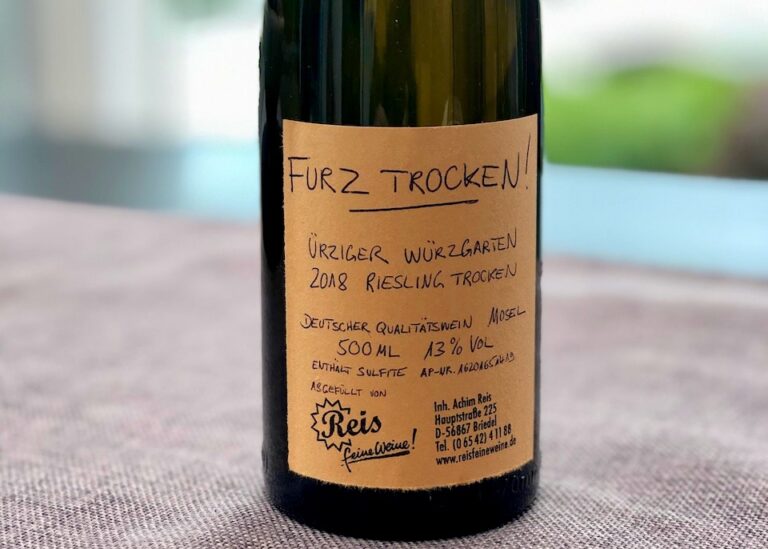
The dark wit of Berlin. Dangerously low water levels in the Rhine River. Black bread. Germany does trocken like few others. And then there’s the wine. Despite its reputation as the land of Blue Nun, more than 60 percent of the wines made in Germany are dry. And within that 60 percent, there are discernible levels of dry, drier, and driest. So dry, in fact, that there’s a strangely specific word for it. (Of course there’s a word. It’s Germany. There’s always a word.) Furztrocken. Fart Dry. Literally. As difficult to grasp as I find a term like feinherb, it’s Kinderspiel when compared to furztrocken. Then again, mindset…...
Zeter assesses the natural bounty of his home, the Pfalz, with the eye of a chef. The soils are his mise en place — the basis of his work — the grape varieties are the ingredients he brings to the table and the bottle. His favorite ingredient — Sauvignon Blanc — has become his trademark. This love came early: in South Africa, 1992, at the Buitenverwachting winery in Cape Town. Now, he is celebrating 15 years as a Sauvignon Blanc iconoclast himself. A recent vertical tasting spanning his first vintage in 2007 to the current release, 2021, made clear the value of following palate…...
German Chardonnay may be the most thrilling wine for our moment.
Baden is Germany's third largest winegrowing region. From Cooperatives to Landwein, learn what makes this region and its wines so important.
The Mosel, Germany’s oldest winegrowing region, knows how to beguile. The Rheingau swathes itself in the trappings of nobility, Baden boasts of its sunshine, the Mittelrhein beckons with Romanticism. The Mosel, however, reaches straight for myth. There are many recaps of the growing region readily available, so let’s focus on something else instead: what makes the Mosel unique — now, then, and, likely, in the future. Not for nothing is the biggest annual wine fair along the Mosel River entitled “Mythos Mosel.” The name, and the event itself, attest to the enduring power the Mosel holds in the imagination of the wine-drinking…...
A handful of Weinheim visionaries are reshaping the future of German wine in the country's largest winegrowing region with lessons from the past.
The sun blazes. The air shimmers. On the horizon four figures throw long shadows across the dry, crumbling ground. They are headed toward a city. Doors swing open. The four step from light into dark, their throats dusty and dry. Behind a deserted bar stands a man. He pushes four full glasses over to them. Out of the glasses sloshes a wine as red as the setting sun. If you aren’t thirsty by now, you should at least be hearing the melody of a harmonica. This is how the opening scene of a revival—the Rotling revival—could begin. The four men…...
What do you do when you have world-class Riesling terroirs — including some of Germany’s highest, coolest vineyards, extraordinary old vines and massale selections, and a growing cadre of hyper-talented producers who bring imagination and dedication to it all — but the world still thinks of you as a place for, well, something else? This is the predicament of Württemberg’s growers. Over the past decade, they’ve made a strong argument that Riesling should be front and center when we consider the wines of this southwestern German region. Although not everyone believes a narrowed focus benefits Württemberg’s identity (the region’s top…...
There’s no end to writings about how wine affects people. It begets relaxation and well-being, of course, but also stimulating discussion. The right bottle can be just the spark needed to light up a dull evening. But can certain wines channel our moods and perceptions — our very psychology — in different ways? This question was often posed by Wolf-Dietrich Salwey, a vintner who passed away in a car accident in 2011. Known for his unconventional character, Salwey routinely invited neighbors, colleagues, and friends to his estate in Oberrotweil in the Kaiserstuhl to explore the influence of specific grape varieties…...
The world of sparkling wines is changing for the better. The number of producers approaching this beverage in serious, artisanal, and creative ways continues to climb. “Grower Sekt” from Austria and Germany is very much en vogue. We are witnessing a tremendous push to quality. For a long time, “mass over class” was the motto, especially in Germany. But for a new generation, awareness of terroir and a trend toward reducing residual sugar are increasingly the focus. No stone has been left unturned in Austria, either. For several years, Austrian Sekt has been governed by a three-tiered quality pyramid: “Sekt…...
We’ll come right out and say it: Franken (Franconia) is Germany’s most underrated region. If you still think of it as the source of wan wines poured from squat flagons and drunk mostly at home, we’re here to let you in on a secret: there has never been a more exciting time for this corner of northern Bavaria, where wine, not beer, rules the day. The region sits just below the 50th parallel and at the cool, eastern edge of Germany’s wine core. It’s a perilous position for viticulture. As decades of frost-crimped and extreme-heat-affected vintages attest, its starkly continental…...
The story starts with a pedicure and a camping van. Each year when the German wine queen visits New York City, Paul Grieco treats her to a pedicure. (If the queen’s mother is also visiting, she gets one, too.) Grieco is a sommelier, vocal Riesling advocate, and owner/manager of Terroir wine bar in New York. He is also part jester, reveling in the micro-tradition of the pedicure while also pointing toward the intellectual esteem in which he holds every queen he’s ever met. Grieco honors the queens, he said, “because we [at Terroir] are fans of history and culture and [the queens] are an…...
Can you hear the music? Forget onions and vinegar: this Franken co-ferment hits harmonies as only Handkäse can do.
Raw pork is the umlaut answer to the American molded potato salad or ham-and-bananas hollandaise.
“When I started drinking wine, wine was French,” my father told me recently over dinner at Scheepskameel, a Dutch restaurant known for its excellent wine menu. He never spends more than 10 euro on a bottle, and rarely drinks white, but that evening he unexpectedly admitted, he preferred our glass of German Riesling to our bottle of red Bordeaux. A few days later, I hosted a Riesling tasting for some serious wine friends. They have accounts with posh traders and their own cellars, which are typically stocked with Burgundies and Bordeaux. They were impressed. But, I wondered, would they buy…...