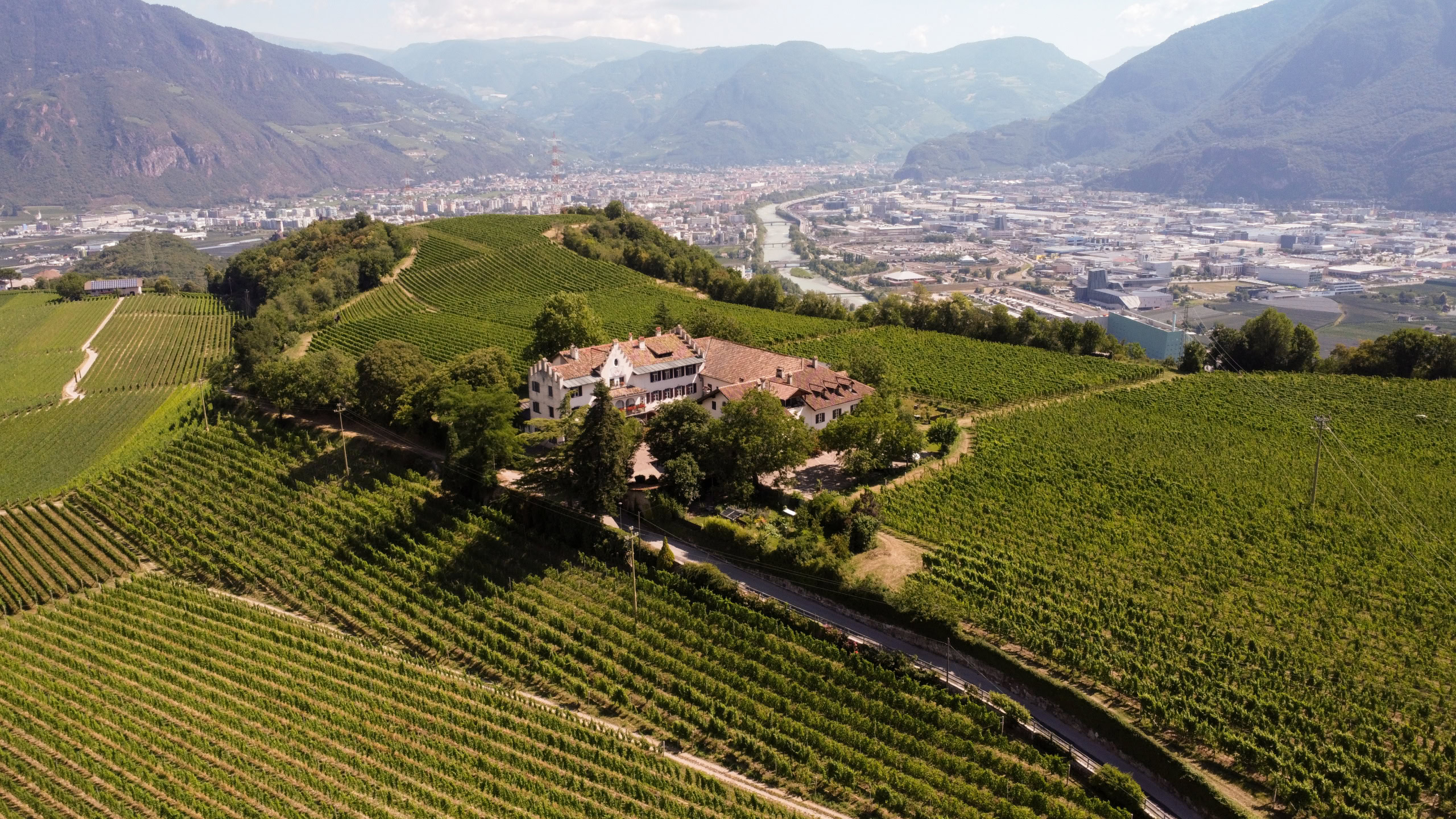
Germany

No other wine country repays attention to detail the way Germany does. Plenty of us are familiar with the specificity of German wine labels, but few realize the focus, heritage, and love behind them. German wine is in the midst of a stunning transformation. It is moving from safe toward thrilling — and at blinding speed. Riesling reigns supreme, but there’s been a significant shift in the direction of Spätburgunder and Chardonnay that is very much worth tracking. 

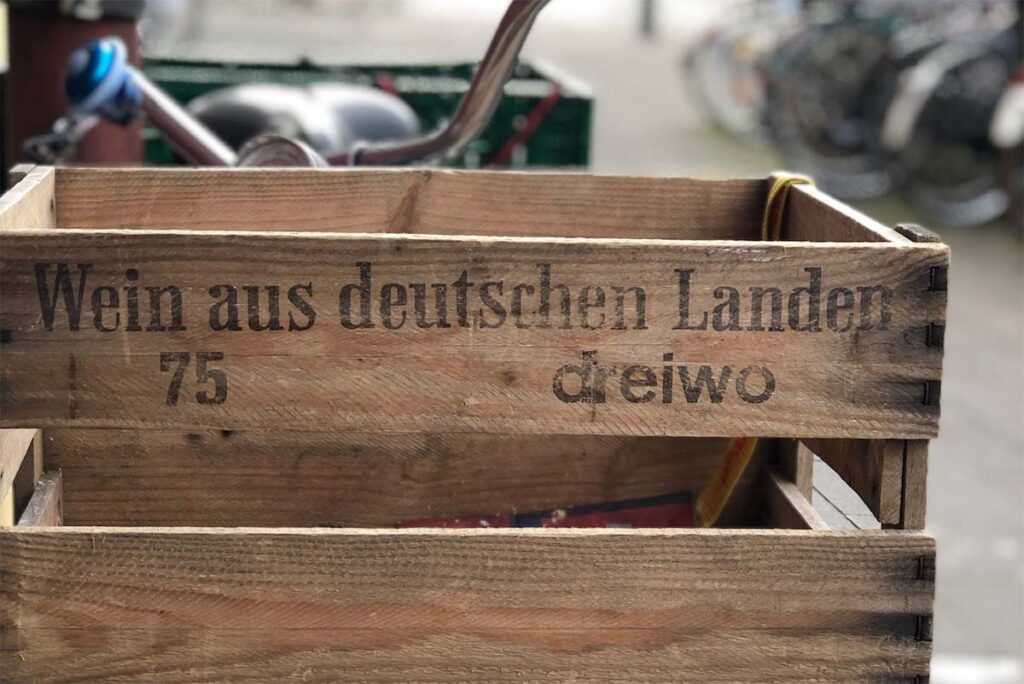
bike basket advertising German-speaking wines from four regions
  • Winners and Losers of the Revised German Wine Law

    Roughly once a generation, the German government pops the hood on the country’s wine law for a tune up. 2021 is one such year, with a new set of revisions taking effect in early May. On the surface, the changes appear more incremental than revolutionary. Yet controversy has followed as various stakeholders realize that some new wrinkles may have unexpectedly far-reaching consequences. So let’s pour ourselves a glass of dry wine (law) and savor some juicy power dynamics.  Here are the early winners and losers of the 2021 German Wine Act. Winner: The VDP’S Long Game You can’t say the…...

    Membership Required

    You must be a member to access this content.

    View Membership Levels

    Already a member? Log in here
  • ·

    When Vermouth was Spelled Wermut

    It was the first hour of my first shift, and of course, it was a “Manhattan Cocktail.” I pictured the flashcards heavy in my pocket from the cram-session the night before:  Rye whisky,  sweet Vermouth, and bitters. Don’t forget the cherry.  To that point, I had known Vermouth as little more than a grandmother’s drink, the bottle dying a slow oxidative death in wood-paneled curios around the world. So after making the guest’s request, and in the name of job experience, I downed the remaining jigger of inexperienced overpour. Later, I would comment to the bar manager that it tasted a…...

    Membership Required

    You must be a member to access this content.

    View Membership Levels

    Already a member? Log in here
  • ·

    Sober Culture

    What does one drink, when one doesn’t drink?  Isabella Steiner opts for an oat milk latte. On the sun-kissed, hipster corner of Berlin known as Paul-Lincke-Ufer, a line for almond croissants forms from a crowd that looks more house party than home office. Steiner takes her spot, her poodle-mix by her side. Steiner and her business partner, Katja Kauf, manage Nüchtern Berlin, a platform for “Sober Culture — Made in Germany.” It appears to tap into something even deeper than the global wellness trend. “The selection of non-alcoholic alternatives [in Germany] rose sharply in 2020,” says 32-year-old Steiner. “This year they…...

    Membership Required

    You must be a member to access this content.

    View Membership Levels

    Already a member? Log in here
  • “It’s the Nitrogen, Stupid!”: On Agrochemistry, Biodynamics and Wine

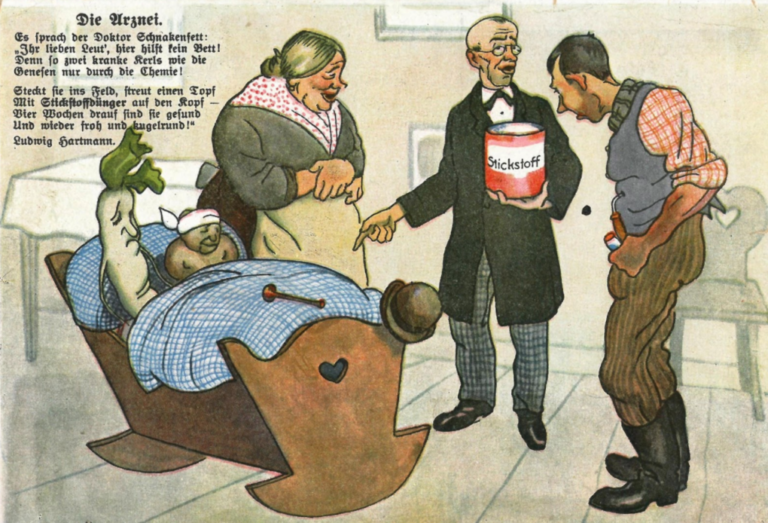
    Above, a postcard from the German fertilizer industry of the 1920s. At the time, perspectives on soil were changing:  Until then, people had spoken of plant growth as being affected by forces; afterward, it was substances. Deficiencies could simply be addressed with the help of agrochemistry.  As recently as a decade ago, biodynamic viticulture could be shrugged off as “some dogma about phases of the moon and cow horns.” But now that we find a who’s who of the wine world on the member lists of relevant biodynamic organizations, it’s no longer so easy to cancel adherents to this form of farming. Those…...

    Membership Required

    You must be a member to access this content.

    View Membership Levels

    Already a member? Log in here
  • WeinGoutte: A Suitcase Winery Unpacks on New Ground 

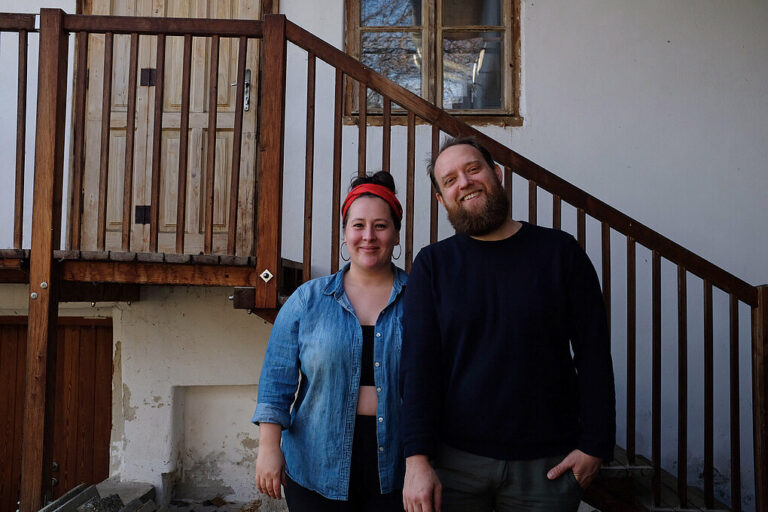
    ​ Home is where the vines grow. We’ve all heard variations on that theme. But just how far can that idea be taken? WeinGoutte offers one answer. This portable micro-estate — whose first vintage sold out in a blink — is the brainchild of husband-and-wife team Christoph Müller and Emily Campeau. The concept goes beyond negociant but stops well short of flying winemaker.  It also presents an entirely new model for a footloose generation’s interpretation of the relationship between vintner and site. Campeau, a fierce lover of food and wine (and a vivid writer on both), is originally from Québec. Her experiences in…...

    Membership Required

    You must be a member to access this content.

    View Membership Levels

    Already a member? Log in here
  • · ·

    In the Sign of Subtlety

    Pinot Blanc is neither a distinctive cépage nor a particular grape variety – at least, not from the viewpoint of ampelography or genetics. And what there is of pure Pinot Blanc worldwide is nearly all rendered in German-speaking growing regions where it is typically known as Weissburgunder.

    Membership Required

    You must be a member to access this content.

    View Membership Levels

    Already a member? Log in here
  • · ·

    What is the Role of “Heimat” in Terroir?

    For over a year, we’ve been living with a pandemic that has shut down more than just our senses of taste and smell. It has forced us to rely on at-home experiences like a glass of wine to satisfy our longing for travel. But what do the places of our terroir dreams taste like? What exactly constitutes the origins of a wine? To use a loaded German word, how much Heimat (loosely, homeland) is in terroir? Flash back to harvest 2012. Max von Kunow of Weingut von Hövel in Germany’s Saar visits the Jurtschitsch family in Austria’s Kamptal for a vacation before his own harvest. Together…...

    Membership Required

    You must be a member to access this content.

    View Membership Levels

    Already a member? Log in here
  • · · ·

    Drink More Scheu!

    If there is an underdog in Germany’s largest winegrowing region, Rheinhessen, it is Scheurebe. Vinified sweet for many years, Scheurebe — pronounced SHOY-ray-beh — largely fell out of fashion. But things changed, and with the dry wine revolution in Germany over the last 20 years, Scheu is back, with — to quote Patti LaBelle — brand new ideas and a new attitude.  “Scheu,” as aficionados like to call it, was bred by German viticulturist Justus Georg Scheu in 1916. Unhappy with the many highly acidic and sour Rieslings he encountered, Scheu (the man, not the grape) wanted to create a…...

    Membership Required

    You must be a member to access this content.

    View Membership Levels

    Already a member? Log in here
  • · ·

    Konni + Evi: Rewriting Possibility in Saale-Unstrut

    It’s hard to believe now, but Germany was once a divided country, and the East was a strange microcosm of icons of that era: Sandmännchen, Jungpioniere, and FKK-Kultur. Not to forget its sparkling ambassador, Rotkäppchensekt. Also hard to believe: a destination for wine fans has now arisen in the area between Chemnitz and Cottbus, Magdeburg and Dresden.  And yet, from Berlin, the trip takes you almost 200 kilometers to the south, past Dessau and Lutherstadt Wittenberg, to a place whose name sounds to German ears disturbingly close to “Lauch” (leek). Laucha an der Unstrut has roughly 3,200 inhabitants, a bell museum, and one…...


    Membership Required

    You must be a member to access this content.

    View Membership Levels

    Already a member? Log in here
  • · ·

    Pfalz comes into its own

    The Pfalz is Germany’s second-largest wine region (by volume) — and perhaps its biggest surprise. The south-of-the-Alps feel of abundance and harmony stems from geographic confluence, where the sheltering Haardt mountains meet Rhine river plain. With Rheinhessen to its north and Alsace due south, it’s a wholly unexpected idyll of fig, lemon, and almond trees, pastel villas, and gentle vine-wrapped slopes as far as the eye can see. Amid this beauty, the Pfälzer live with French-inflected savoir-faire. This amplitude is all there in the wines.  Within a compact 85-km north-south span, 130 villages and seemingly countless vineyards are tightly packed north to…...

    Membership Required

    You must be a member to access this content.

    View Membership Levels

    Already a member? Log in here
  • ·

    Ten Questions for Germany’s Newest Master of Wine

    A fresh crop of Masters of Wine was announced late last month: Ten individuals who have grasped the holy grail of wine education. Among them is Moritz Nikolaus Lüke of Bonn — the tenth German to achieve the distinction. He joins an elite crew who have earned the title by passing legendarily rigorous blind tasting examinations and writing a series of theory papers as well as a research-based thesis. TRINK caught up with Lüke to find out what the experience was like, learn about his Covid-driven research paper — and get an answer to the question we’re all naturally most curious about: what he drank…...

    Membership Required

    You must be a member to access this content.

    View Membership Levels

    Already a member? Log in here
  • · ·

    Christine Pieroth: The Nahe’s Natural Pioneer

    Piri Naturel is Christine Pieroth's independent  line of natural wines in Germany's Burg Layen. Her wines bring a breath of fresh air to more straightforward Nahe’s wine scene.

    Membership Required

    You must be a member to access this content.

    View Membership Levels

    Already a member? Log in here
  • · · · ·

    Time in a Bottle: Good Things Come to Those Who Late

    While artists throughout the ages have longed to catch time in a bottle, it is winemakers who have indeed come closest to achieving this noblest of goals. A fine wine captures not just a single moment, but the span of a vintage, a lifetime, of eons of geology. A liquid suspension of sugar, acids, ethanol, tannins, phenolics, and chemical compounds can become a remarkable crucible of climate, soil, and vision.  Yet unlike many other artistic disciplines, there is no fixed point at which the winemaker can lay down his pen or her brush and declare the bottle finished. There are certainly…...

    Membership Required

    You must be a member to access this content.

    View Membership Levels

    Already a member? Log in here
  • · ·

    Eat & TRINK | Grüner Silvaner and Gravlax

    Curing fish is a bit like baking cakes: unless one follows a particular recipe to the letter, the final result inevitably contains an element or three of surprise. Once in the oven, once in the brine, the window for intervention has passed – leaving time and temperature as the only remaining levers. I clearly lack the discipline to work with exact measurements (thus explaining my ban from baking birthday cakes), but I do enjoy the imprecise, historical art of preserving food with salt. Think: classic Sauerkraut, southern German Surfleisch, or – well – salmon. This particular side of freshly caught salmon…...

    Membership Required

    You must be a member to access this content.

    View Membership Levels

    Already a member? Log in here
  • ·

    How Austrian Biodynamic Growers Put Individuality First, Together

    Why does biodynamics matter? Respekt-BIODYN is the ongoing effort of 25 growers from German-speaking wine regions to answer that question.  Though there are many forms of holistic farming that benefit people, planet, vines and wines, this tight-knit Austria-based group believes that a shared commitment to viewing the teachings of philosopher and agricultural reformer Rudolf Steiner as a springboard for exchange, cooperation, shared learning, and support helps cultivate a sense of individuality that, ultimately, translates into more profound terroir expression and higher quality in their wines.  Biodynamic Origins “The first 12 winemakers started in 2005,” explains the group’s leader, Michael Goëss-Enzenberg…...

    Membership Required

    You must be a member to access this content.

    View Membership Levels

    Already a member? Log in here
  • Are the British Getting a Taste for Umlauts?

    We British are not the world’s most noted linguists, but that doesn’t seem to put off some of us from drinking “German-speaking” wines. That said, the market for these wines has had a rough ride at times, which makes their current increasing popularity all the more intriguing. Germany has historically boasted a well-established presence in the U.K. wine market. In the 19th– and early 20th– centuries German wines were famously on par with Bordeaux, Burgundy, Champagne, and Port in terms of price. After the fall of Napoleon, the Rhineland and the Mosel both entered a period of prosperity, initiated by…...

    Membership Required

    You must be a member to access this content.

    View Membership Levels

    Already a member? Log in here
  • · ·

    He Who Controls the Spice Controls the Universe

    Picture yourself at a German holiday market (if such things were happening in 2020) — a mug of glühwein in hand and the scent of fresh pfeffernuss cookies in the air. It’s no surprise that these warm, spicy aromas are key attributes in many wines from Germany and Austria, South Tyrol, and the German-speaking parts of Switzerland. And there’s a hidden world of compounds and precursors to thank for this distinctive and alluring range. Much like a chef in the kitchen, growers can influence the aromatic and flavor complexity of their wines by playing with soil type, exposition, vine age,…...

    Membership Required

    You must be a member to access this content.

    View Membership Levels

    Already a member? Log in here