
Trink Magazine Articles

  • ·

    Sober Culture

    What does one drink, when one doesn’t drink?  Isabella Steiner opts for an oat milk latte. On the sun-kissed, hipster corner of Berlin known as Paul-Lincke-Ufer, a line for almond croissants forms from a crowd that looks more house party than home office. Steiner takes her spot, her poodle-mix by her side. Steiner and her business partner, Katja Kauf, manage Nüchtern Berlin, a platform for “Sober Culture — Made in Germany.” It appears to tap into something even deeper than the global wellness trend. “The selection of non-alcoholic alternatives [in Germany] rose sharply in 2020,” says 32-year-old Steiner. “This year they…...

    Membership Required

    You must be a member to access this content.

    View Membership Levels

    Already a member? Log in here
  • “It’s the Nitrogen, Stupid!”: On Agrochemistry, Biodynamics and Wine

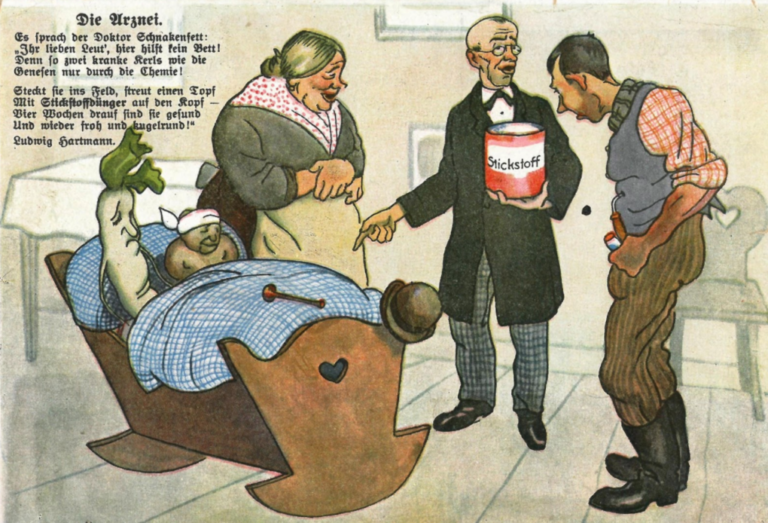
    Above, a postcard from the German fertilizer industry of the 1920s. At the time, perspectives on soil were changing:  Until then, people had spoken of plant growth as being affected by forces; afterward, it was substances. Deficiencies could simply be addressed with the help of agrochemistry.  As recently as a decade ago, biodynamic viticulture could be shrugged off as “some dogma about phases of the moon and cow horns.” But now that we find a who’s who of the wine world on the member lists of relevant biodynamic organizations, it’s no longer so easy to cancel adherents to this form of farming. Those…...

    Membership Required

    You must be a member to access this content.

    View Membership Levels

    Already a member? Log in here
  • What’s Driving Swiss Wine?

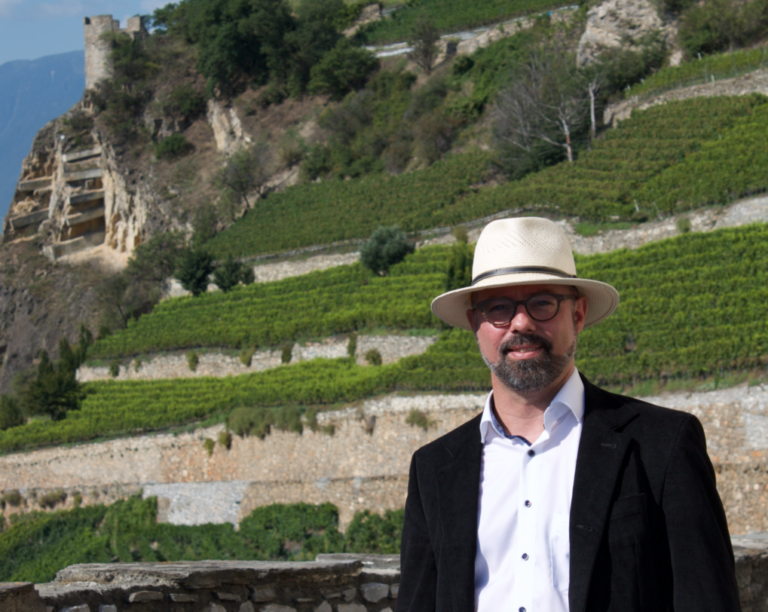
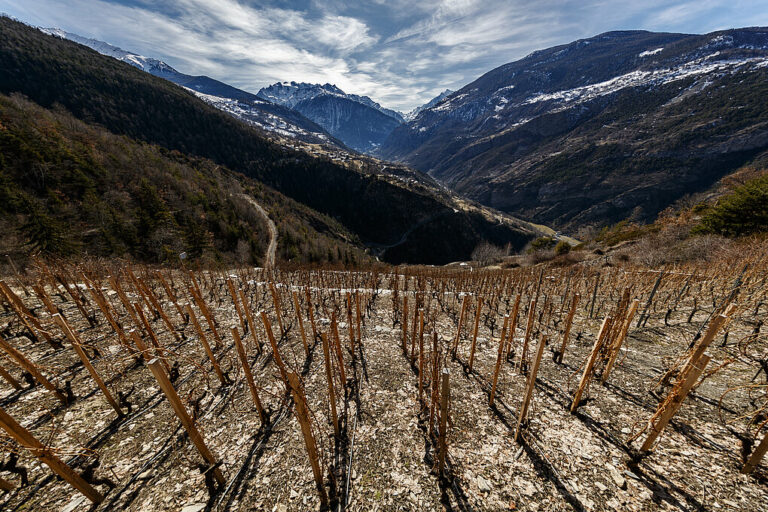
    The Donatschs were never conformists. Starting in the 1970s, Thomas Donatsch of Graubünden turned the Swiss wine landscape on its head with his illegal Chardonnay plantings and barrique experiments. In 2019, his son Martin broke the price record for Swiss wine with his Réserve Privée. Yet it hasn’t always been easy. A conversation with Martin reveals a few of the reasons why Swiss wines remain an insider secret. When it comes to wine, what makes Switzerland so unique? Switzerland is an extremely multifaceted country. Two radically different regions can exist within mere kilometers of each other. Ticino for example embodies…...

    Membership Required

    You must be a member to access this content.

    View Membership Levels

    Already a member? Log in here
  • José Vouillamoz on Swiss Wine Grapes

    I’ve read about as widely on Swiss wines as an Anglophone can: the relevant chapters of Jason Wilson’s delicious Godforsaken Grapes. The late Sue Style’s charming, informative Landscape of Swiss Wine. Ellen Wallace’s colorful Vineglorious. Dennis Lapuyade’s expert blog ArtisanSwiss. Stephan Reinhardt’s candid, convincing coverage in the Wine Advocate. But it is Dr. José Vouillamoz’s Swiss Grapes: History and Origin that has done the most to help me wrap my head around the marvelously confounding world of Swiss wines. The English edition, published in 2019 (two years after the original French), is a startlingly accessible and appealingly personal exploration of the trove…...

    Membership Required

    You must be a member to access this content.

    View Membership Levels

    Already a member? Log in here
  • WeinGoutte: A Suitcase Winery Unpacks on New Ground 

    ​ Home is where the vines grow. We’ve all heard variations on that theme. But just how far can that idea be taken? WeinGoutte offers one answer. This portable micro-estate — whose first vintage sold out in a blink — is the brainchild of husband-and-wife team Christoph Müller and Emily Campeau. The concept goes beyond negociant but stops well short of flying winemaker.  It also presents an entirely new model for a footloose generation’s interpretation of the relationship between vintner and site. Campeau, a fierce lover of food and wine (and a vivid writer on both), is originally from Québec. Her experiences in…...

    Membership Required

    You must be a member to access this content.

    View Membership Levels

    Already a member? Log in here
  • ·

    3 Can’t-Miss Wines from Vulkanland Steiermark

    In Vulkanland Steiermark — “volcanic Styria” — the name says it all. Some 1,500 hectares of vineyard are, for the most part, sited on the slopes of extinguished volcanic cones that rise from a gently hilly landscape. Here Pannonian warmth from the east meets the Illyric balminess of the Adriatic. Among the best-known growers in Vulkanland are Weingut Neumeister, Winkler-Hermaden, and Ploder-Rosenberg. As throughout Styria, white varieties are most strongly represented, with Welschriesling and Weißburgunder (aka Pinot Blanc) statistically far in the lead, followed by Sauvignon Blanc, Müller-Thurgau, and Chardonnay; Zweigelt yields respectable red wines here as well. Traminer from…...

    Membership Required

    You must be a member to access this content.

    View Membership Levels

    Already a member? Log in here
  • Completer: The Answer to a Prayer

    By traditional measures, my first year of college was a waste. I spent a lot of it playing cards with a gang of liberal theologians at a Jesuit university in California. Towering above the group was our guru, the truest Renaissance man I’ve ever met — priest, medieval scholar, professional clown, and director of his own traveling circus. He spent most of each year wandering from one Catholic university to another, plying his gift for persuasion. But he always made time for cards when he was in town. When not lobbying for Christ, he was partial to Texas Hold ’em,…...

    Membership Required

    You must be a member to access this content.

    View Membership Levels

    Already a member? Log in here
  • The Swisstory of Absinthe

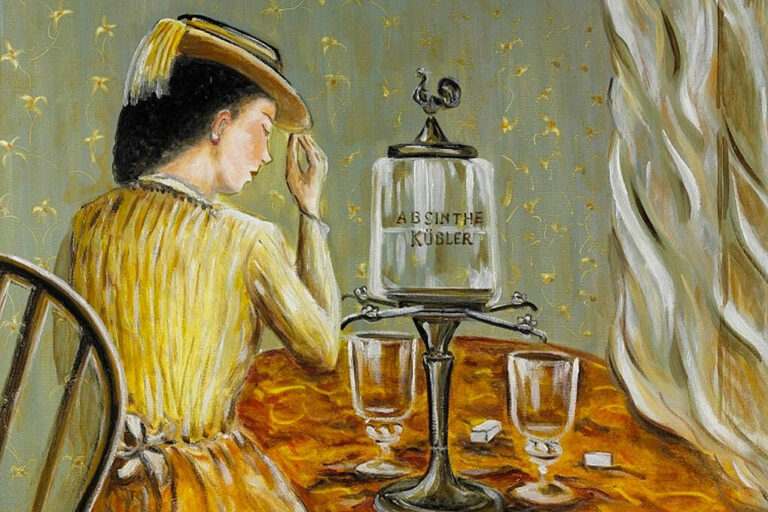
    Banned and beloved, feared and revered, one would assume the birth story of absinthe to be as spirited as its character. Yet its quite conventional beginnings can be clearly traced back to the mild-mannered region of Val-de-Travers, Switzerland, below the limestone-cliffed Jura mountains, where a greenish-gray perennial that gave the herbal elixir its name thrives on the lush borders of the region’s forests and roadsides. And so it is that neither the what nor the where, but rather the who of absinthe’s beginnings that has been called into question, becoming only the first in a long twisted tale of controversy…...

    Membership Required

    You must be a member to access this content.

    View Membership Levels

    Already a member? Log in here
  • · ·

    In the Sign of Subtlety

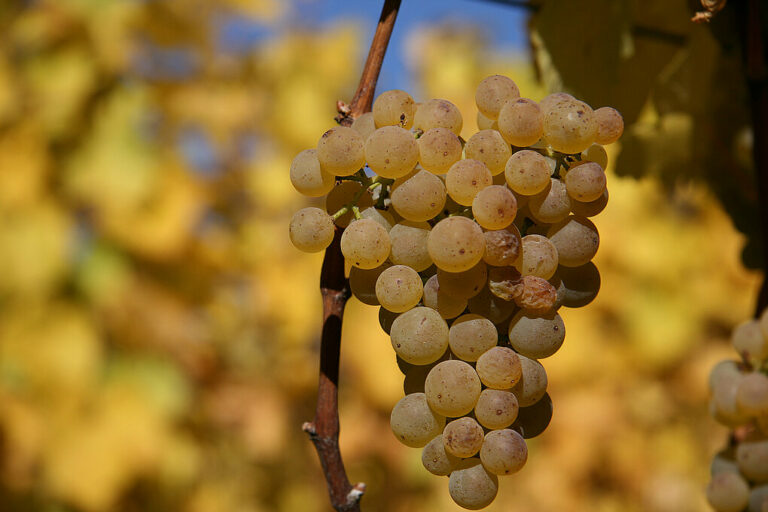
    Pinot Blanc is neither a distinctive cépage nor a particular grape variety – at least, not from the viewpoint of ampelography or genetics. And what there is of pure Pinot Blanc worldwide is nearly all rendered in German-speaking growing regions where it is typically known as Weissburgunder.

    Membership Required

    You must be a member to access this content.

    View Membership Levels

    Already a member? Log in here
  • · ·

    What is the Role of “Heimat” in Terroir?

    For over a year, we’ve been living with a pandemic that has shut down more than just our senses of taste and smell. It has forced us to rely on at-home experiences like a glass of wine to satisfy our longing for travel. But what do the places of our terroir dreams taste like? What exactly constitutes the origins of a wine? To use a loaded German word, how much Heimat (loosely, homeland) is in terroir? Flash back to harvest 2012. Max von Kunow of Weingut von Hövel in Germany’s Saar visits the Jurtschitsch family in Austria’s Kamptal for a vacation before his own harvest. Together…...

    Membership Required

    You must be a member to access this content.

    View Membership Levels

    Already a member? Log in here
  • · · ·

    Drink More Scheu!

    If there is an underdog in Germany’s largest winegrowing region, Rheinhessen, it is Scheurebe. Vinified sweet for many years, Scheurebe — pronounced SHOY-ray-beh — largely fell out of fashion. But things changed, and with the dry wine revolution in Germany over the last 20 years, Scheu is back, with — to quote Patti LaBelle — brand new ideas and a new attitude.  “Scheu,” as aficionados like to call it, was bred by German viticulturist Justus Georg Scheu in 1916. Unhappy with the many highly acidic and sour Rieslings he encountered, Scheu (the man, not the grape) wanted to create a…...

    Membership Required

    You must be a member to access this content.

    View Membership Levels

    Already a member? Log in here
  • · ·

    Konni + Evi: Rewriting Possibility in Saale-Unstrut

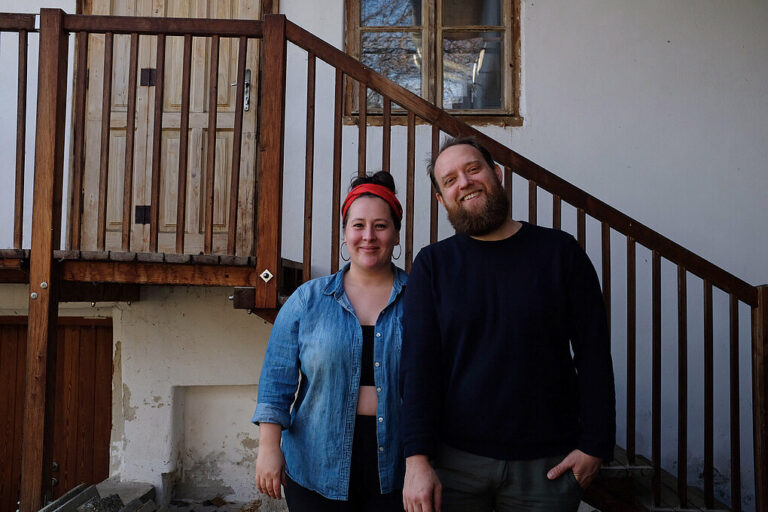
    It’s hard to believe now, but Germany was once a divided country, and the East was a strange microcosm of icons of that era: Sandmännchen, Jungpioniere, and FKK-Kultur. Not to forget its sparkling ambassador, Rotkäppchensekt. Also hard to believe: a destination for wine fans has now arisen in the area between Chemnitz and Cottbus, Magdeburg and Dresden.  And yet, from Berlin, the trip takes you almost 200 kilometers to the south, past Dessau and Lutherstadt Wittenberg, to a place whose name sounds to German ears disturbingly close to “Lauch” (leek). Laucha an der Unstrut has roughly 3,200 inhabitants, a bell museum, and one…...

    Membership Required

    You must be a member to access this content.

    View Membership Levels

    Already a member? Log in here
  • · ·

    Pfalz comes into its own

    The Pfalz is Germany’s second-largest wine region (by volume) — and perhaps its biggest surprise. The south-of-the-Alps feel of abundance and harmony stems from geographic confluence, where the sheltering Haardt mountains meet Rhine river plain. With Rheinhessen to its north and Alsace due south, it’s a wholly unexpected idyll of fig, lemon, and almond trees, pastel villas, and gentle vine-wrapped slopes as far as the eye can see. Amid this beauty, the Pfälzer live with French-inflected savoir-faire. This amplitude is all there in the wines.  Within a compact 85-km north-south span, 130 villages and seemingly countless vineyards are tightly packed north to…...

    Membership Required

    You must be a member to access this content.

    View Membership Levels

    Already a member? Log in here
  • ·

    Ten Questions for Germany’s Newest Master of Wine

    A fresh crop of Masters of Wine was announced late last month: Ten individuals who have grasped the holy grail of wine education. Among them is Moritz Nikolaus Lüke of Bonn — the tenth German to achieve the distinction. He joins an elite crew who have earned the title by passing legendarily rigorous blind tasting examinations and writing a series of theory papers as well as a research-based thesis. TRINK caught up with Lüke to find out what the experience was like, learn about his Covid-driven research paper — and get an answer to the question we’re all naturally most curious about: what he drank…...

    Membership Required

    You must be a member to access this content.

    View Membership Levels

    Already a member? Log in here