
Trink Magazine Articles

  • ·

    The Zotzenberg Exception

    In Alsace, Grand Cru usually means one thing: Riesling. But on Zotzenberg — a low, east-facing slope between Barr and Mittelbergheim — the often overlooked Sylvaner holds an unusual place of privilege. Zotzenberg remains the only Grand Cru vineyard in Alsace for which Sylvaner is officially recognized on the label. It’s a rare exception that shows how a site can reshape a grape’s reputation and, perhaps, its future.  Six Centuries on a Quiet Hill in Alsace Zotzenberg was first documented as “Zoczenberg” over 600 years ago. Its quality was noted early on: in 1541, Mittelbergheim’s village records mention the hill…...

    Membership Required

    You must be a member to access this content.

    View Membership Levels

    Already a member? Log in here
  • · · ·

    The Vanished Cellar

    The quiet whirr of my high-speed German train is a soothing reminder of Europe’s classy public transit I so miss in America. I’m headed south from Frankfurt towards a gentle landscape of vineyards, orchards and villages near the Rhine River and my Jewish father’s hometown. I’m much less comfortable with the muted conversations surrounding me. Like many children of Holocaust survivors, I grew up instinctively wary of the German language and all things German.  I’m on a symbolic journey alone back to Landau, the market town where my grandfather Heinrich Levy was a winemaker in the Pfalz in 1920s and ‘30s,…...

    Membership Required

    You must be a member to access this content.

    View Membership Levels

    Already a member? Log in here
  • · ·

    Remembering Werner Näkel

    On Saturday 13 September, Germany lost a winemaking legend when Werner Näkel passed away at the age of 72 in Dernau, his home village in the Ahr Valley and seat of the family estate, Weingut Meyer-Näkel. Werner Näkel will be remembered as a founding father of great German Pinot Noir, a wine which under the name of Spätburgunder had for a long time simply languished in the vinous doldrums of Germany, before, in the 1980s, Näkel and a handful of like-minded colleagues began to wonder why the grape, so highly revered worldwide for its red Burgundy renditions, should not be…...

    Membership Required

    You must be a member to access this content.

    View Membership Levels

    Already a member? Log in here
  • Alter Torkel: A Window on Bündner Wine

    In a country that consumes 99 percent of its own wine, finding a restaurant that has an extensive Swiss selection is easy, but finding a restaurant that exclusively features all the wineries and wines of a single appellation is rare.  Alter Torkel in Jenins, a village in Graubünden, in eastern Switzerland, somehow miraculously fits the bill. It may not be the first restaurant to put wine before food, but I have yet to come across one that takes this philosophy to such extremes. As a balmy foehn and radiant late-winter sun warm the crisp mountain air, the terrace at Alter…...

    Membership Required

    You must be a member to access this content.

    View Membership Levels

    Already a member? Log in here
  • ·

    The Weight of a Word: On Purity and German Riesling

    Words are like viruses. They appear in culture and may lie dormant then suddenly they are everywhere, swirling about, adapting to their hosts, mutating to survive. In the wine world, this process can happen fast. "Purity," it turns out, is anything but pure.

    Membership Required

    You must be a member to access this content.

    View Membership Levels

    Already a member? Log in here
  • German Vintners at the Table

    Hans Ruck, 74, is fully at home in front of a stove. The German vintner, of Weingut Ruck in Iphofen, has been a serious chef for five decades, with a healthy stash of self-composed recipes — all harmonized to the wines from his estate at the edge of the Steigerwald in central Franken.  “I’ve never had a beer with a meal in my life,” Ruck claims. “The harmony between food and wine is what truly brings the enjoyment.” Once Ruck gets rolling, it’s hard to stop him. You soon feel like you’re standing at the stove with him, peeking into…...

    Membership Required

    You must be a member to access this content.

    View Membership Levels

    Already a member? Log in here
  • · ·

    The Sacred Sylvaner of Neustift Abbey

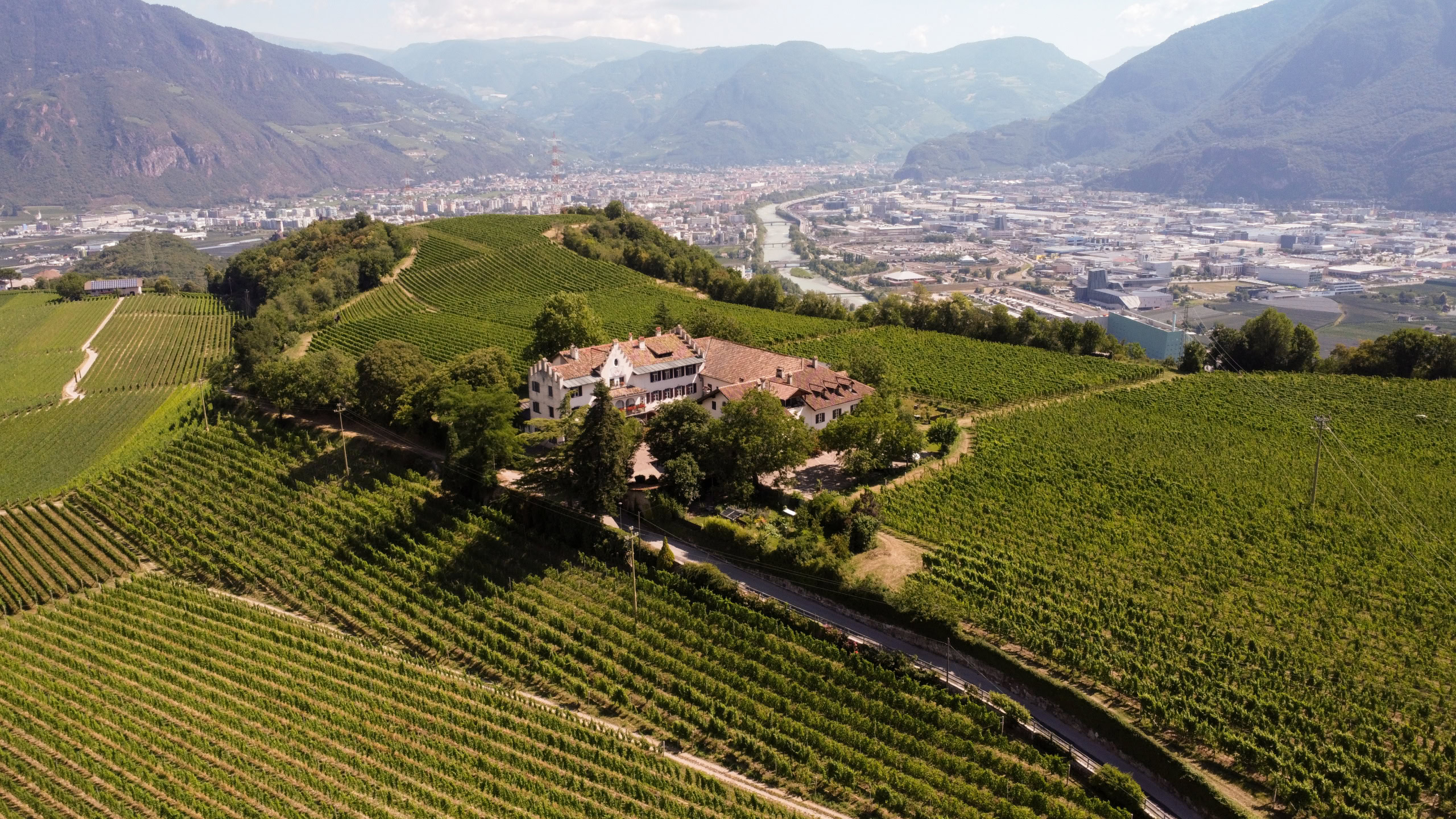
    In the heart of Alto Adige-Südtirol, infinite green rows of vines crown the chestnut-brown roofs of Neustift Abbey. In this fairytale-like northern Italian valley, German and Italian coexist in mutual synchrony, a vivid reminder of a not-so-distant past when this was part of the Austrian Empire. The fortified ensemble houses a monastery, boarding school, museum, and winery within its Romanesque, Baroque, and Rococo walls. Wine has been made using grapes of the region here for the last nine centuries, all under the vigilance of Augustinian canons. Grüner Veltliner, Kerner, and Sylvaner reflect the terroir, proudly representing the abbey in local…...

    Membership Required

    You must be a member to access this content.

    View Membership Levels

    Already a member? Log in here
  • Four Off-Trail Austrian Wines to Discover

    For most wine drinkers, Riesling and Grüner Veltliner are gateways to Austrian wine. But with Austria’s wide range of climates and geography, this tiny country offers surprising varietal diversity. Forty-two different wine grapes are native or traditional, with expressions ranging from light and vibrant to rich and baroque. Topping the list are varieties with long histories in Austria: the red grapes Blaufränkisch and Zweigelt, the whites Chardonnay (known in Austria as Morillon) and Sauvignon Blanc. Then there are the 22 grapes on the back half of the list, each accounting for less than 1% of total plantings. All these varieties…...

    Membership Required

    You must be a member to access this content.

    View Membership Levels

    Already a member? Log in here
  • ·

    Eat + TRINK: For the Love of Marillenfleck

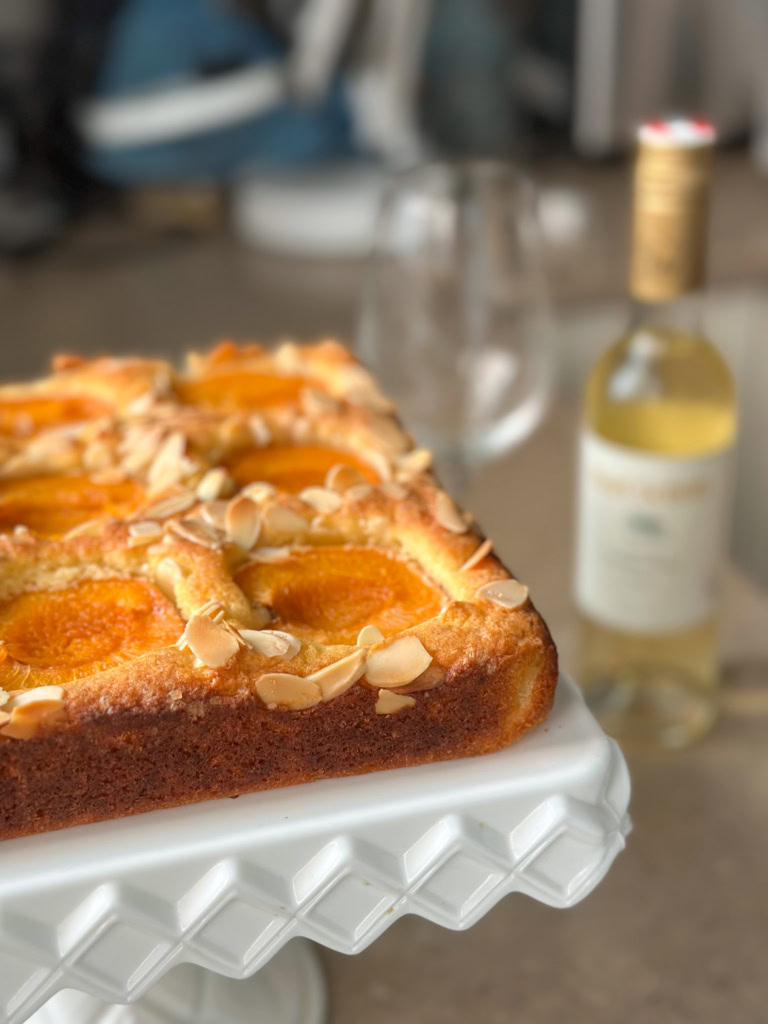
    The Wachau stands tall as one of Austria’s most storied wine regions. Terraced vineyards of Grüner Veltliner, Riesling, and other varieties line the bend of the mighty Danube. But grapes aren’t the only iconic fruit here.  As a nerdy baker and wine nerd, I am intrigued by why particular grape or fruit varieties thrive in specific areas and what makes that terroir so special. I swear by Montmorency tart cherries from Northern Michigan just as I revere Grüner Veltliner from the Wachau. When I discovered that the Wachau is also known as a source of my second-favorite fruit to bake…...

    Membership Required

    You must be a member to access this content.

    View Membership Levels

    Already a member? Log in here
  • ·

    The Kitzingen Connection

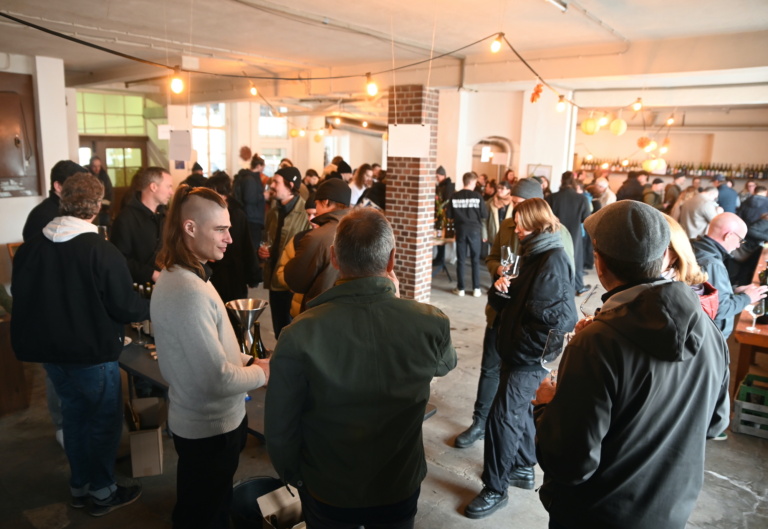
    Kitzingen has never been particularly famed as a mecca for winemaking in Franken. So when I received an invitation to visit this town, 20 km southeast of Würzburg, for a wine presentation by the New Kitz & Friends, I had little reason to suspect it would mutate into a natural wine hub.  At this point, New Kitz & Friends are hardly unknowns – certainly not in this magazine. Colleague Rainer Schäfer recently profiled this group of unconventional locals and newcomers, all moving in a cosmic orbit around the pioneering natural wine estate 2Naturkinder. For this event, the New Kitz called…...

    Membership Required

    You must be a member to access this content.

    View Membership Levels

    Already a member? Log in here
  • ·

    Burgenland Orange: A New Shade for the DAC?

    When Italy’s Collio DOC voted in December 2024 to include orange wines in their disciplinare, the news barely caused a ripple in the grand lake that is global wine. Meanwhile, I was in a state of mild shock. One of Italy’s most conservative appellations had just voted to allow orange wines to bear its hallowed classification.  The decision clearly made sense: Collio is ground zero when it comes to orange wine. It was here, after all, that seminal growers like Gravner and Radikon redefined skin-fermented white wines in the late 1990s. Once considered heretics, their approach is now established worldwide…....

    Membership Required

    You must be a member to access this content.

    View Membership Levels

    Already a member? Log in here
  • Why Is Switzerland Opting Out of the Vineyard Classification Trend?

    One of the biggest trends in wine over the past two decades has been an increased interest in expressing origin. Organizations like the Verband Deutscher Prädikatsweingüter (VDP) in Germany and the Österreichische Traditionsweingüter (ÖTW) in Austria have both shaped and surfed this wave to the extent that their vineyard classifications — in both cases private initiatives — are now being codified into national law. Switzerland has no comparable organization. The one that comes closest, Mémoire des Vins Suisses, was founded more than 30 years ago, with the aim of proving that Swiss wines can age. Does this mean Swiss wines…...

    Membership Required

    You must be a member to access this content.

    View Membership Levels

    Already a member? Log in here
  • · ·

    The Pfalz’s Unlikely Catch: A Fish Soup Story

    There is no fish soup in the Pfalz. Sad, but true. Like most of Germany’s winegrowing regions, the Pfalz is simply too far removed from the sea for fish to feature prominently in its traditional cuisine. By extension, Pfalz fish soup is practically a culinary contradiction. A delicious deception. A seafood swindle.   A Pfalz cookbook is a celebration of rustic comfort: Leberknödel (liver dumplings), Kartoffelsuppe mit Speck (potato soup with bacon, often in unlikely combination with plum cake), and, of course, Saumagen (stuffed pig’s stomach). Arguably the region’s culinary signature dish, this is a hearty, sausage-y mix of pork, potato,…...

    Membership Required

    You must be a member to access this content.

    View Membership Levels

    Already a member? Log in here
  • ·

    Big Risks, High Stakes: The New Climate Calculus on the Kaiserstuhl

    It is a landscape rife with charms and challenges: From their perch atop the Oberrotweiler Eichberg, on a long-dormant volcano that rises to 310 meters, Johannes Landerer and Jakob Moise can enjoy some of the finest views over the Kaiserstuhl and sprawling Rhine Basin in Baden. The early morning sun is quickly rising, but the Kaiserstuhl, normally a place of striking warmth, has seen an unusual amount of precipitation in the summer of 2024, leaving it greener than at any time in recent memory. But if this pair of Kaiserstuhl winegrowers agree on anything, it’s that this situation is likely…...

    Membership Required

    You must be a member to access this content.

    View Membership Levels

    Already a member? Log in here
  • Germany’s Unrivaled Bread Culture

    On a chilly April morning, I sat in the tasting room of an renowned old Alsatian winery, under the spell of an enchanting rose-and-peach-inflected, off-dry Gewurztraminer from vines right outside the winery’s door. I chatted with the person pouring the wine. They asked what brought me to Alsace. I answered that I had just studied German bread baking at the Akademie Deutsches Bäckerhandwerk. “I’ve never thought about German bread before,” they responded. We were less than 30 kilometers from the German border, in a town with a German name, at a winery with a German name. But they’d never even…...

    Membership Required

    You must be a member to access this content.

    View Membership Levels

    Already a member? Log in here
  • ·

    The Healing Power of Classic German Cooking

    “Germans are particularly nostalgic about the food of their grandmothers,” writes Luisa Weiss, furnishing a sturdy thesis for her handsome, welcoming new cookbook.   Weiss, whom you may — should — know, is a food writer. She was born, partly raised, and now lives full-time in Berlin. She blogged about food for more than a decade from New York as The Wednesday Chef, then moved to Germany. There she wrote her way deeper into the German culinary world: the food-driven memoir My Berlin Kitchen: A Love Story with Recipes (2012) and Classic German Baking (2016). She now writes a Substack organized…...

    Membership Required

    You must be a member to access this content.

    View Membership Levels

    Already a member? Log in here